

Great Greek Authors
Get to know them through their books
At school, we all more or less had to — or, unfortunately, didn’t have to — read classical Greek literature. From excerpts from Papadiamantis to half-pages of Kazantzakis and a poem by Seferis that we didn’t really understand but wrote something about in the exams. And no, we’re not talking about Homer (no one read him in full in middle school, let’s be honest).
The thing is that in Greece we truly have exceptional writers — men and women — who have written masterpieces. Some we have read. Some we have said we have read. And some we would very much like to have read (perhaps next to a fireplace, with a blanket and cognac). In this article, we will set aside the much-read “great” books for a moment and shine a light on some Greek writers and books that deserve far more attention than they have received so far.
Let’s take a look at 6 of them.
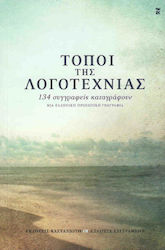
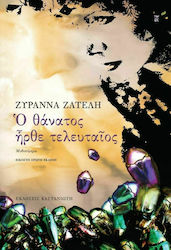
1. Zyranna Zateli
Zyranna Zateli is one of the most distinctive voices in contemporary Greek literature. With a rich, atmospheric, and deeply lyrical language, she has managed to create her own, instantly recognizable literary universe. Her works are multilayered, full of mystery, dream, death, love, and profound existential questions — and at the same time, so human.
She has been honored with the State Literature Prize and is considered one of the most important writers of her generation. Her best-known work is the trilogy that begins with “And with the Light of the Wolf They Return”, a landmark novel in modern Greek prose.
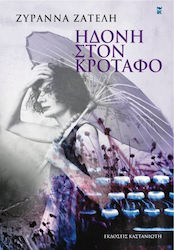
However, one of her books that never received the recognition it deserved is “Pleasure at the Temple”. It is a novella different from her other works: shorter in length, but just as intense and poetic. With an almost introspective style, this book balances between imagination, memory, and desire — a confession outside of time, striking exactly where the title “strikes”: at the temple, where thoughts, longing, and the eruption of language are born.
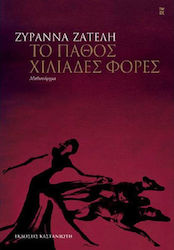
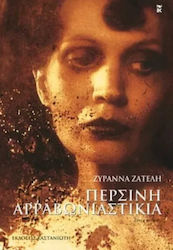
If you want to enter the world of Zyranna Zateli, start with:





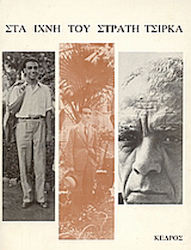
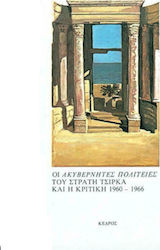
2. Stratis Tsirkas
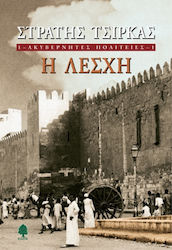
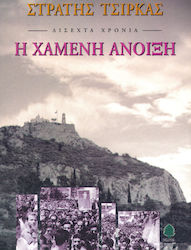
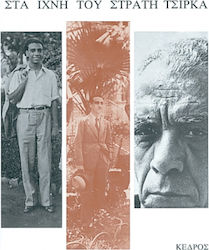
Stratis Tsirkas is considered one of the leading writers of modern Greek prose. Born in Cairo in 1911, with intense political and literary activity, he sharply recorded the dead ends, searches, and contradictions of the 20th century. His writing is deeply political, but also philosophical, with a strong sense of historical and personal responsibility.
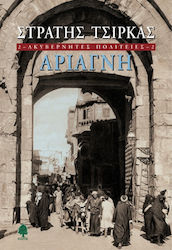
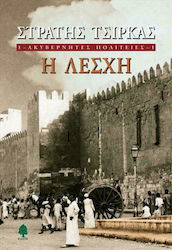
His best-known work, the trilogy Unruly Cities, has gone down in the history of Greek literature as one of the boldest and most complex novels of its time. But there is another book, less prominent, that is truly worth discovering: “The Lost Center”.
It is an essay that combines the personal with the political, the philosophical with the historical. Tsirkas reflects on the confusion and fragmentation of the human being in the postwar era. Without grandstanding or didacticism, he tries to identify that "center" that was lost — in the individual, in society, in culture. It is a book that invites you to think, not necessarily to agree, but certainly to pause a little more quietly in the face of things.
If you want to get to know Tsirkas' work, start with:

3. Kostas Tachtsis
Kostas Tachtsis was one of the most sincere, daring, and authentic writers of Greek literature. Born in 1927, he lived a restless, adventurous life, full of moves, contradictions, and conflicts — a life that passed almost intact into his work. His style, direct, spoken, almost confessional, bridges the personal with the social, drama with everyday life, tragedy with humor.
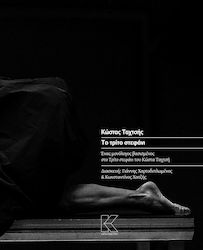
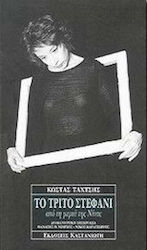
“The Third Wreath” is undoubtedly his epic. A polyphonic, vivid portrait of modern Greek society through the voices of two women who narrate their lives — and through them, the whole country, from the Asia Minor Catastrophe to World War II. It is one of the most important Greek novels of the 20th century, timeless and deeply moving.
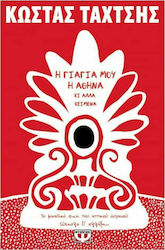
But Tachtsis is not only that. He also wrote shorter, more “quiet” texts that deserve our attention. “The Byzantium Café” is one of them — a brief, personal narrative with the rawness and honesty that characterize all his work. And “My Grandmother, Athens”, though unfinished, is a moving, nostalgic look at the city and time, told only as Tachtsis could tell it: directly, tenderly, and with bitter humor.
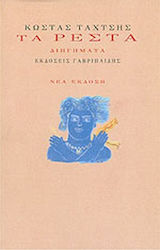
If you want to enter the world of Kostas Tachtsis, start with:





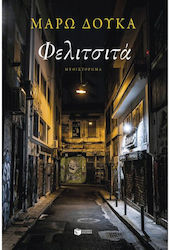
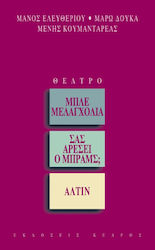
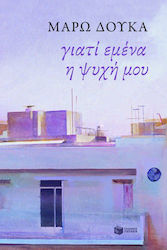
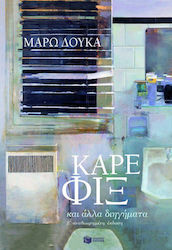
4. Maro Douka
Maro Douka is one of the most consistent and award-winning voices in Greek literature since the Metapolitefsi and beyond. With a deep political and social perspective, but also a steady focus on the human being, she has built a body of work that combines history with personal narrative, trauma with literary power.
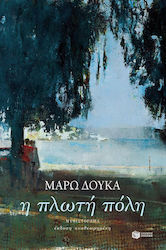
Her best-known work, Floating City, has been loved like few others and remains a point of reference for literature of the Metapolitefsi. But a book that deserves far more attention than it has received is The Well.
It is an exceptional, harsh, yet utterly human novel that sheds light on the Civil War from a perspective that does not choose “sides.” Douka, with courage and sensitivity, delves into memory and trauma without didacticism or heroization, giving voice to the “ordinary” people of history – those who found themselves caught in the vortex without choice. Her writing is spare, clear, but full of emotional intensity.
If you want to get to know Maro Douka, start with:




5. Periklis Korovesis
Periklis Korovesis was one of the most sincere, sharp, and uncompromising voices of modern Greece. A fighter, writer, journalist, and politician, but above all a person who was not afraid to tell the truth, even when it hurt, even when it did not “fit.” His writing is sparse, direct, almost everyday — and that is precisely what makes it so powerful.
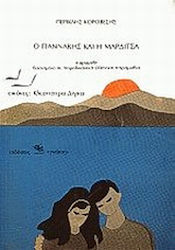
His best-known work, Anthropofylakes, is a document and a cry. A testimony of the torture he suffered during the Junta, this book reads like literature, but strikes like a political act. Despite its enormous significance, it remains almost “unofficial” in the collective literary consciousness — perhaps because it does not flatter, does not beautify, does not forget.
But Korovesis did not stop there. In books such as Tango Bar and Pious Women of Passion, a more inward, quieter but equally honest side is revealed. His stories move between love, loneliness, and the cracks of everyday life. His language remains terse, clear, and full of underlying tension.
If you want to get to know Korovesis, start with:







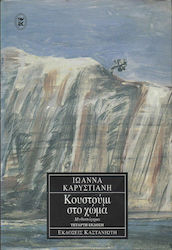
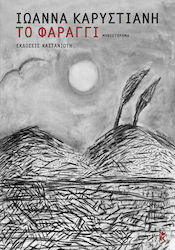
6. Ioanna Karystiani
Ioanna Karystiani is one of those writers who do not simply write stories — they create worlds. Usually set against the backdrop of islands, the sea, small communities, silences, and losses, her characters are both simple and complex people. Her writing is dense, reflective, and full of emotion, without unnecessary embellishment. She knows how to say a lot with a few words — and that is rare.
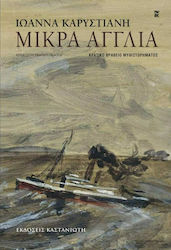
Born in Chania, with roots in Asia Minor, she started out as a cartoonist and columnist before turning to literature. Her first book, Mrs. Kataki, a collection of short stories, became known immediately — but broader recognition came with Little England, a novel about life, women, and unspoken passions in interwar Andros. The book won the State Prize for Novel and was adapted for the cinema by Pantelis Voulgaris.
Karystiani writes about losses that do not cry out, about anxieties that are never spoken, about families held together by silences. She is one of those writers who should be read slowly — not because they are tiring, but because you need to pause a little at every sentence.
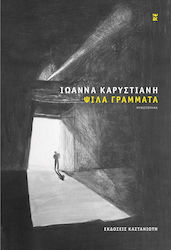
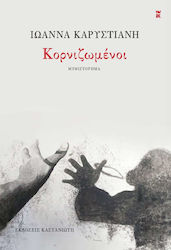
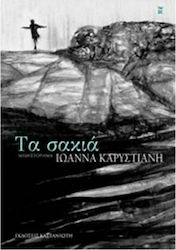
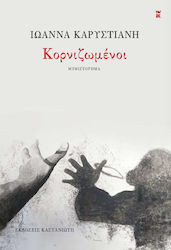
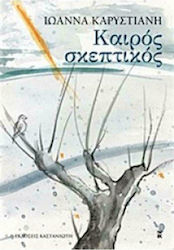
If you want to enter the world of Ioanna Karystiani, start with:
-
-
-
Ψιλά Γράμματα
from10,97 €
-
-
-
-
-

-
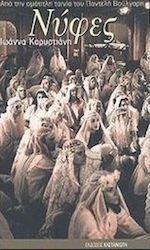
Νύφες, Script
from9,23 €
-

Relevant Articles

5 + 1 Books About the Mother-Daughter Relationship

5 Books You Must Read at Least Once in Your Life

The Greek Mythology Retellings You Shouldn't Miss

Be the first to leave a comment!