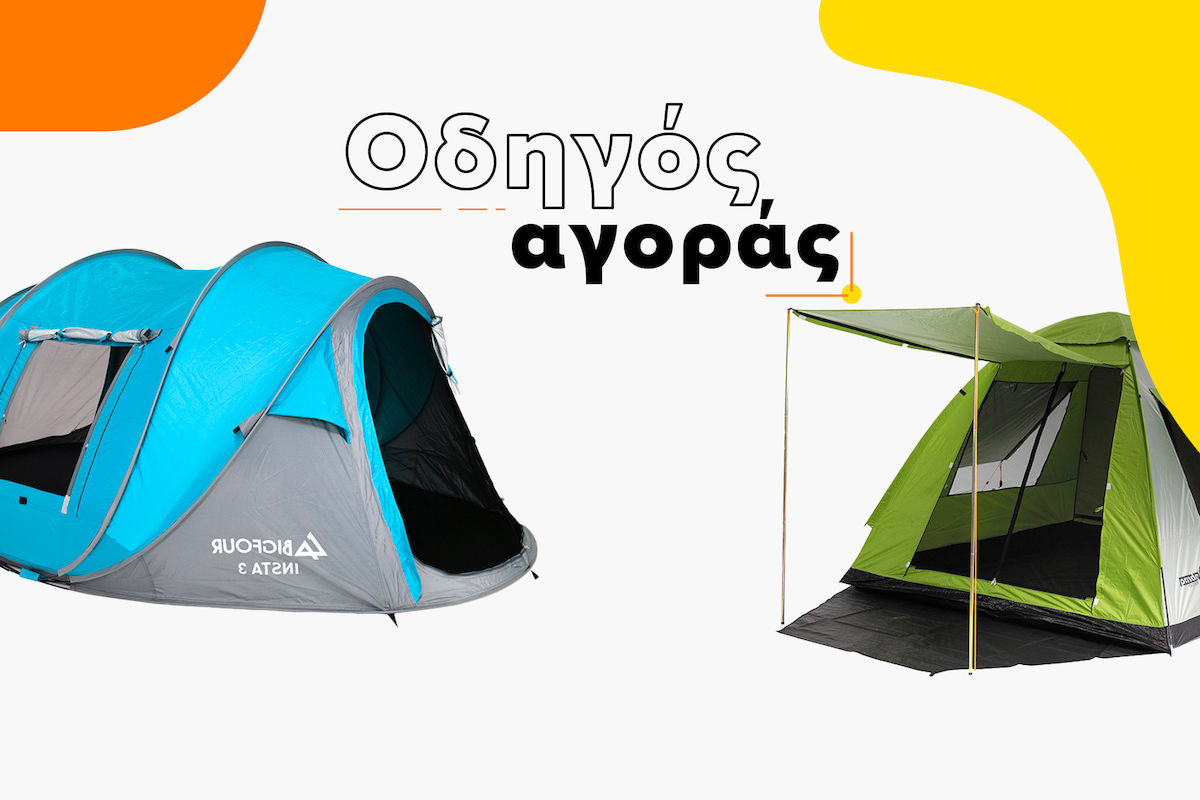

Guide to Camping Tents: Everything You Need to Know to Choose the Right One
If you have decided to try camping or simply want to upgrade your equipment, here you will learn everything you need to know.
To choose a camping tent, you should take into account some basic characteristics, such as the type of tent, the size according to the number of people, and the season in which you will use it.
Size:
The size of a tent is usually calculated according to the number of people it will accommodate. It is important to know that the necessary space for one person is calculated as 55x185 cm. If a tent is advertised as a two-person tent, it means that it can definitely fit 2 people, but it is not certain that it can also fit your belongings. If you have a car nearby, then you don't need a larger tent. However, if you plan to camp for many days and it's not convenient to have your belongings in the car, then we recommend choosing a 3 or 4-person tent for comfort.

Types:
Igloo
Igloo tents are the most common tents. They have poles that are placed diagonally and create the tent's frame so it can stand, while also having pegs to secure it to the ground for greater stability, especially in adverse weather conditions. Most of them are double-layered; the first layer is usually made of some perforated fabric or mesh, while the second is sturdy, durable, and windproof, and sometimes it may also have a sun-blocking lining.
Pop Up
Pop-up tents have increased in recent years, due to improvements in materials and the convenience they offer for simple summer use. Their main advantage is quick and easy setup, even for beginners. However, they have some drawbacks, such as the fact that they are made of a single layer of fabric and do not have great resistance to strong winds. They are usually not very tall, making them not very comfortable inside, while when folded they take up a lot of space and are not recommended if hiking is required before camping. Nevertheless, they are an ideal choice for short overnight stays in good weather conditions.
Tunnel
Tunnel-type tents are ideal for multi-day stays, especially in organized campsites. They have many compartments and, due to their design, are suitable for families who prefer one large tent with separate spaces. However, they require good anchoring to the ground, as they are affected by winds, especially if they blow from the side. A major advantage is that they are very spacious, since the side walls are vertical, resulting in a very large usable space inside the tent.
Car
If you want to take the camping experience to the next level, then you need a car roof tent. It is secured on the car roof rack with 8 or 10 screws, depending on the model, and is quite resistant to winds. The tent's maximum load differs from the maximum load while in motion. In Europe, the maximum permitted weight while in motion, as recommended by manufacturers, is usually 75 kg. However, the maximum camping weight is significantly higher (usually over 200 kg), and manufacturers always specify it. These tents are considerably more expensive due to their special construction, but if you choose a 3-season or 4-season model, they are extremely durable in all weather conditions and very stable.
Mountaineering
Mountaineering or geodesic tents have 2 main characteristics: they are very aerodynamic and extremely lightweight. The poles intersect, creating a very stable structure, resistant to strong winds as well as heavy snowfall and rain. Many geodesic tents are single-layer, but they are so technologically advanced that they are fully waterproof and at the same time “breathable”.
Beach
If you want to go to the beach but are not a fan of umbrellas, a beach tent will make things much easier! It is a tent that is open at the front, so you can go in and out comfortably, but it provides shade and is closed all around to protect you from the wind and possible blowing sand. It is extremely convenient for the beach and you can find it in a pop-up type or with an automatic mechanism so you don't have to struggle with poles under the hot sun!
-
 Igloo
Igloo
-
 Pop Up
-
 Tunnel
-
 Car
Car
-
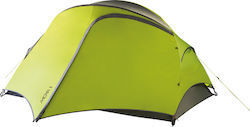 Hiking
-
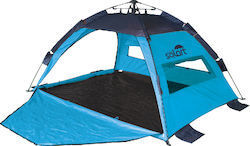 Beach
Beach

Season of use:
Tents are divided into summer, 3-season (spring, summer, autumn), 4-season, and winter tents.
Summer tents should have good ventilation and openings to allow air to pass through and prevent heat from building up. Higher-quality tents offer advanced fabrics that “breathe” and let moisture and heat escape from the tent. However, always keep in mind that no tent can stay cool when exposed directly to the sun for a long period of time. For this reason, try to set up your tent in an area with natural shade, such as under trees or next to a hill. Don’t forget that you can use sunshades for protection from the sun.
3-season tents usually consist of 2 fabrics. The inner fabric is usually simple mesh, and the outer fabric is more durable and provides coverage, waterproofing, and protection from the wind. If the tent is set up and secured properly, it becomes resistant even to very strong winds.
4-season tents can be used from winter through summer, but not in extreme weather conditions such as snowfall or very low temperatures. The fabrics are usually thicker for protection from the cold in winter, but they also have openings for airflow in summer. Although they sound tempting, the truth is that an all-season tent cannot be as effective as a tent designed for a specific season.
Winter tents are usually geodesic and are intended for mountaineers. Their fabrics are very durable, with insulation against the cold and very good waterproofing to withstand heavy rain or snowfall. In addition, their construction is very sturdy so they can withstand stormy winds as well.
What does the waterproof rating of camping tents indicate?
The waterproofing of a tent indicates how much water its outer fabric can repel. It is measured in millimeters (mm) and refers to how many millimeters of a vertical column of water (and therefore pressure) a square centimeter of fabric can withstand without water penetrating it.
The higher the waterproof rating, the less breathable the fabric is and therefore the warmer the tent. Common waterproof ratings range from 500mm to 10000mm. Theoretically, any fabric with waterproofing >1000mm is considered waterproof. Indicatively, a summer tent may have a waterproof rating from 500 to 1500mm, while a winter tent may be above 3000mm.

Parts
The basic parts of a tent are the inner and outer fabric (if there is one), the poles, the stakes, and the guy lines.
Many tents have double fabric, and their benefits are definitely many more! The inner fabric is usually made of mesh and/or fabric in specific areas, depending on the season it is intended for and the structure for the poles to pass through. It is also joined to the tent base, which is made of thick durable material, usually tarpaulin, so it does not tear easily but also provides protection so dirt does not get into the tent. The outer fabric, on the other hand, offers privacy and protection from the weather. It may be waterproof (above you will see the waterproofing ratings), but it can also provide sun protection.
The poles form the backbone of the tent and support the fabrics. They consist of many smaller rods that are connected to each other with an elastic cord and fit into one another. They are usually made of fiberglass or aluminum. Aluminum poles are quite lighter but also more expensive, which is why they are mainly used in mountaineering geodesic tents.
The stakes are the metal pegs that are driven into the ground to secure the tent. They come in many different types depending on the terrain they are intended for. For example, you need different stakes for soil and different ones for snow or sand, where the ground is very soft.
The guy lines are located on the sides of the tent at reinforced points, and their purpose is to stabilize the tent so that the poles do not bend in case of strong wind. We usually tie them to the ground, to stakes or stones, or to trees, thus allowing the outer fabric to remain taut and making it easier for air to pass through the tent.
If this information did not cover everything for you, you can also watch the video below to have all your questions answered.
- Now that you’ve learned all the features, read the guide with the best tents on the market!
- Read also: The list of essentials for camping!
Relevant Articles

The best camping tents on the market
Car roof box: The ultimate buying and installation guide
Buying Guide for Camping Showers: Bathe in Nature Like at Home!
Be the first to leave a comment!