

Treadmill Buying Guide: How to Choose the Right Treadmill
Choosing to buy a treadmill for your home is one of the best investments you can make in your fitness.
However, the wide range of options on the market can easily leave you feeling overwhelmed. Find out everything you need to consider, step by step, before making your final decision.
1. Use
Before looking at the technical specifications, ask yourself: What exactly do you want to do on the treadmill?
Light or brisk walking: You need a basic, compact treadmill without excessive power. Walking Pads fall into this category. These are electric treadmills designed for light walking, usually with a compact design for easy storage.
Jogging (easy running): You need a motor with moderate power and good shock absorption.
Intensive running / endurance training: This requires a powerful motor, a large running belt and a sturdy frame.
Multiple users: If more than one person in your household will be using it, take the needs of the most demanding user into account.
2. Motor Power (HP)
The motor is the treadmill’s “heart.” Its power is measured in horsepower (HP). Important: Always check the continuous horsepower rating (CHP – Continuous Duty HP), not the peak horsepower rating (Peak HP).
1.5 to 2.0 CHP: Ideal for walking.
2.0 to 2.5 CHP: Suitable for jogging and light running.
3.0 CHP and above: Essential for serious daily running or for users with a higher body weight.
3. Running Belt Dimensions
The running belt should provide comfort and safety. If it is too small, you risk tripping or restricting your stride.
For walking: At least 40 cm wide and 120 cm long.
For running: At least 50 cm wide and 130–140 cm long (or even 150 cm if you are over 1.85 m tall).
4. Shock Absorption System
If you want to protect your knees, ankles and lower back, a shock-absorbing deck is non-negotiable. A good treadmill absorbs 15% to 40% more impact than running on asphalt. Look for models with elastomer cushioning or specialized shock-absorbing decks.

5. Incline & Speed
Electric incline: Lets you change the incline at the touch of a button, increasing calorie burn and activating different muscle groups. Choose a treadmill with an incline of at least 10–12%.
Maximum speed: 10–12 km/h is enough for walking. If you plan to run, look for a model that reaches 16–20 km/h.
6. Maximum User Weight & Stability
A golden rule when buying: Choose a treadmill with a maximum user weight capacity at least 15–20 kg higher than your weight (or that of the heaviest member of your household). This ensures the motor won't be pushed to its limits, extending the machine's lifespan.
7. Available Space & Folding
Before ordering, measure your space carefully.
If space is limited, choose a folding treadmill with a hydraulic soft-drop system for easy and safe folding.
Make sure it has transport wheels so you can move it when you're not using it.
8. Display, Programs & Connectivity
Technology makes your workout more enjoyable:
Basic metrics: Time, distance, speed, calories, heart rate.
Built-in programs: Help vary your workouts (HIIT, fat burning, hill training).
Bluetooth & Apps: Many modern models connect to apps such as Kinomap or Zwift, letting you run virtual routes around the world.
Relevant Articles
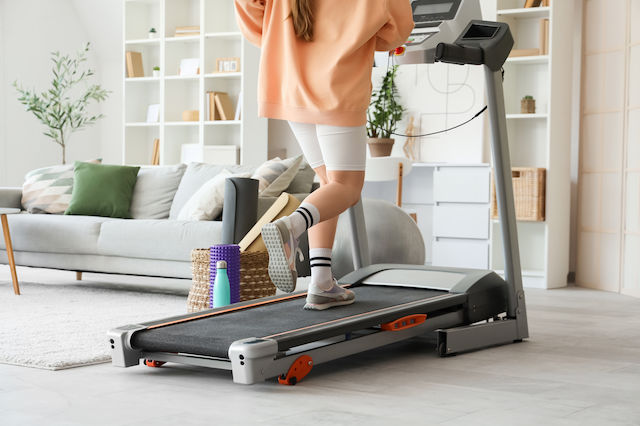
The best treadmills for 2026
The best Activity Trackers for 2026

Buying Guide for Activity Trackers

Be the first to leave a comment!