

Espresso Machine Buying Guide
Are you confused about which Espresso Machine to choose?
Let’s take a look together at the differences in the type of espresso machine, the features as well as the capabilities and functions it may have, so you can make the best choice for your tastes.
Types of Espresso Machines
Espresso machines are divided into five main categories: stovetop coffee makers, manual, semi-automatic, automatic, and capsule coffee makers. The main differences between espresso machines lie in their ability to perform functions automatically or manually (such as creating pressure, coffee extraction, etc.) as well as in the type of coffee they accept (ground, coffee beans, capsules). Below we will examine each type in detail.
Stovetop Coffee Makers (moka pot or espresso pot)

These are traditional espresso makers and still very popular in Italy today. Visually, they remind us of the well-known "briki" and to operate, they only require a stovetop. They are available in various sizes (for 1, 2, 3, or more cups of coffee).
Pros
- Ease of use
- Low purchase cost
- Easy and quick cleaning
- Ability to operate without electricity (e.g., gas stove in camping, cottage)
- Small space they occupy combined with easy portability
Cons
- They deliver low pressure (2-3 bar), which is why the coffee they produce cannot be considered a regular espresso (it is usually known as moka)
- The amount of coffee that must be placed in the special holder is fixed and depends on the size of the coffee maker (For example, if we have a 3-cup espresso briki, we must always put the amount of coffee for 3 cups)
Who are they for?
For individuals looking for a quick, easy, and above all economical solution for a fresh homemade espresso (or better yet, moka coffee).
Automatic espresso machines

The automatic espresso machines provide the most automated process. Usually, they require only the press of a button to prepare an espresso. These machines automatically regulate the amount, temperature, and pressure of the water, making the process extremely easy and fast, but limiting the user's control over the details.
They have the same features as semi-automatic ones, with the difference that extraction times can also be set if desired. They usually operate with 2 programs, one for a single and one for a double espresso shot, in addition to the manual start-stop of extraction.
One type of automatic machines is super-automatic espresso machines, in which all intermediate preparation stages (grinding the coffee, tamping the coffee, start-stop of extraction, milk frothing) are done automatically, producing a ready beverage (espresso, cappuccino, latte, etc.) in our cup.
Positive
- Ease of use, since all that is required is adding the coffee and selecting a program
- The ability to automatically prepare other espresso-based beverages (e.g. cappuccino)
- The speed of beverage preparation
- The consistency and stability in the quality of the coffee they produce
- The automatic cleaning function that some models have
Negative
- The high purchase cost
- Greater susceptibility to breakdowns due to their complex construction
- The absence of any possibility of intervention during the espresso preparation process
- The large amount of space they occupy
Who are they for?
For people who demand speed and consistency from an espresso machine. Due to their speed, these machines can quickly serve many cups of coffee, which makes them a very good choice for a professional setting.
Semi-automatic espresso machines

The semi-automatic espresso machines provide a balance between automation and user control. Usually, they require manual control of the amount of coffee or the timer for brewing. This allows the user to adjust the process according to their preferences, while maintaining some degree of automation.
They use an electric water pump to create pressure. The start and stop of extraction are done manually.
Pros
- The set pressure helps us achieve a more consistent result compared to manual espresso machines
- Easy milk frothing, through a special attachment that most of them have
- The ability to use ground coffee (some also work with ready-made espresso portions known as ESE pods)
Cons
- The fact that it requires quite a bit of practice (determining the amount of coffee, tamping it into the corresponding coffee machine attachment, and calculating extraction time) to achieve a tasty espresso
- The coffee must be ground correctly
Who are they for?
For those who are looking for a balance between control over the brewing process and ease of use. In other words, for people who are interested in experimenting in order to achieve the taste and texture they want.
Manual espresso machines (Piston / Lever)

Manual espresso machines require full user involvement at every stage of preparation. The user needs to manage the pressure, temperature, and extraction duration. These machines provide the greatest control and the most personalized experience, but require specialized knowledge and skills to achieve the best results. They are essentially machines for producing traditional espresso.
They use a piston that is manually pushed through a lever/handle to create the necessary pressure. They allow us to have full control over the entire process. We can determine the pressure, the start and stop of extraction, as well as the amount of ground coffee we will use.
Pros
- The ability to manually adjust all the parameters that determine the extraction result, so the coffee is perfectly in line with our preferences
- The feeling that the result is due to our skills
- The robust construction and their distinctive appearance
Cons
- The difficulty of using them, as they require considerable experience and skill
- The purchase cost, which is at high levels
- The process, which is done manually, resulting in a greater chance of error
- The large volume they occupy
Who are they for?
For coffee enthusiasts who want to make decisions and control all the stages involved in the traditional preparation of an espresso coffee.
Machines with capsule system

As is evident from their name, they are powered by suitable coffee capsules. Espresso is prepared at the press of a button. In capsule system espresso machines the coffee extraction time can be programmed (automatic) or set manually (semi-automatic).
Advantages
- Ease of use
- The ability to prepare other beverages as well by loading the machine with the appropriate capsule
- The small amount of space they occupy
- No need for cleaning
Disadvantages
- Although the coffee is stored airtight inside the capsules, it cannot be ground immediately before the coffee is brewed in the machine
- The higher cost per cup of beverage
- The limitation in the coffee varieties we can try, since most machines work only with specific capsules. It should be noted here that companies are constantly expanding the range of capsules.
Who are they for?
For those who want a small and portable machine so they can quickly and easily prepare various beverages (e.g. espresso, chocolate).
Coffee Supply
Espresso machines are divided into two main categories in terms of coffee supply: those that use coffee beans and those that operate with ground coffee. [Of course, there are also the Capsule Espresso Coffee Machines, but that is another category!] Continuing, let us examine the differences between the two types of espresso machines.
- Bean supply: Devices that use beans offer maximum freshness and authentic flavor. Coffee beans retain the aromas and oils they contain better, as they remain in the package until the moment of use. The user has the choice of grind level according to their preferences for the coffee’s aromas and extraction time .
- Ground coffee supply: Devices that use ground coffee offer convenience and ease in preparing espresso. Ground coffee is usually provided in vacuum-sealed packages, preserving its freshness for a short period of time. The user does not need to deal with grinding the beans, but must control the amount of ground coffee used and the water pressure to achieve the ideal extraction. This option is suitable for those who want ease of use without the need for a grinder to grind coffee.
Power & Pressure of Espresso Machine
In the world of espresso machines, two key words often overlooked by novice buyers are power and pressure. These two parameters significantly determine a machine's performance and play a crucial role in selecting the most suitable model. Let's examine how power and pressure are related to the quality of coffee produced by a machine, and how they can guide a buyer's decision for the ideal espresso machine for their individual preferences.
-
Power:
The power of an espresso machine refers to the energy it can produce for coffee preparation and is measured in watts (W). Power affects the speed at which the machine can heat water and generate pressure for coffee extraction. Higher power usually means faster preheating and the ability to prepare espresso more quickly -with a device having 1100 watts or more considered to heat water quickly-. However, high power values are not always necessarily good, as the appropriate balance between power and pressure is critical for brewing quality coffee. -
Pressure:
Pressure in an espresso machine is important for creating a rich and aromatic espresso. Pressure is measured in bars and represents the force with which water is extracted through the coffee. The normal pressure for espresso preparation usually ranges between 9 and 15 bars. High pressure values are essential for ensuring excellent extraction and sometimes for creating a rich crema. The ability of the device to maintain stable pressure during extraction is crucial for producing coffee with balanced flavor and aroma.

Features & Functions
An important role in the price of an espresso machine is played by the additional features and functions that make it unique by simplifying processes in everyday use. Below we present 3 options that you will love in one device.
- Milk frother: Espresso coffee machines may have an integrated or standalone milk frother for creating milk foam, with temperature and pressure control. Both options ensure creamy milk foam for delicious drinks such as cappuccino and latte.
- Built-in: The built-in espresso machine integrates elegantly into kitchen cabinets, providing a functional and stylish solution that does not take up unnecessary counter space.
- Wi-Fi: A modern espresso machine with WiFi function offers the latest technology, allowing you to monitor and control the preparation of your favorite coffee from your smartphone or tablet, for a truly customized and comfortable coffee experience.
Coffee Maker with Capsules or Not?
Essentially, this will depend on your own needs and the use you intend to make.
On one hand, coffee makers with capsules are definitely the easiest to use and relatively economical. You can buy a coffee maker for less than 100 euros and with 0.15€ - 0.50€ per dose, you have a coffee in a minute at the press of a button, without messing up your kitchen at all. On the downside, while they have consistent performance, they cannot reach the quality of freshly ground coffee from a good semi-automatic or automatic machine. Additionally, the environmental footprint from plastic or aluminum can be another negative factor, although many companies do recycle the capsules they produce.
On the other hand, machines with ground coffee or beans require a little more experimentation to achieve a good result, especially if they are semi-automatic. Ground coffee requires a little more time in cleaning the parts of the coffee maker, as well as your counter which may get dirty. However, if you give them a little time and find what suits you in taste and texture, the result will justify you.
How Many Bars Should an Espresso Machine Have?
To achieve a genuine espresso, the machine should have at least 9 Bars. Therefore, when choosing a coffee maker, opt for a bar range of about 9-15 to have a rich and aromatic espresso.
Important: There are several factors that affect the perfect espresso coffee, such as the coffee ratio, extraction time, and extraction temperature. Therefore, to achieve the best result, it's not just the pressure that matters, but also the overall quality of the coffee maker's construction and how correct the process we follow for its preparation is.
Which type of espresso machine should you get?
The final choice should be based on your actual requirements from the machine, while taking into account the positives and negatives of each type of machine.
In general:
- If you are interested in ease of use and want to achieve a good result with the press of a button, then a capsule or super-automatic machine will satisfy you.
- If you are interested in coffee economy, you can choose an espresso pot or an economical semi-automatic machine that uses ground coffee.
- If you want to experiment to achieve the perfect taste and texture, then a quality semi-automatic machine along with a grinder will be ideal for you.
Finding and choosing an espresso machine according to your personal needs can be a challenge. We hope Skroutz's buying guide helped you understand the features and differences between the various espresso machines, making the final choice easier.
Don’t know which espresso machine to choose?
Relevant Articles
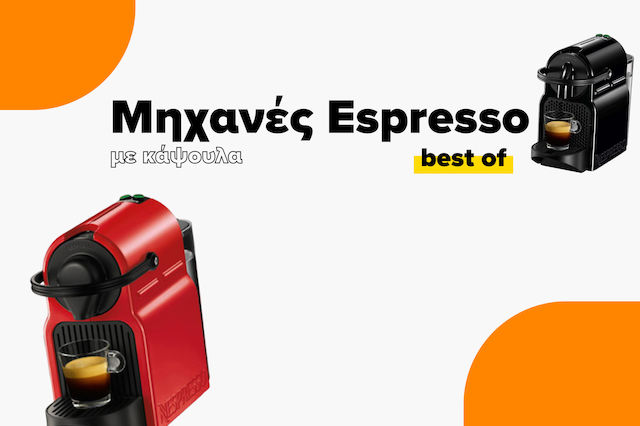
The best capsule espresso machines for 2026
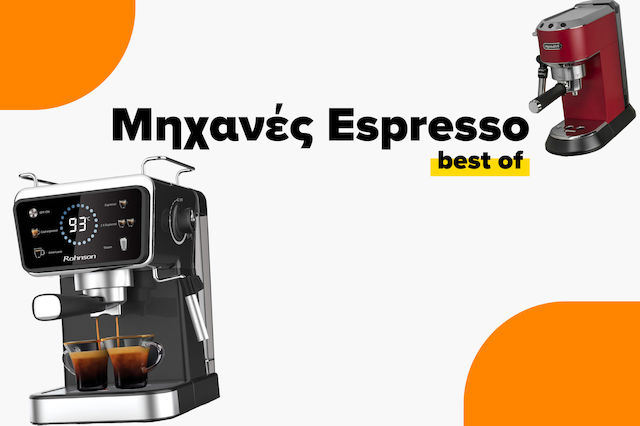
What are the best espresso machines? See ideal suggestions for every use and budget and choose the best one for your needs!
Home Coffee Equipment Guide
Be the first to leave a comment!