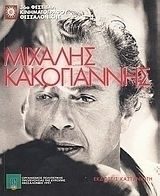
With Mihalis Kakogiannis, Greek cinema transitions from the period of amateurism and banality, primarily illustrated by theatrical works, to its maturity. The road to the maturation of domestic cinema was a persistent and difficult one.
The cinema was exiled from the community of modern Greek culture, and it was treated as a trivial art, without ambitions, a poor relative of the myths that dominated Greek theater. Greek cinema became part of modern Greek culture through Kakogiannis and Koundouros, two filmmakers who worked from two seemingly opposing paths. On one side is Koundouros' political, radical, poetic cinema, while on the other side is Kakogiannis' modern, urban ethnography.
In his very first films, Kakogiannis, with the solidity of an education rooted in English theater and Italian neorealism, creates works of rare balance between melodrama and folk tragedy, such as 'Sunday's Awakening' and 'The Girl in Black'. He relies on the grace and adequacy of the great Elli Lambeti.
'Stella' is one of the most mythical films in Greek cinema, where the primitive ethos of modern Greek folk culture is discovered and highlighted in the, until then, neglected and discredited world of humble neighborhoods. With the unforgettable music of Manos Hadjidakis and the romantic, blasphemous, and immensely tender Melina Mercouri, Kakogiannis creates the portrait of a woman who, at its core, embodies the proud, rebellious, and emancipated face of Greece.
This very face, which repudiates misery and defeat, is what filmmaker Mihalis Kakogiannis seeks in 'Alexis Zorbas'. He is aided here by the explosive music of Mikis Theodorakis. Kakogiannis, from the paths of popular drama, will encounter the archetypically anthropocentric and dramatically modern power of ancient Greek tragedy.
His proposals for adapting ancient drama to cinema, from 'Electra' to 'Iphigenia', demonstrate coherence and effectiveness. Coherence for the modest and renewing identity of a genre whose resilience the centuries have proven; and effectiveness because he dared to free this genre from its museum-like, conservative reading and inscribe it in the most popular art of the time, cinema.
Kakogiannis also had the privilege of directing some of the greatest actors: Lambeti, Mercouri, Hemborn, and Papa, Horn, Kazakos, Bates, and Queen. An eminent actor's director and a pioneering creator for Greek cinema, he is honored by the Thessaloniki Film Festival with a tribute to his entire body of work.
This is a reason to reflect again on the journey of those who, in times when nothing was taken for granted, self-evident, and easy, worked with imagination, virtue, and courage.


 20 Coins
To earn Skroutz Coins, join Skroutz Plus and accept the terms of the reward program.
20 Coins
To earn Skroutz Coins, join Skroutz Plus and accept the terms of the reward program.