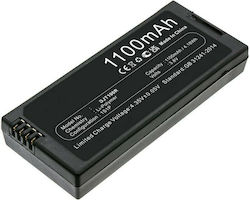

MultiEnergy Μπαταρία 15.4V 3600mAh για Drone 2τμχ
από119,50 € σε 2 καταστήματα
Φίλτρα
Brand
- Πολυμερών Λιθίου (Li-Po): Προσφέρουν περισσότερους κύκλους φόρτισης όπως ακριβώς και οι μπαταρίες Li-ion, με τη διαφορά ότι είναι πιο ελαφριές και έχουν λιγότερες πιθανότητες διαρροής υγρού, όμως έχουν χαμηλότερη χωρητικότητα.
- Ιόντων Λιθίου (Li-ion): Προσφέρουν περισσότερους κύκλους φόρτισης σε σχέση με τις παλαιότερες που βασίζονται στο νικέλιο ή τον μόλυβδο. Δεν αποφορτίζονται εύκολα όταν είναι αποθηκευμένες και μπορούμε να τις φορτίζουμε όποτε θέλουμε.
- Νικελίου - Μετάλλου (Ni-MH): Προσφέρουν μεγάλη χωρητικότητα και είναι κατασκευασμένες με πιο φιλικά προς το περιβάλλον υλικά σε σχέση με τις Ni-Cd. Πρέπει να επαναφορτίζονται μόνο όταν έχουν αποφορτιστεί εντελώς, διαφορετικά χάνουν την απόδοσή τους.
- Τα επιμέρους στοιχεία (κελιά) που ενώνονται στη σειρά για να δώσουν την επιθυμητή τάση (Volt). Για παράδειγμα, μια μπαταρία "3S" κρύβει μέσα της 3 ενωμένα κελιά Λιθίου. Περισσότερα κελιά σημαίνουν υψηλότερη τάση και συνήθως μεγαλύτερη ισχύ.
- Ο ρυθμός εκφόρτισης, γνωστός και ως C-Rating, αφορά συνήθως τις Li-Po μπαταρίες και δείχνει πόσο γρήγορα μπορεί η μπαταρία να δώσει το ρεύμα της με ασφάλεια, χωρίς να υπερθερμανθεί ή να φουσκώσει.
- Χαμηλή Εκφόρτιση (1C - 25C): Μπαταρίες χαμηλής κατανάλωσης κατάλληλες για πομπούς/δέκτες, FPV και απλά τηλεκατευθυνόμενα & drones.
- Μεσαία Εκφόρτιση (30C - 50C): Μπαταρίες μεσαίας κατανάλωσης κατάλληλες για απλά τηλεκατευθυνόμενα αεροπλάνα, οχήματα & drones.
- Υψηλή Εκφόρτιση (60C - 95C): Μπαταρίες υψηλών επιδόσεων κατάλληλες για γρήγορα τηλεκατευθυνόμενα & 3D πτήση.
- Extreme Εκφόρτιση (100C+): Μπαταρίες αποκλειστικά για FPV Racing/Freestyle Drones και Drag RC cars που τραβάνε τεράστια ποσά ρεύματος σε δευτερόλεπτα.
- Το Wh προκύπτει από με τον τύπο: (Τάση x Χωρητικότητα) / 1000. Μπαταρίες <100Wh, όριο IATA, είναι ασφαλείς για χειραποσκευή. Μεταξύ 100Wh και 160Wh χρειάζονται έγκριση από την αεροπορική ενώ πάνω από 160Wh δεν είναι ασφαλείς για πτήση.