

Which snow chains should I get & comparison with snow socks
To read this guide, you will surely have questions and want to learn more about snow chains such as:
- What types of anti-skid devices are there?
- What are the differences in chain thickness?
- How can you easily find the compatible size of snow chains for your tires?
- Which type is ultimately the best for your needs?
Let's get started!
1. Anti-slip chains
This type of chain is the best known to the general public, as it was the first type of anti-slip device invented in 1904 by the American Harry D. Weed. Snow chains of this type are made with galvanized steel links and offer great durability during use. They require frequent cleaning from salt and ice, so that they remain in excellent condition and fully functional. Also, their installation is relatively easy, but it is necessary to have tried it beforehand, so that you become familiar with the installation process.
Advantages: Their performance even in severe snowstorms, their reliability, and their low purchase cost.
Disadvantages: The vibrations they cause during use and the relatively difficult installation process.

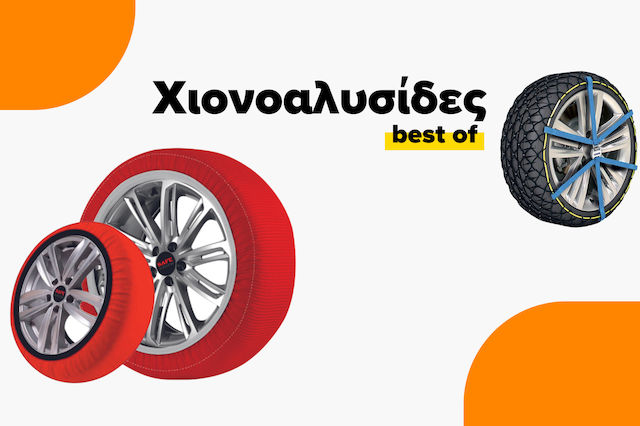
2. Snow socks or fabric snow chains
The easiest to install of all the other anti-slip devices are snow socks. You can see for yourself in this guide, which explains in 3 simple steps "How to Install Snow Socks".
They are made of durable, specially designed fabric that covers the car's tires. They provide effective traction on soft snow as well as ice, increasing friction. Their design makes them quiet during use. They are usually used in light snowfall, on lowered passenger cars, as well as on those with low-profile tires.
Advantages: Easy installation, performance on fresh snow and ice, as well as quiet operation.
Disadvantages: Their use is recommended only in light snowfall. Also, they wear out relatively quickly if used outside of ice or snow, e.g. on dry asphalt, dirt, etc.

3. Spider-Type Snow Chains
This type of snow chain has all the advantages of standard chains and “blanket” type chains, with the only difference being that they require some preparation before use. To install them, there must be a fixed part on the rim, usually a special bolt or bracket, which should be installed from the beginning. They are highly durable and ensure effective traction.
#Tipsbyskroutzteam: For safer installation, before you start fitting them, read and understand the instructions for use.
Advantages: Their practicality and durability over time.
Disadvantages: The high purchase cost.

4. Anti-slip Straps
These are plastic straps that are held on the car rim with special straps and metal strips. They tie and “embrace” the tire tread and increase its grip. They are suitable for occasional use and are not recommended for use in heavy snowfall conditions.
Advantages: Easy installation, practicality, and low purchase cost.
Disadvantages: Their occasional use and their ineffectiveness in heavy snowfall conditions.

What are the differences between chains based on their thickness?
The classic anti-slip snow chains and spider-type anti-slip chains are determined by the thickness (millimeters / mm) of the links they have. Usually, the thickness sizes 7mm, 9mm and 10mm are intended for lowered passenger cars as well as for those with low-profile tires. Also, the sizes with thickness 12mm and above penetrate more into the snow, offering better traction. They are usually installed on cars that have enough clearance between the wheel arch and the wheel, e.g. SUVs and 4x4s.
How can you find your tire dimensions to choose the right car chain?
To be able to choose the right snow chain, which will be compatible with your tires, you should look at the dimensions always written on the side of your tires in this form 175/65R14.
Also, in many cars there is a sticker indicating the factory tire dimensions on the driver's door or on the fuel cap door at the rear.

Several cars have different tire sizes, as shown in the photo (185/65/15 & 195/55/16), meaning a different size for the front axle and a different size for the rear. So the choice of compatible snow chains will be based on the car's driving axle, e.g. Front-wheel drive cars are fitted on the front axle to make the steering system work more effectively, rear-wheel drive cars are fitted on the rear axle, and 4x4 cars that have power to the front wheels and optional power to the rear are fitted on the front axle.
In case the opposite is true, the fitting is done on the rear axle. It would be advisable, in any case, to consult the manufacturer's manual, as the fitting for 4x4 cars varies depending on the manufacturer.
Explanation of indicative tire size: The following tire size consists of three different measurements, such as the width of the tire in millimeters (mm), the height or profile as a percentage of the width, and the rim diameter in inches. To find the correct size of snow chain, you need to know the full dimension of your tire.
Indicative example of size 175/65R14:
- Width: 175mm
- Height/Profile: 65
- Diameter: 14 inches

Snow Chains, Snow Covers or Traction Devices? Which type ultimately meets your needs?
To be able to choose among these different types mentioned above, you should first take into account whether you have a passenger car, 4x4 or truck. Then, compare their advantages and disadvantages so that you can rule out those that do not match your needs.
Next, you should think about what you will use them for, e.g. whether you will use them occasionally in an urban environment, where there are usually light snowfalls, or whether you are going to use them in more difficult conditions such as in a mountain village?
The type of vehicle, the frequency of use, and even the place where you live, will help you choose the right type of anti-slip device for you.

Did you find the right type for you? If yes, don’t forget to equip yourself with a pair of work gloves and an ice scraper, which you will need during installation!
Important:
According to the relevant decision of the Ministry of Infrastructure and Transport, the use of anti-slip equipment is mandatory when traffic restrictions are imposed due to adverse weather conditions.
Important:
According to the relevant decision of the Ministry of Infrastructure and Transport, the use of anti-slip devices is mandatory when relevant traffic restrictions are imposed due to adverse weather conditions.
Relevant Articles
The best car snow chains
See what you should pay attention to before changing the wheels on your car

Buying Guide: What Sound System Should You Install in Your Car?
Be the first to leave a comment!