

How to choose the right motorcycle helmet
If you are a motorcycle enthusiast, then you know how important the role of a helmet is when riding a motorcycle. The right helmet is not just an accessory, it is a vital safety accessory that can make the difference between life and death in an emergency situation.
There are many different types of helmets available, so it is important to do your research and choose one that is suitable for your needs. Take into account the type of motorcycle you ride, the type of riding you do, and the level of protection you need.
To begin with, let’s look at the main types of helmets. Generally, there are different types of helmets to choose from, such as full face, jet or open face, flip-up, modular, motocross, and on-off.
➡ Helmet Types
1. Full face
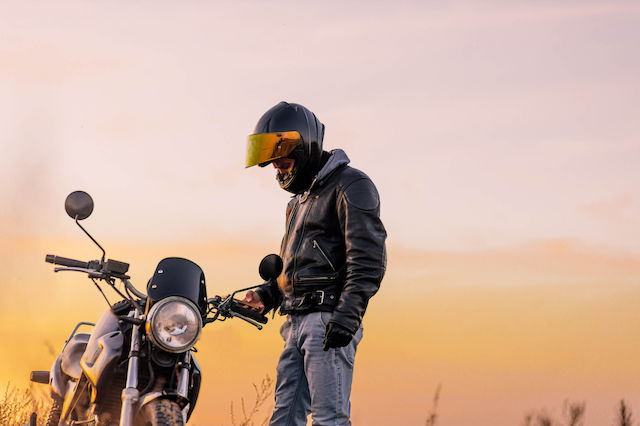
If we start with the full-face helmets, these are the most common choice among motorcycle riders as they cover the entire head and offer full protection
In addition to basic coverage, they provide protection at the back which protects part of the neck as well as the chin. The eyes could not be left unprotected, and for this reason there is a special opening visor.
# Suitable for use with all types of motorcycles, both small and large displacement. Additionally, they are ideal for long distances and travel.
2. Jet (open face)
Jet motorcycle helmets, also known as open face or three-quarter helmets, are a popular type of helmet that offers partial protection to the rider's head, covering the back and the sides, leaving the face uncovered. This can offer riders more freedom while riding but makes them vulnerable in the event of an accident.
# Suitable for use on small and medium displacement motorcycles that move within the city at low speeds.
3. Flip up
Flip up motorcycle helmets offer flexibility in use and combine the advantages of a full face and an open face helmet. Both helmet styles are combined in one design, providing both full protection and comfort for the rider.
They are quite safe when closed, almost like full face helmets, and at the same time convenient since, depending on the route or the rider's mood, they can also be used open.
# Suitable for use on large displacement motorcycles, ideal for long distances.
4. Modular
Modular motorcycle helmets also offer flexibility in use like the Flip up, combining the advantages of a full face and an open face helmet. The only difference is that their front part does not move upwards like the Flip up, but is completely removable.
# Suitable for use on large displacement scooters & sport touring motorcycles, ideal for the city as well as medium distances.
5. Motocross
Motocross helmets are specialized helmets designed specifically for motocross and enduro use. They have unique features that make them ideal for the demanding conditions of the off-road environment.
They cover the entire head and chin, and have a small visor for protection from the sun, dirt, and mud.
Unlike full face helmets, off road helmets have a large opening in the eye area for better field of vision, intended for use with special goggles or motorcycle masks. When used together with a mask, they provide extremely high protection.
# Suitable for off-road use on off road routes as well as on motocross tracks.
6. On-Off
On-Off motorcycle helmets, also known as adventure helmets, are designed for riders who want to enjoy both on-road and off-road riding. These helmets combine the features of full face helmets with those of motocross helmets, offering a versatile and multi-dimensional protection tool.
Differences by Helmet Type
Choose the right type of helmet based on your needs!
➡ Construction Materials
Now that you know all the types of helmets, their pros and cons, let's see what else you need to know before choosing the ideal helmet for you.
The construction material plays a significant role in your choice, as motorcycle helmets have a durable outer shell that protects not only from small objects that may be "thrown" while riding, but mainly from possible impacts.
They are usually made either from simple thermoplastics or from more complex materials such as carbon, each of which offers the helmet different durability and lifespan. Let's take a look at the most popular construction materials available right now.
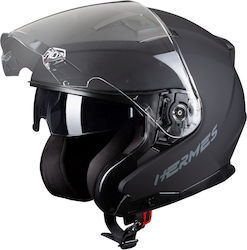
- Polycarbonate helmets: They are affordable and durable, but are usually heavier compared to other materials.
- Fiberglass helmets: They are lighter than polycarbonate helmets and offer better energy dispersion in case of impact.
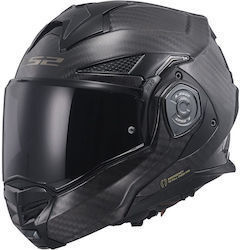
- Carbon fiber helmets: They are the lightest and most durable, but also the most expensive.
-
 Carbon
-
 Fiberglass
-
 Thermoplastic

➡ Certification
Additionally, it is important to choose a helmet that has been certified by reliable organizations such as the DOT (Department of Transportation) of the United States and the ECE (Economic Commission for Europe) of the UN. These certifications mean that the helmet has undergone rigorous testing and has been deemed safe for use on the road.
Furthermore, regarding UN certifications, there is now a new, stricter certification, the ECE 22.06, which has replaced the old ECE 22.05 and requires helmets to meet higher safety standards, as it requires and checks 18 impact test points on helmets instead of the previous 6.

➡ Application
The most important criterion for buying a helmet is the proper fit on your head.
As with all clothing and accessories, the helmet must fit properly to provide you with the best possible protection and comfort for long-term use. A helmet that is too large may move or rotate significantly around your head, leaving you unprotected in critical areas.
Similarly, a helmet that is too small may cause pain or pressure on specific points of your head, which can result in headaches, ear pain, etc. That’s why we have written a dedicated guide for you, which will help you step-by-step to choose the right helmet size.
➡ Extra Features
When comparing models, the detail lies in the equipment. See which features will make your daily life on the bike much easier:
- Internal sun visor (Sun Visor): A second, tinted shield hidden inside the helmet that drops down with a lever. It saves you the hassle of wearing sunglasses inside the helmet and is a lifesaver for the Greek sun.
- Anti-fog membrane (Pinlock): The Pinlock is an extra, flexible lens that attaches inside your main visor. It creates a "double glass" that 100% prevents your visor from fogging up from your breath in winter or rain. If you ride in winter, you need to have it.
- Prescription glasses slot: If you wear prescription glasses, look for helmets that mention they have special grooves (Glasses Grooves) in the padding. This way, the arms of your glasses will fit without pressing on your temples.
- Removable and washable interior: The inner lining (pads) should be fully removable. In the summer you will sweat, so being able to remove and hand-wash them keeps your helmet clean and odor-free.
- Intercom slot: This means the helmet has ready-made, internal recesses in the ear area to place the speakers and wires of a Bluetooth system, without them pressing on your head.
- Integrated Bluetooth: Some premium helmets come with the Bluetooth system pre-installed from the factory or are designed exclusively for a specific intercom model. It allows you to listen to GPS instructions, answer calls, or talk to your passenger at the press of a button.
➡ Conclusion
All of the above are the most important features that will help you decide which is ultimately the ideal helmet for you.
What you need to keep in mind once you decide is that a good helmet is one that:
- fits perfectly on your head, is certified safe,
- does not strain your neck
- has the features that you consider essential for riding your motorcycle
So, take some time to search a bit more and find the right one for you, it’s worth it!
# Be safe and enjoy the ride
Relevant Articles

What are the best motorcycle helmets?
Buying Guide: How to Choose the Right Motorcycle Protectors
Buying Guide: How to Choose the Right Rider Backpack
Be the first to leave a comment!