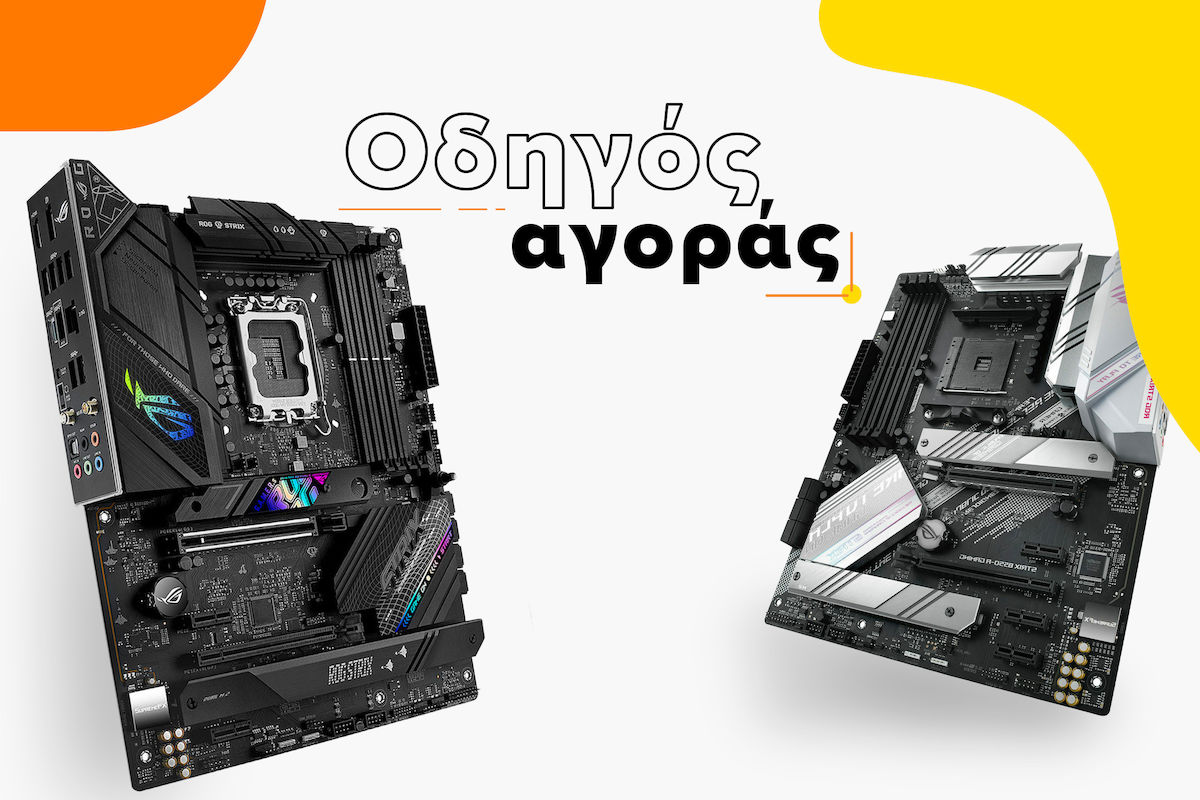

Οδηγός Αγοράς Motherboard
Πώς να επιλέξεις την κατάλληλη μητρική κάρτα

Η μητρική κάρτα motherboard ή μητρική πλακέτα είναι ο κεντρικός κόμβος ολόκληρου του υπολογιστή και η κινητήρια δύναμη πίσω από όλο το υλικό του. Σαν ένας καλός μαέστρος ορχήστρας, συντονίζει όλα τα εξαρτήματα του μηχανήματος όπως η μνήμη RAM, η Κάρτα Γραφικών, ο Επεξεργαστής, ο SSD κ.α για να λειτουργούν αρμονικά μεταξύ τους.
Η μητρική πλακέτα κατανέμει την ηλεκτρική ισχύ από το Τροφοδοτικό στα εξαρτήματα του υπολογιστή, παρέχοντάς τους την ισχύ που χρειάζονται για να λειτουργήσουν. Επιτρέπει επίσης σε όλα τα εξαρτήματα να επικοινωνούν μεταξύ τους, έτσι ώστε ο υπολογιστής να μπορεί να λειτουργεί ως ένα ενιαίο σύστημα.
Για παράδειγμα, εάν θέλετε να ανοίξετε ένα έγγραφο που είναι αποθηκευμένο στον SSD σας, η μητρική πλακέτα θα κατευθύνει τη CPU να διαβάσει δεδομένα από τον SSD με τη βοήθεια της RAM και να τα επεξεργαστεί, ώστε να μπορεί να τα εμφανίσει στην οθόνη σας.
Ανεξάρτητα από την πολυπλοκότητά τους, όλες οι μητρικές έχουν ορισμένα κοινά χαρακτηριστικά, όπως υποδοχές RAM, υποδοχές PCIe, θύρες SATA, θύρες USB, υποδοχές τροφοδοσίας και υποδοχές ήχου. Κάθε τύπος σύνδεσης διασφαλίζει ότι διαφορετικά εξαρτήματα μπορούν να συνδεθούν εύκολα στην πλακέτα χωρίς να χρειάζεται να χρησιμοποιήσετε πρόσθετα καλώδια ή προσαρμογείς.
Βασικά σημεία επιλογής μιας Μητρικής Πλακέτας

Υποδοχή CPU ή CPU Socket
Η υποδοχή της CPU είναι το σημείο στο οποίο τοποθετείται ο εγκέφαλος ολόκληρου του συστήματος. Έχει σχεδιαστεί με τρόπο που είναι πολύ εύκολο να εγκατασταθεί ο επεξεργαστής. Απλώς τοποθετήστε τον στην υποδοχή με τη σωστή φορά και ασφαλίστε με τον μοχλό. Ο επεξεργαστής θα πρέπει να ενσωματώνει το ίδιο Chipset με αυτό που υποστηρίζει η μητρική πλακέτα. Παράδειγμα, οι επεξεργαστές με Socket 1700, κουμπώνουν στις μητρικές που διαθέτουν υποστήριξη για το συγκεκριμένο Socket.
Ένας δευτερεύον παράγοντας είναι το μοντέλο του Chipset της μητρικής που συνοδεύεται από διαφορετικά χαρακτηριστικά και επιλέγεται ανάλογα με τη χρήση που προορίζεται ένας υπολογιστής. Στο συγκεκριμένο παράδειγμα μπορούμε να διαπιστώσουμε ότι τα συμβατά Chipset για το Socket 1700, είναι τα Ζ790, B760, Z690.
Συνήθως το πρώτο γράμμα, στην περίπτωση μας το Z και το Β, υποδηλώνουν ένα σύνολο χαρακτηριστικών που διαθέτει το Chipset. Για παράδειγμα, το Z (790/690) χαρακτηρίζει τις μητρικές υψηλών επιδόσεων που θα μπορούσαν να ταιριάξουν στους Gamers και στους Overclockers. Το Β(760), απευθύνεται σε πιο casual users και συνήθως είναι οικονομικότερες.
Aν σκέφτεσαι να κάνεις overclock, δεν μπορείς να διαλέξεις οποιαδήποτε μητρική και επεξεργαστή, αφού ο δεύτερος θα χρειαστεί να είναι ξεκλείδωτος. Για επεξεργαστή Intel, πρόσεξε ο τίτλος του να έχει στο τέλος το γράμμα Κ, ενώ η μητρική να διαθέτει chipset με το αρχικό Ζ όπως προαναφέραμε. Με την AMD τα πράγματα είναι πιο απλά, αφού όλες οι πρόσφατες γενιές επεξεργαστών της έχουν τη σχετική δυνατότητα, ενώ από πλευράς μητρικών, κοινά chipsets όπως το B650 ή το νέο B850 θα ταιριάξουν ιδανικά.
Για ευκολία, αυτός ο πίνακας συγκεντρώνει όλη την πληροφορία που χρειάζεσαι για να κάνεις την κατάλληλη αντιστοίχιση ανάλογα αν διαθέτεις AMD ή Intel επεξεργαστή.
Intel
AMD
Skroutz Tip: Για καλύτερη σταθερότητα, αν έχεις σκοπό να επενδύσεις σε ακριβό, υψηλών επιδόσεων επεξεργαστή ή και για overclocking, αξίζει να δώσεις προσοχή στο VRM της μητρικής κάρτας.
Το VRM, ή η μονάδα ρυθμιστή τάσης, είναι ζωτικής σημασίας για τον έλεγχο και τον «καθαρισμό» της ισχύος της CPU σε όλα τα σενάρια, πράγμα που σημαίνει ότι τα VRM υψηλότερης ποιότητας είναι γενικά καταλληλότερα για επεξεργαστές υψηλών επιδόσεων που ανεβάζουν θερμοκρασία ή και που απαιτούν σταθερότητα στο overclocking

Μητρικές για Hardcore Gamers και Overclockers για AMD επεξεργαστές (Socket AM5)

Μητρικές για Hardcore Gamers και Overclockers για Intel επεξεργαστές (Socket 1700)


Υποδοχές RAM ή RAM Slots
Οι υποδοχές RAM είναι τα σημεία όπου τοποθετείτε τη μνήμη RAM. H RAM είναι υπεύθυνη για την αποθήκευση πληροφοριών που πρέπει να προσπελαστούν γρήγορα. Με απλά λόγια, όσο μεγαλύτερη μνήμη, τόσες περισσότερες εργασίες μπορούν να πραγματοποιηθούν ταυτόχρονα και με μεγάλη ταχύτητα.
Το σύγχρονο πρότυπο για τη μνήμη RAM είναι το DDR5. το οποίο είναι και υποχρεωτικό αν επιλέξεις τις νέες πλατφόρμες της AMD (AM5) και της Intel (LGA 1851). Το παλαιότερο DDR4 παραμένει μια εξαιρετική και οικονομική λύση (Value for Money), αλλά περιορίζεται πλέον σε παλαιότερα sockets (όπως το AM4) ή σε συγκεκριμένες budget μητρικές του socket LGA 1700 της Intel.
Κάθε μητρική αναφέρει τη μέγιστη χωρητικότητα RAM που μπορεί να υποστηρίξει, πόσα Slots έχει αλλά και την έκδοση τους (DDR4 ή DDR5). Το τελευταίο είναι αυτό που σε ενδιαφέρει περισσότερο, καθώς για να πετύχεις μέγιστη απόδοση, είναι προτιμότερο να συνδυάζεις τις μνήμες σου σε ζευγάρια (dual channel). Δηλαδή, αν ο στόχος σου είναι τα 32GB, είναι καλύτερο να συνδυάσεις δύο των 16GB παρά μία των 32GB.
Tip: Οι μνήμες DDR4 και DDR5 έχουν διαφορετικές υποδοχές, επομένως μια μητρική DDR5 δεν μπορεί να δεχτεί DDR4 μνήμες και το αντίστροφο.

Οδηγός τοποθέτησης RAM στην μητρική κάρτα
Υποδοχές PCIe
Οι υποδοχές PCIe είναι τα σημεία που συνδέετε κυρίως την κάρτα γραφικών σας αλλά και άλλες κάρτες επέκτασης. Το πιο διαδεδομένο πρότυπο PCIe που διαθέτουν οι σύγχρονες κάρτες γραφικών, είναι το PCIe 4.0. Προσφέρει διπλάσια ταχύτητα σε σχέση με το PCIe 3.0. Αυτό σημαίνει ότι οι κάρτες γραφικών που χρησιμοποιούν PCIe 4.0 μπορούν να μεταφέρουν δεδομένα με διπλάσια ταχύτητα σε σχέση με τις κάρτες γραφικών που χρησιμοποιούν PCIe 3.0 με αποτέλεσμα να μπορεί να βελτιωθεί η απόδοση των παιχνιδιών και των εφαρμογών που απαιτούν υψηλή απόδοση γραφικών.
Μέσα αποθήκευσης
Κάθε υπολογιστής χρησιμοποιεί χώρο αποθήκευσης, είτε πρόκειται για SSD 2,5" ιντσών στις SATA θύρες είτε για M.2. Με την πτώση των τιμών στους SSD, δεν θα αναφερθούμε πλέον στους HDD, καθώς πρόκειται για παλαιότερη τεχνολογία που όλο και περισσότερο εγκαταλείπεται ενώ η χρήση της περιορίζεται για χρήσεις Back up, καταγραφικών κλπ.
Αυτό που σε ενδιαφέρει στη μητρική είναι να διαθέτει αρκετές υποδοχές SATA για τους 2.5” SSD που θες να τοποθετήσεις, αλλά και υποδοχές για M.2 SSD. Oι τελευταίοι είναι πιο σύγχρονοι και γρηγορότεροι από τους 2.5" SSD. Επίσης, καταλαμβάνουν λιγότερο χώρο καθώς ενσωματώνονται στη μητρική καθιστώντας τους σχεδόν αόρατους τις περισσότερες φορές.
Το πιο διαδιδόμενο πρωτόκολλο επικοινωνίας στους M.2 είναι το PCI Express 4.0 ενώ την πρόσφατη εμφάνιση του έκανε και το PCI Express 5.0. Το PCIe 4.0 προσφέρει μέγιστη ταχύτητα μετάδοσης δεδομένων 16 GT/s (gigatransfers ανά δευτερόλεπτο), ενώ το PCIe 5.0 προσφέρει διπλάσιο εύρος ζώνης (έως 32 GT/s), επιτρέποντας στους νεότερους high-end M.2 SSDs να αγγίζουν κορυφαίες ταχύτητες ανάγνωσης και εγγραφής. Αυτό σημαίνει ότι το PCIe 5.0 είναι διπλάσια γρήγορο από το PCIe 4.0 αλλά και αρκετά ακριβότερο προς το παρόν. Παρόλα αυτά είναι μια καλή επιλογή Μητρικής με το συγκεκριμένο χαρακτηριστικό καθώς την καθιστά Future Proof τον καιρό που το PCIe 5.0 θα είναι πλέον το νέο standard.
Σε ό,τι αφορά την ταχύτητα, οι δίσκοι PCIe 4.0 έχουν μέγιστη συνεχή ταχύτητα ανάγνωσης/εγγραφής 5.000MBps, ενώ οι δίσκοι SATA III έχουν μέγιστη συνεχή ταχύτητα ανάγνωσης/εγγραφής 600MBps. Αυτό σημαίνει ότι οι δίσκοι PCIe 4.0 είναι πάνω από οκτώ φορές πιο γρήγοροι από τους δίσκους SATA III.
Απαραίτητη προϋπόθεση για τη χρήση των παραπάνω, είναι η υποστήριξη από τη μητρική.
Οδηγίες για σωστή τοποθέτηση ενός M.2 αποθηκευτικού μέσου
Οδηγίες για σωστή τοποθέτηση ενός SSD 2.5" αποθηκευτικού μέσου
Μητρικές για casual χρήστες με Intel επεξεργαστές (Socket 1700)

Πίσω I/O Panel
Υπάρχει το πίσω πάνελ I/O της μητρικής πλακέτας. Εδώ θα βρείτε όλες τις κύριες συνδέσεις εισόδου και εξόδου και τα σημεία σύνδεσης όλων των εξωτερικών καλωδίων.
Αναλόγως με τα περιφερειακά που θες να συνδέσεις στο PC σου, χρειάζεται να βεβαιωθείς πως υπάρχουν και οι κατάλληλες θύρες στη μητρική σου. Για παράδειγμα, αν πρόκειται να αγοράσεις επεξεργαστή που έχει ενσωματωμένα γραφικά (integrated graphics) έλεγξε ότι υπάρχουν οι κατάλληλες συνδέσεις HDMI, Display Port ή και τα δύο για την οθόνη που θες να τοποθετήσεις.
Παράλληλα, προτίμησε να έχει αρκετές θύρες USB για όσα θέλεις να συνδέσεις, ενώ αν έχεις συσκευές που είναι συμβατές με την τελευταία γενιά USB, μπορείς να προτιμήσεις να διαθέτει USB 3.2, ώστε να εκμεταλλευτείς τη βελτιωμένη ταχύτητα.

Μητρικές για casual χρήστες με AMD επεξεργαστές (Socket AM4 ή AM5)


Έξυπνος Φωτισμός
Επειδή πολλοί builders ενδιαφέρονται και για την εμφάνιση πέρα από την απόδοση του PC τους, υπάρχουν μητρικές που διαθέτουν φωτισμό RGB. Αν από την άλλη θες να συνδέσεις εξαρτήματα όπως fans, τα οποία έχουν φωτισμό RGB 12v ή aRGB 5v, φρόντισε η μητρική σου να έχει τις αντίστοιχες υποδοχές RGB Headers για να μπορείς να τα ελέγχεις.

Νέες Τεχνολογίες που αξίζει να προσέξεις
Ασύρματη Δικτύωση (Wi-Fi 7)
Αν δεν θέλεις να τρέχεις καλώδια Ethernet, πολλές μητρικές έρχονται με ενσωματωμένο Wi-Fi (θα το καταλάβεις από τη λέξη "WIFI" στο όνομα του μοντέλου). Οι νεότερες high-end μητρικές ενσωματώνουν το πρότυπο Wi-Fi 7, το οποίο προσφέρει εξαιρετικά χαμηλό latency και ταχύτητες που αγγίζουν τα επίπεδα του ενσύρματου δικτύου.
Μητρικές με "Κρυφά Καλώδια" (Back-Connect / BTF / Project Zero)
Μια ολοκαίνουργια τάση στο PC building είναι οι μητρικές με κρυφές συνδέσεις (όπως οι σειρές ASUS BTF, MSI Project Zero και Gigabyte Stealth). Σε αυτές, όλες οι υποδοχές για τα καλώδια (τροφοδοσία, SATA, fans) βρίσκονται στο πίσω μέρος της πλακέτας για ένα απόλυτα καθαρό οπτικό αποτέλεσμα.
Προσοχή: Αν επιλέξεις μια τέτοια μητρική, θα πρέπει να σιγουρευτείς ότι και το κουτί (PC Case) που θα αγοράσεις είναι ειδικά σχεδιασμένο για να υποστηρίζει back-connect μητρικές.
Σχετικά Άρθρα
Τροφοδοτικά Υπολογιστή: Αναλυτικός Οδηγός Αγοράς
Τα καλύτερα Τροφοδοτικά Υπολογιστή της αγοράς

Οδηγός Αγοράς για Κουτιά Υπολογιστών
Άφησε πρώτος το σχόλιό σου!