

Which Milk Frother Should You Choose? Everything You Need to Know!
A milk frother seems like a simple purchase: pour in the milk, press a button, and you’re done! In practice, though, the options vary more than you might expect. Some frothers heat the milk, others only froth it, and some can even make cold foam. Plus, the capacity listed on the box isn’t the amount of foam you’ll actually get.
That’s why we’ve put together the five decisions that really matter, so you know what to look for before choosing. Let’s take a detailed look at them all and answer any questions you may have!
1. Type of device: What do you want it to do?
The first and most important decision is how the foam will be made. It depends on whether you want the milk heated in the same device, how much counter space you have and how often you’ll use it.
Classic milk frothers consist of a jug and a base, which heats and froths the milk at the touch of a button. They have a whisk inside the jug and most models switch off automatically when they’re done. This means you don’t have to stand over them, and the result is similar every time. On the other hand, the base and jug take up permanent space on the counter.
➡ Choose one if: you make cappuccino or latte almost every day and want hot frothed milk ready to use, without a saucepan or having to keep an eye on it.


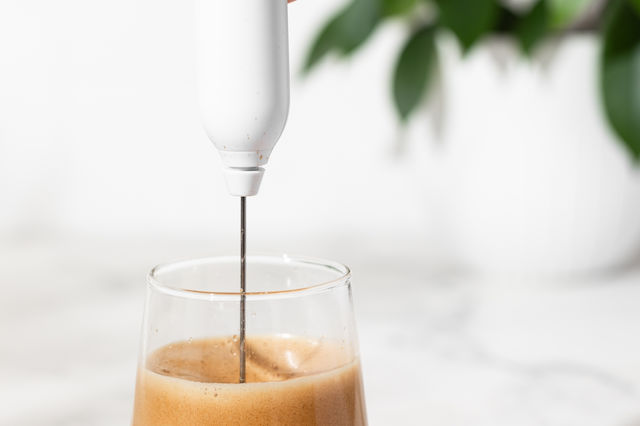
On the other hand, you can use a handheld milk frother. It froths quickly, but doesn't heat the milk: if you want hot foam, you need to heat the milk first in a saucepan or in the microwave. It fits easily in a drawer, and there are also battery-powered models.
➡ Choose it if: you have limited kitchen space or want something that's easy to take with you.


SkroutzTip: For hot milk foam in a jug, start with milk straight from the fridge. Cold milk usually produces more stable foam.
2. Hot, cold, or both?
Not all devices do the same thing. Before looking at the other features, think about which drinks you want to make, as this will determine which programs you need.
- Hot milk froth: the basic option for cappuccinos and lattes. The device heats and froths the milk at the same time.
- Cold milk froth: ideal for freddo cappuccinos and drinks made with cold milk. Most milk frothers with a jug support this, but some models only froth hot milk, so check the specifications if this feature matters to you.
- Hot milk without froth: useful for cocoa, biscuit-flavored drinks, or coffee with hot milk when you don’t need froth.
- Hot chocolate: some devices have a separate program with a different whisk for thicker drinks. These are known as “4-in-1” models, combining all four options above.
➡ Choose a device with multiple programs if: you want to make a variety of drinks, not just hot cappuccinos.
In addition to the programs, it’s worth checking a few small details that make the device easier to use: automatic shutoff when the milk reaches the right temperature, a base that lets you lift the jug from any side (a 360° cordless base), a removable whisk that’s easier to clean, and, on some models, an indicator or display showing which program is running.
SkroutzTip: Don’t assume that “4 functions” means the same thing on every model. Check the specifications to see exactly which programs the device you’re interested in offers.
3. Capacity: How much milk will you froth?
Capacity is measured in ml and is one of the most important criteria, but it requires a little attention. The figure you see usually refers to the maximum amount of milk that can be heated. Froth takes up about twice the volume of milk, so when making frothed milk, the jug is usually filled about halfway. For this reason, many manufacturers provide two markings: one for heating and one for frothing.
- Appliances up to 240 ml (up to 2 servings) are the smallest. They’re enough for one or two drinks at a time and take up less space on the counter and in the cupboard.
- Appliances with a capacity of 241–400 ml (2 to 3 servings) are the mid-range option. They’re suitable for a couple or a small household, without needing a second batch.
- Appliances with a capacity of 401 ml or more (4+ servings) are ideal for larger households or anyone who makes several drinks in a row.
➡ Choose a smaller capacity if: you’re the only one who drinks coffee with frothed milk and don’t want the appliance taking up space.
➡ Choose a larger capacity if: you make drinks for family or guests and want to prepare them all in one go.
In the table below, you can see approximately how much milk foam each range produces:
4. Interior surface: Non-stick coating or stainless steel?
The inside of the jug comes into contact with hot milk, so it affects how easy the appliance is to clean and how well it holds up over time. Most appliances have a non-stick coating, but you’ll also find models with a stainless steel interior.
- A non-stick coating prevents milk from sticking to the sides, so the jug is easier to rinse and requires less scrubbing. However, it needs to be handled with care: wire scourers and abrasive sponges can scratch it and wear it down over time.
- A stainless steel interior has no coating that can wear off, so it can withstand more scrubbing. However, if milk dries or burns onto the bottom, it usually takes more effort to clean.
➡ Choose a non-stick coating if: you want to clean the jug quickly after each use and wash it with a soft sponge.
➡ Choose a stainless steel interior if: you don’t like the idea of a coating that wears down and don’t mind cleaning it a little more carefully.
SkroutzTip: Whichever material you choose, rinse the jug immediately after use. Dried milk is much harder to remove from the sides.
5. Cleaning: What can go in the dishwasher?
A milk frother needs to be cleaned after every use, and that ultimately determines whether you’ll use it every day. Before you buy, check which parts of the appliance are dishwasher-safe and which aren’t.
- The base containing the electrical components must never be immersed in water. Wipe it with a damp cloth on all models.
- Models with dishwasher-safe parts, such as the whisk or lid (and, in some cases, the jug itself), save you from washing them by hand—especially the whisk, which has hard-to-reach corners.
- All parts of other models must be washed by hand. That’s not a problem, as long as you know in advance.
➡ Choose dishwasher-safe parts if: you have a dishwasher and plan to make frothed milk almost every day.
SkroutzTip: Dishwasher-safety information is listed in the product specifications and the manufacturer’s instructions. Check both before putting any part of the appliance in the dishwasher.
Explore models with dishwasher-safe parts:


Don’t forget! By considering the features above and choosing the ones that suit your needs, you can find the ideal milk frother. Before you decide, take a look at other users’ reviews to learn about their experiences, which may help you make your choice much more easily. You can also check out the guide to the best milk frothers.
This article was created with the help of AI and reviewed and edited by the Skroutz team.
Relevant Articles
The Best Frappé Makers for Every Need
Τα καλύτερα Αξεσουάρ Καφετιέρας για κάθε χρήση

The Best Electric Coffee Grinders for Every Use
Be the first to leave a comment!