

Dishwashers: Comprehensive Buying Guide
Everything you need to know before buying a dishwasher!
Food is a pleasure, a ritual one could say. But just when you’ve enjoyed your meal, you hear the call of the dishes waiting for you to…be washed!
Don’t worry though! This guide will help you choose the right dishwasher for your needs, giving you useful information and tips.
➡ And before we look at all that, don’t forget that with purchase through Skroutz you get:
- Free delivery to your floor (yes, even to the 5th).
- Free returns in case you change your mind.
- 2-year warranty for any eventuality (repair, replacement, or refund) so you can have peace of mind.
- After-sales support for whatever you need after your purchase.
In short, you shop without stress.
So, let’s now go through everything in detail, so that every question is answered!
Type (installation)
To begin with, you will need to choose which type of dishwasher suits - and, above all, fits - in your kitchen. Dishwashers are divided into 3 types based on their construction and installation method:
1. Built-in
- This type is installed inside the cabinets and becomes one with the kitchen. Choose it if style and appearance are important to you and you either want to “hide” the appliance or save space.
- You can find both built-in dishwashers and fully built-in dishwashers, with the latter featuring internal control buttons and a front panel that can be replaced with the material of the rest of the cabinets, so it blends seamlessly with the kitchen.
- Finally, this type of dishwasher requires a permanent connection to a water supply and must be installed by a professional.
2. Freestanding
- Unlike a built-in model, a freestanding dishwasher does not fit inside a cabinet, while the installation and water connection process is simpler.
- Such dishwashers are usually placed low in a space between or next to cabinets, and many have wheels so they can be moved easily. Also, their front panel and buttons are visible.
Skroutz tip: Most freestanding dishwashers have a removable top (lid) so they can fit under more cabinets.
3. Countertop
- As the name suggests, a countertop dishwasher usually has a small capacity and can be placed on the counter or another surface.
- Its connection to a water supply is much simpler, with no need for tools, while the fact that it does not take up cabinet space is very important, especially for smaller kitchens.
- At the same time, due to its placement, it is suitable for those with muscle problems, since you do not need to bend down to fill or empty it.

Width
Once you have settled on the right type of dishwasher for your needs, make sure the appliance will fit into your furniture or your kitchen design by checking its size. The main dimension you should pay attention to is the width of the dishwasher.
In built-in and freestanding models, the most common are:
- 60 cm wide dishwashers. for larger households, which more easily fit large cookware such as pots and
- 45 cm wide dishwashers for smaller households and more limited spaces.
While 55 cm wide dishwashers are those placed on the kitchen counter.
Size (in place settings)
In terms of capacity, dishwashers for 9 - 12 place settings are ideal for singles or couples who do not cook every day, while dishwashers for 13 place settings and above are suitable for large families that use many and large utensils throughout the day.
If your daily dishwashing needs are very limited or you want a small dishwasher for the office, there are dishwashers for up to 8 place settings.
Noise
dB (decibels) indicate how loud the sound produced by the appliance is when it is operating. So if volume is important to you, all you have to do is look for a low-noise dishwasher. As a general rule, remember that appliances with noise levels below 45 dB are relatively quiet, while those exceeding 50 dB (about the sound of rain, for example) will become increasingly less discreet in operation.
Programs
Depending on the temperature, water pressure, and time, dishwashers have washing programs to meet various needs. Each manufacturer may give different names to each washing function, but the 3 most common programs are:
Automatic: Dishes are washed at 45 - 65 degrees and the wash lasts a little over 1.5 hours. Ideal for common daily washes.
Intensive: The average temperature is 70 degrees and the wash lasts a little longer than the automatic program. Ideal for tough cleanings or even for disinfecting baby utensils.
Economical or Green: The temperature drops to 50 degrees and the time exceeds 2 hours. Ideal in cases where you are more concerned about electricity consumption rather than operating time.

Additional programs & functions
Many manufacturers offer additional functions, the most popular being:
- Special function for protecting delicate glassware. You can find it as Glass Protect.
- Soil sensor so that the water is adjusted according to how dirty the dishes are, for savings (Sensor).
- Wash with half load, for saving water and electricity (Half Load).
Beyond washing programs, many next-generation dishwashers offer additional technologies to meet even the most demanding user’s needs. The most common are:
- WiFi connection: Control of the dishwasher through a mobile phone or smart hub to connect with the ecosystem of a smart home.
- ExtraDry: Extra drying so you don’t need to dry the water off the dishes with paper or a towel after washing.
- Start Time Scheduling: Selection of the exact time you want your appliance to start operating. It is excellent for cases when you are away from home for many hours or want the washing to start at night.
- Favorite Program Memory: Memorizes in memory the washing conditions (temperature, pressure, drying) you prefer and recalls them at the press of a button.
Skroutz Tip: You don’t need to get lost in the number of programs and functions when choosing the right appliance - unless you need them all. Prefer the dishwasher that supports your everyday needs, even if it doesn’t have many extra functions.
Energy Class

The information shown on the energy label of a dishwasher, along with the filters on our website, can guide you so you can understand how much electricity it consumes in use. Indicatively, the letter A indicates the lowest possible consumption.
The other details found on the energy label are:
- The QR code you can scan for additional information
- The supplier's name
- The energy consumption of the specific model
- Additional information about the appliance's features
To learn everything about the new energy label and what changed, you can read our related article.
Useful tips for dishwashers
How do I clean the dishwasher?
See below some useful tips to enjoy your dishwasher to the fullest.
- Remember to clean the filter and the rotating arms every 6 months. Finally, don’t forget to clean the door rubber seal from food residues at least once a month.
- To get rid of odors and residues, first run an empty cycle with a cup of vinegar to dissolve all the grease that has built up. Then, run a second cycle with baking soda to remove any remaining smell. The above process should be done with high-temperature water (above 60 degrees).
- For better results, the dishwasher detergent needs to be placed in the dishwasher’s special compartment and not simply inside the appliance.

Frequently Asked Questions
Skroutz answers the most common user questions about the daily use and installation of dishwashers:
Which utensils should not go in the dishwasher?
It is advisable to avoid putting crystal, non-stick, and cast iron utensils in the dishwasher unless recommended by the manufacturer, as the washing process can damage them. Additionally, wooden surfaces, utensils with thin plastic parts, and sharp knives can be affected by the temperature and operation of the dishwasher.
How long does a wash cycle usually last?
It depends on the program you choose and the technology of the dishwasher. On average, wash cycles last between 1.5 to 4 hours, depending on the settings you have selected.
What is the best position for the dishwasher?
It is preferable to place it as close as possible to your sink. It is easier to connect to the water supply, and it will also be close to the dirty dishes for easier access. As for the side of placement, it is better to place it opposite to your dominant hand. That is, if you are right-handed, choose the left side. Trust me, it will make your life much easier.
Don't forget! By taking into account the above individual characteristics and combining those that suit your needs, you can arrive at the ideal choice for you. Before deciding, you can also take a look at the reviews of other users, to see their opinions and experiences, which can help you reach a final decision much more easily.
You can also take a look at the guide with the top dishwasher picks, where you will find the best ones based on user feedback.
Relevant Articles
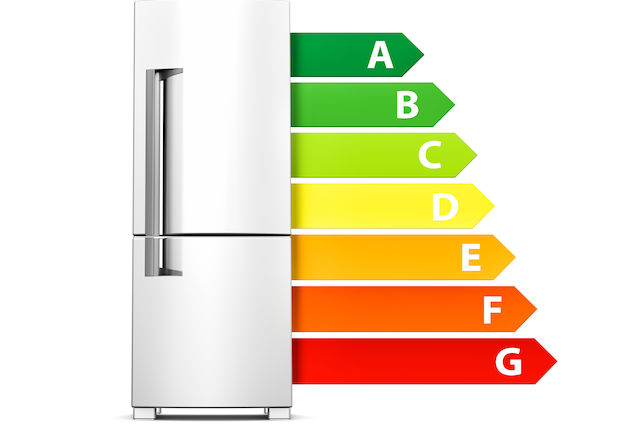
Energy Label for Refrigerators: How to Read It Correctly!

The best kitchen hoods

Home appliances: tips for efficient use!

Be the first to leave a comment!