

Dehumidifier Buying Guide
Everything you need to know before buying a dehumidifier for your space!
The dehumidifier is a device that has entered our lives to provide a more pleasant and healthy atmosphere free from unpleasant humidity. So whether you are looking for a new one, or it is the first time you will buy a dehumidifier for your space, let’s see what you need to know and what to look out for!
1. Type
Initially, we encounter 3 main types of dehumidifiers. Compressor dehumidifiers are the most common choice and are more efficient in high temperatures, suitable for larger spaces, and absorb more moisture. Thermoelectric dehumidifiers (Peltier), on the other hand, are quiet, economical, and ideal for small spaces. Meanwhile, dehumidifiers that use Zeolite (Desiccant) as a dehumidifying medium are suitable for low temperatures and work well in spaces without any heating, requiring constant dehumidification.
✨ Dehumidifiers with compressor | For large spaces
A dehumidifier with compressor works roughly like a household air conditioner. In essence, the device absorbs moisture from the space and condenses the humid air in its special cooling unit, thereby removing the water from the passing air. The water that has been absorbed is collected in the device’s tank, while at the same time the air is cooled and, after processing, returns to the space 2-3 degrees warmer. This dehumidifier offers a more immediate result and is more economical to operate in spaces that have heating.
Compressor dehumidifiers are suitable for use in spaces that are heated sufficiently and maintain a temperature above 15°C throughout the day.
Top Picks in Compressor Dehumidifiers


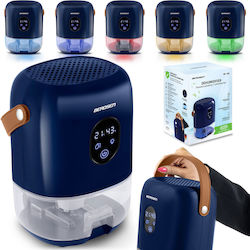
✨ Thermoelectric Dehumidifiers (Peltier) | For small spaces
Thermoelectric dehumidifiers, are known mainly for their small size. Such a dehumidifier is similar in concept to a compressor dehumidifier, but it is based on the Peltier thermoelectric effect, from which it also takes its name. In this effect, an electric current passes through two different materials joined at one point and, depending on the direction of the current, that point is either heated or cooled. In the case of the dehumidifier, the humid air first enters the device and is cooled - so that it releases the water vapor and water - and then returns to the environment warmer. These dehumidifiers are usually portable, economical and more resistant to wear, while offering almost silent operation.
Thermoelectric dehumidifiers have limited dehumidifying capacity. Most models in this category can remove about 0.5lt - 0.8lt of moisture per day, which makes them suitable exclusively for very small spaces, such as a wardrobe or a small WC.
Top Choices in Thermoelectric Dehumidifiers:


✨ Zeolite Dehumidifiers (Desiccant) | For spaces without heating
A desiccant dehumidifier uses zeolite, a natural drying material with a wide range of uses. The zeolite is placed in a special tray inside the dehumidifier, through which the room air passes and the moisture is retained. Then, the drying material is heated by an internal heating element and releases the moisture, directing the water into the appliance’s tank and the dry air back into the room. Such a dehumidifier maintains its performance consistently regardless of the ambient temperature. Also, during operation it “blows” dry and warm air, which indirectly helps with heating. Finally, the drying material is regenerated so the process can be repeated, therefore the zeolite does not need to be replaced
Zeolite dehumidifiers are suitable for use in a space, room, or house where the air temperature is likely to drop below 15°C, such as a storage room, a cellar, or a garage.
Top Picks in Dehumidifiers with Zeolite


2. Dehumidification Capacity & Space Coverage
The dehumidification capacity is measured in lt/day and indicates the volume of water the device can absorb in 24 hours. It is a complex feature that depends on many factors. The most important one is the dimensions of the space for which you intend your dehumidifier.
Dimensions
The dimensions of your space play a very important role in choosing the right dehumidifier. The square meters (m²) coverage of the device shows how many times a day the dehumidifier needs to sweep the air in the space to achieve the desired dehumidification level, and thus the total operating time of the device to achieve it. The dehumidifier should be able to cover the air in your space at least 4-5 times within 8-10 hours of operation.
For homes with a fixed height of 3 meters, you can also consider the volume of your space in cubic meters (m³).
SkroutzTip: To calculate the cubic meters of your space, multiply the square meters by the height of the apartment. For example, a house of 90m² with a height of 3m has a volume of 270m³ (90m² x 3m height = 270m³).
An incorrect calculation of your needs and the parameters of your space can lead to the ineffective operation of the dehumidifier and additional costs in the operation of the device.
As a general guideline, there is the following indicative table for the square meters of the space in which the dehumidifier will operate:
*The above dimensions refer to unified spaces.
More factors that can influence the choice of the appropriate dehumidifier are as follows:
Humidity levels & orientation
Houses and spaces located near the sea, a lake, or in a mountainous area may have higher humidity levels compared to an area that is not as affected by the wet element (e.g., the city center).
Insulation
The insulation of your space plays a crucial role in choosing the ideal device. The age of the apartment, as well as the quality of the thermal insulation materials and frames, are what affect the levels of insulation. The older the space you want to dehumidify and the less the materials and frames are of good quality, the greater the dehumidification capacity the device you choose should have. Also, it is good to consider if there are focused humidity problems on walls or rooms, which require greater performance from the dehumidifier.
Temperature & usage
Spaces with lower temperatures, spaces that are not used as often, or spaces with limited access to ventilation, such as a bathroom without a window, a storage room, or north-facing rooms, may have lower temperatures, higher humidity levels, and therefore greater dehumidification needs.

3. Noise
Another important parameter for choosing the ideal dehumidifier is the noise of the device, especially if it is intended for use in a bedroom. For this reason, it is advisable to compare the noise levels during the operation of the machine. Among the different types we saw above, zeolite dehumidifiers are usually lighter and relatively quieter during operation, while the more modern compressor dehumidifiers usually have a silent mode. In any case, if quietness plays an important role for you, then it is a good idea to look for a quiet dehumidifier.
SkroutzTip: Indicatively, dehumidifiers intended for small rooms should not exceed 38-42dB at low speed, while in more powerful devices the noise level can range from 44–52dB.
4. Ionizer
Do you suffer from allergies? Does dust bother you? Do you have sensitivity to smells and unpleasant odors? Do you live in a home with elderly people or small children? Or perhaps you have a pet?
If you answered YES to one of the above questions, then an dehumidifier with built-in ionizer is for you! It is a purification filter that releases positive and negative ions, thus helping to neutralize bacteria, dust, unpleasant odors, and airborne particles. The ionizer cleans the air from odors coming from smoke or activities such as cooking, while also improving the atmosphere in spaces where people sensitive to allergies are present, such as babies or elderly people.
You will find the ionizer as a separate function (mode) in a dehumidifier.
5. Filters
In addition to the ionizer, a dehumidifier may feature a HEPA filter or a activated carbon filter, each of which helps improve air quality by focusing on different factors.
- The HEPA filter focuses on dust, pollen and mold, as well as bacteria or other airborne particles, removing them from the air entering the dehumidifier and returning it to the room free of them. Look for a dehumidifier with a HEPA filter if you suffer from allergies, asthma or other respiratory sensitivities. It is a good idea to clean the filter often (1-2 times a month) or, if needed, replace it every 6-12 months, depending on how much you use the device.
- The activated carbon filter, on the other hand, is recommended for environments where there are smokers, pets, strong odors and exhaust fumes or other harmful gases. In combination with a HEPA filter, they can provide a complete air purification solution. Look for a dehumidifier with an activated carbon filter if you have a pet at home to reduce odors from its fur and waste, if you or someone around you smokes, or in spaces with strong smells and chemicals, such as the kitchen or a storage room. This should also be replaced every 6-12 months, as its effectiveness decreases as impurities accumulate.
Find the right filter for your device:
6. Additional features & functions
For easier and more convenient operation of the dehumidifier, you can look for various extra features that make it more user-friendly and will make your life easier. Let’s take a look at them:
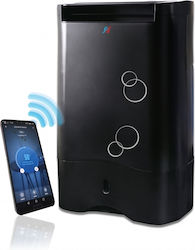
- A dehumidifier with built-in Wi-Fi gives you the ability to remotely control the device from your mobile phone via a special app. This way, you can set when you want the dehumidifier to start or stop operating, adjust the desired humidity levels you want it to reach, change modes, and even contact customer service to resolve any potential issues.
- Also, a dehumidifier with automatic restart capability will continue operating even after a possible power outage. So you don’t need to worry if you have turned it on and are away from home, nor do you need to wake up at night to turn it back on.
- Finally, if you want to enjoy continuous dehumidification without having to empty the water tank, or if you want to place the dehumidifier in a space with direct access to a water outlet, such as the bathroom, you can look for a dehumidifier with drainage connection.
7. Placement & Movement
It is advisable to place the dehumidifier in a central location within the house, in the areas that are used the most and ideally on a stable surface with a little height above the floor. Even if there is moisture in more than one area, it is not necessary to use a different device for each space. As long as the interior doors of the rooms remain open, the moisture will naturally move towards the dehumidifier to be absorbed.
If there is a specific area within the house with a focused moisture problem, you can move the dehumidifier to that spot to ensure reliable performance. For example, it may be needed in the case of a room with built-in closets that receive little to no sunlight, in the bathroom, or in some storage area - hallway. There, the dehumidifier should ideally be placed with the other doors closed to draw all the moisture. Then, after it has improved the air quality in that specific area, you can place it in the rest of the house.
Generally, compressor dehumidifiers are heavier and bulkier than those that operate with zeolite, due to the presence of the compressor - which adds about 5-6 kilograms to the device. If you intend to move it frequently, make sure that the model you choose has wheels.
8. Maintenance & cleaning
A dehumidifier is a device that directly affects the atmosphere and the quality of the air we breathe. For this reason, it is especially important to take care of its regular maintenance and cleaning. Proper cleaning of the dehumidifier contributes to the good and efficient operation of the device, while ensuring lower energy consumption and guaranteeing a longer lifespan. All this in a healthy and clean environment!
What should you do?
- Cleaning the filters: The filters should be cleaned every 2-4 weeks for continuous use, or less often depending on how frequently the device is used. After making sure the dehumidifier is turned off and disconnected from any power source, remove the filter -usually located on the back- and rinse it with lukewarm water for a few seconds. Once it is dry, you can put it back in place.
- Cleaning the water tank: It is recommended to empty the tank after each use or as soon as it is full (whichever comes first). Once a month, it is a good idea to clean it with water and vinegar or a mild soap for better disinfection and to prevent mold and bacteria from forming.
- Cleaning the external surfaces: It is a good idea to regularly clean (about once a month) the external surfaces of the dehumidifier as well, since dust can accumulate and end up in the air. Wipe these surfaces with a damp cloth and avoid using detergents.
- Checking the compressor/fan: In dehumidifiers that have a compressor or fan, it is a good idea to have them assessed once a year by a specialized technician, so that the proper operation of the device can be confirmed. Also, it is a good idea to consult a specialist whenever any malfunction is detected (more noise, unusual sounds).
- Cleaning the fins: The fins, or grilles, in a dehumidifier collect the largest amount of dust and therefore require regular cleaning, so that the air entering and leaving the machine is clean. After turning off the device, you can clean them using a vacuum cleaner and the help of the special slim suction attachment.
- Proper storage: Finally, if you are not going to use the dehumidifier for a long period of time, it is a good idea to clean it by following the steps above and store it in a dry and clean place. You can also use a protective cover for even better storage.

Frequently Asked Questions
How does a dehumidifier work?
- The basic function of a dehumidifier is to remove excess moisture from the room air, keeping it at normal levels.
- This means that it creates the conditions for a healthier environment, while removing the natural and visible signs of humidity, such as mold on the walls or condensation in the form of water droplets on the windows.
- It also helps prevent conditions caused by high humidity, such as allergies and asthma.
- At the same time, using a dehumidifier in a space during the winter months also reduces heating costs, achieving better living conditions.
You can also read the related article about how a dehumidifier works.
When do you need a dehumidifier?
- Signs of humidity: Humidity is measured in various ways, the most common being relative humidity. The ideal average relative humidity in a space ranges between 50% - 55%. Therefore, when the relative humidity in your home or space is higher than normal, that is above 55% - 60%, the use of a dehumidifier is recommended. You can check the humidity of your home or a room with a good quality humidity meter - hygrometer. Of course, if the humidity in the home is excessive, then signs of mold and the associated smell will be clearly visible to the naked eye.
- Temperature perception: In addition to visible signs of humidity, another factor that will lead you to decide to buy a dehumidifier is the feeling of temperature. The human body perceives the ambient temperature as a combination of temperature, humidity, and some other factors. Especially during the winter months, high humidity creates a feeling of intense and more penetrating cold. For example, a space with a temperature of 23°C and relative humidity of 80% is much more unpleasant than a space with 20°C and 50% relative humidity. For this reason, by adjusting humidity to lower levels, the feeling of cold is also reduced.
- Clothes drying: Finally, a common reason for using a dehumidifier is drying clothes indoors during the winter months and not only then. The use of fireplaces or environments with a lot of exhaust fumes may not allow you to hang clothes outside, even in summer. However, when you dry clothes inside the house, the humid air is also transferred to the other rooms, creating humidity. Therefore, using a dehumidifier for drying clothes can achieve the desired results faster and at low cost.
Don't forget! By taking into account the above individual characteristics and combining those that suit your needs, you can arrive at the ideal choice for you. Before deciding, you can also take a look at the reviews of other users, to see their opinions and experiences, which can help you reach a final decision much more easily.
Watch the related video with the detailed buying guide for Dehumidifiers:
Finally, you can also take a look at the guide with the top dehumidifier picks, where you will find the best options based on user feedback.
Relevant Articles

Black Friday on Dehumidifiers (2026)
The best ionizer-humidifiers and air purifiers
Why you need a dehumidifier in your life!
Be the first to leave a comment!