

Which Kitchen Sink Should You Choose? Everything You Need to Know!
The sink is perhaps the part of the kitchen you use most throughout the day. That’s why choosing one is about more than just looks: it needs to suit your countertop, fit in the cabinet below and, of course, work for the way you cook.
Materials, bowls, drainer boards, installation methods… there are lots of options, and it’s easy to get confused. That’s why we’ve gathered everything you need to know to help you choose the kitchen sink that best suits your needs. Let’s take a closer look at everything so we can answer all your questions!
1. Installation method: How will the sink sit on the countertop?
The first and most important decision is the installation method. It depends mainly on your countertop material, whether you’re renovating or simply replacing your sink, and the look you want to achieve.
➡ Top-mount sinks are the most popular, and for good reason. They’re easy to install: they fit into a cutout in the countertop, with the rim resting on top. They work with almost any countertop material, including laminate, wood, stone, and quartz. They’re also ideal for replacements: if you find a sink with a similar cutout size, you can swap it out without any major work.
Choose one if: you want a practical, affordable option that suits any kitchen, or if you’re replacing your old sink.
➡ Undermount sinks are installed beneath the countertop. With no rim, they give the kitchen a more modern, streamlined look. They’re also very easy to clean, as you can sweep crumbs and water straight from the countertop into the bowl. However, they require a countertop material that can withstand water around the cutout, such as stone or quartz.
Choose one if: you have (or are planning to install) a stone or quartz countertop and want a minimalist look.
➡ Flush-mount sinks are installed at the same height as the countertop surface. The result is striking, but installation requires a special cutout and careful work by a professional, usually as part of a renovation.
Choose one if: you’re building a kitchen from scratch and want a premium, seamless look.
➡ Sit-on sinks sit directly on a cabinet, without a countertop, and serve as the work surface themselves. They’re a classic, affordable option for storage areas, vacation homes, or utility spaces.
Choose one if: you need a quick, affordable solution for a space without a continuous countertop.
2. Construction material
The material determines how durable your sink will be, how easy it is to clean and how it will look over the years.
➡ Stainless steel sinks are the most popular and usually the most affordable option. The reason is simple: they can withstand heat and won’t break even if a heavy dish falls into them, making them one of the safest options for everyday use. On the other hand, water or limescale marks and scratches are more noticeable. They can also be a little noisier when water is running or when you place dishes inside.
Choose this if: you want good value for money and a material that suits any kitchen style.
➡ Composite granite is becoming increasingly popular, and for good reason. It is very resistant to scratches and high temperatures. It is also quieter than stainless steel, as the material itself absorbs the sound of running water and dishes. In addition, a composite granite sink is usually available in a range of colours, such as black, grey, beige and white, giving the kitchen a more modern and welcoming look.
Choose this if: you want a durable sink that coordinates with the colour of your worktop and cabinets.
➡ Porcelain sinks have a smooth, glossy surface that is very easy to clean. They are particularly suited to classic and country-style kitchens, but require a little care when it comes to hard knocks, as a heavy dish dropped suddenly can crack the sink or chip the enamel.
Choose this if: you value classic style and easy cleaning.
➡ Finally, there are also glass and stainless steel sinks, with a splashback made of safety glass. They create a distinctive, modern look, but need to be wiped frequently to prevent marks from showing.
The table below gives you a quick overview of how the main materials compare:
SkroutzTip: If you choose a dark synthetic granite sink and your local water is high in minerals, wipe the sink dry after use. This will help prevent white marks and keep its color vibrant for years.
3. Number of bowls & draining board
How many bowls do you need? The answer depends on your available space, as well as whether you have a dishwasher.
- The most popular choice is a sink with 1 single bowl, because a large bowl comfortably fits baking trays, pots and pans.
- If you want a little more flexibility, a sink with 1½ bowls combines a main bowl with a smaller one beside it. You can rinse vegetables or drain pasta in the smaller bowl when the larger one is full of dishes.
- You’ll also find sinks with 1¼ and 1¾ bowls: the fraction indicates the size of the second bowl compared with the main one.
- Finally, sinks with 2 bowls (or 2½) have two equally sized bowls. This is the classic choice for those who often wash dishes by hand and want to lather up in one bowl and rinse in the other.
Choose one bowl if: you have a dishwasher or limited space and want large cookware to fit comfortably.
Choose two bowls if: you often wash dishes by hand or cook a lot and need two work “stations.”
Many sinks also have a draining board beside the bowl: a flat, ridged surface where you can leave plates and glasses to drain. A sink with a full-size draining board is very practical if you do a lot of washing by hand, while a sink with a small draining board is a good middle-ground option for smaller countertops. If you have a dishwasher, a sink without a draining board gives you more free counter space and a larger bowl for the same overall length.
4. Dimensions & Base Cabinet
Accurate measuring is the most important step before buying, so you can avoid any unpleasant surprises on installation day. The key measurement you need to know is the width of the base cabinet, the cabinet beneath the sink, because the bowl (or bowls) must fit inside it.
- Measure the countertop depth (from the front edge to the wall). Most sinks are 40 to 51 cm deep, and you need to leave space behind them for the faucet.
- Measure the total length available, as the sink rim usually extends over the neighboring cabinet too.
- Replacing an old sink? Measure the existing countertop cutout precisely. The new sink must cover it completely; otherwise, you’ll need a new cutout or even a new countertop.
- Consider what’s underneath: the trap, pipes, and possibly a recycling bin or water filter. A very deep bowl takes up space in the cabinet.
The table below gives you an idea of what fits in each cabinet size:
SkroutzTip: The table is indicative. Before buying, check the sink specifications for the “minimum base cabinet” recommended by the manufacturer and compare it with your own cabinet.
5. Sink bowl depth
The depth of the sink bowl may seem like a small detail, but it makes a big difference in everyday use.
- A shallow bowl (up to 17 cm) is more ergonomic because you don’t have to bend down as much. This makes it a good choice for taller people or those who mainly use small cookware.
- A standard bowl (18–20 cm) is the golden mean for most kitchens.
- If you often cook with large cookware, a deep bowl (21 cm or more) easily accommodates pots and baking trays. It also keeps dirty dishes out of sight and helps prevent splashes on the countertop.
Choose a deep bowl if: you often cook with large cookware and want to keep splashes off the countertop. However, check that it leaves enough space in the cabinet underneath.

6. Color & finish
Sinks are no longer just “silver.” Especially with composite granite, you’ll find black, gray, white, and beige sinks that can become the focal point of your kitchen.
With stainless steel, the difference lies in the finish:
- Textured stainless steel has a raised surface that does a great job of hiding scratches and water marks, making it the most “wear-resistant-looking” choice for everyday use.
- Smooth (satin) finish creates a more elegant look, but marks show more easily and it needs to be wiped down more often.
- Brushed stainless steel, on the other hand, gives your kitchen a modern, almost “professional” aesthetic.
SkroutzTip: Choose your sink color to complement your countertop and faucet. A black sink with a black faucet on a light-colored countertop creates a striking contrast, while a sink in the same color as the countertop blends in subtly.
7. Shape & orientation
- Rectangular sinks are the most common because they make better use of space, but they’re not the only option.
- If your countertop is L-shaped, corner sinks make use of the “dead” corner that would otherwise go unused.
- Round sinks are ideal for small spaces or as a second, auxiliary sink on a kitchen island.
- Finally, square sinks, usually with a single bowl, create a modern, clean look.
➡ If your sink has a drainer or a second bowl, pay attention to its orientation: the main bowl can be on the left or right. Reversible sinks can be installed on either side, which is very useful if you’re not sure about the layout.
SkroutzTip: If you have a dishwasher, install the main bowl on its side. That way, you can rinse dishes and put them straight in without water dripping onto the floor.
8. Extra features that make a difference
Modern sinks are more than just a basin. Here are some features that make everyday life easier:
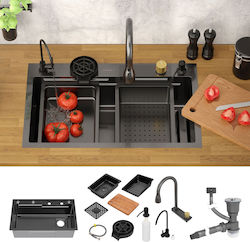
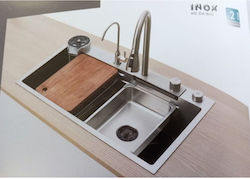
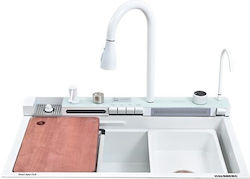
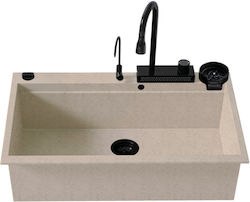
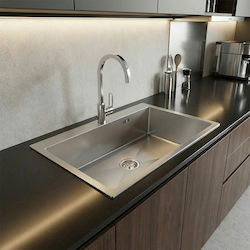
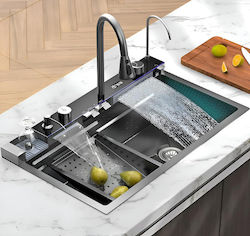
- Multifunctional sinks feature a special ledge where accessories such as a chopping board, colander or draining rack can be fitted. This gives you extra work surface, making them ideal for small kitchens.
- Antibacterial protection, found mainly in composite granite sinks, limits the growth of bacteria on the surface.
- Some sinks come with a tap or with waste fittings and a trap included. If these aren’t included, factor them into the total cost.
- Check whether the sink has a pre-drilled tap hole and where it is located, especially if you want a tap with a pull-out spray or a water filter.
- For stainless steel sinks, look for soundproofing pads on the underside of the bowl to noticeably reduce noise from running water and cookware.
- The overflow (a small hole near the top of the bowl) helps prevent spills if you forget to turn off the tap.
Discover multifunctional sinks


9. Installation, maintenance & warranty
- Installation: Drop-in sinks are relatively easy to install, while undermount and flush-mount sinks require a professional. In all cases, proper sealing with silicone is essential to prevent water from seeping into the countertop.
- Maintenance: Stainless steel can be cleaned with a mild detergent and a soft sponge, while composite granite requires regular cleaning to remove limescale. Avoid scouring pads and harsh chemicals on all materials.
- Warranty: Check the manufacturer's warranty period, which is often quite long for some materials, such as composite granite.
Finally, don't underestimate the reliability of the brand. A sink is a purchase that should last for many years, so it's worth investing in a product that will stand the test of time.
Don't forget! By taking the above features into consideration and choosing the ones that suit your kitchen and needs, you can find the ideal option. Before deciding, take a look at reviews from other users to see their experiences, which may help you make your choice much more easily.
Also discover the best sinks for every kitchen at the best prices!
Relevant Articles
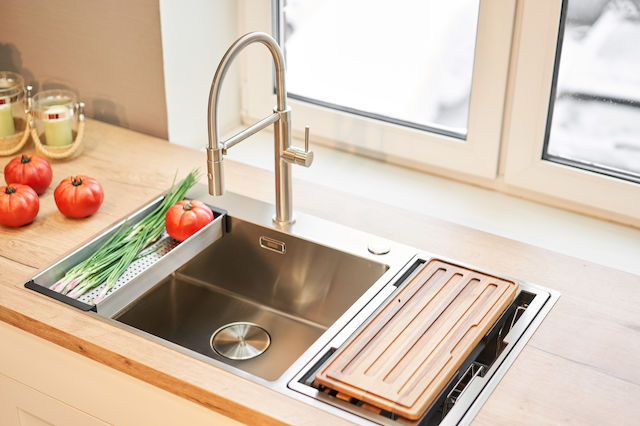
The Best Sinks for Every Kitchen

Looking for a steam cleaner and don't know which one to choose?

The best washing machines

Be the first to leave a comment!