

Buying Guide: Workout Benches
The bench is the first and most useful piece of equipment in any home gym. You can use it for chest and shoulder presses, rows, abdominal exercises, squats and dozens of dumbbell exercises. Find out what types are available, what uprights, incline settings and maximum weight capacity mean, and which bench suits your workout and your space.
With or without uprights
Without Uprights: a bench on its own. Use it with dumbbells, or place it inside a rack or Smith machine for barbell presses. It is more stable, more versatile and takes up less space. The most popular choice.
With Uprights: the bench has built-in supports for the barbell, so it is ready for bench presses without a rack. Many also have attachments for leg exercises (quadriceps and hamstrings) and biceps curls. Keep in mind that the uprights on budget models are usually lightweight and do not have safety arms. If you train alone with heavy weights, choose a bench without uprights and use it inside a power rack with safety bars.
Type: adjustable or fixed
Adjustable: the backrest adjusts from flat to almost upright, and many models also decline. One bench does the job of three, making it the best choice for most people. Benches that adjust to flat, incline and decline positions are also known as FID (Flat, Incline, Decline) benches.
Flat: a fixed, flat bench. It is the most stable, has no gaps in the padding and is usually the most affordable. Ideal for heavy barbell presses or if you want something simple.
Incline: a fixed positive incline, for incline presses and upper-chest and shoulder exercises.
Decline: a fixed negative incline, for decline presses and abdominal exercises. A good leg support is essential.
Use: general-purpose or for a specific exercise
General-Purpose: benches for presses, rows and dumbbell exercises. They are the foundation of any home gym.
Abdominal: incline benches with leg supports for abdominal exercises and torso twists. They are often foldable.
Back Extension: hyperextension benches for strengthening the lower back, glutes and hamstrings. They are very useful if you sit for long periods or want to help prevent lower back pain. Some adjust to 45° or 90° angles.
Biceps: Scott (preacher) benches, where you rest your arm to isolate the biceps. It is worth knowing that many adjustable benches can be fitted with a preacher attachment.

Maximum capacity
Maximum capacity is the total weight the bench can support: your body weight plus the barbell or dumbbells. If you weigh 80 kg and lift two 30 kg dumbbells, the bench is already supporting 140 kg, and the force is even greater during movement.
Up to 115 kg: benches for abs, light strength training and lightweight dumbbells.
From 120 to 180 kg: for beginners and intermediate users training with dumbbells.
Over 180 kg: for barbell training and heavy loads. Sturdy models can support 300 kg or more. A bench with a high weight capacity is usually more stable, even if you don't lift that much.
Adjustments: backrest and seat positions
Backrest positions: usually from 5 to 10. What matters is having the key angles: flat, 15–30° for incline presses, 45° and nearly upright for shoulder presses. More positions don't necessarily mean a better bench.
Adjustable seat: the seat angle keeps you in position during incline exercises and prevents you from sliding.
Adjustment mechanism: a ladder-style mechanism is quick and very stable. A pop-pin is more compact, but takes a little longer. Avoid screw mechanisms if you often change the angle during your workout.
Gap between the backrest and seat: on many adjustable benches, a gap remains between the two pads when the bench is flat, which can be uncomfortable for your lower back or glutes. Modern benches with a near-zero gap (zero gap) feel like a flat bench. A gap of up to 2–4 cm is acceptable.
Storage and portability
Foldable: folds up and fits under a bed or behind a door. It's ideal for small spaces, but is usually less stable with heavy weights.
Vertical storage: many benches can be stood upright on one end and take up very little space without sacrificing sturdiness.
Home or commercial
A Commercial bench has a thicker frame, higher weight capacity, durable upholstery and usually a longer warranty. It's designed for gyms, studios or heavy daily training at home. Home benches are lighter, more affordable and suitable for most people.

What to consider before buying
Training: Will you work out with dumbbells, a barbell, or just your body weight? Do you need an incline, or only a flat bench?
Space: Measure the bench length (usually 1.2–1.5 m) and leave room to extend your arms while holding dumbbells. If space is limited, consider a folding bench or one that can be stored vertically.
Rack compatibility: If the bench will go inside a rack, check its width and length to make sure it fits and you can reach the barbell.
Weight capacity: Add your body weight to the weight you lift, and leave some room for future strength gains.
Ergonomics: Height from the floor, pad width, and gap between the backrest and seat.
Warranty: How many years are the frame and upholstery covered for?
Hidden costs: Dumbbells or a barbell and plates, a rack for safe presses, accessories, and floor mats.
Common mistakes: Buying a bench with lightweight uprights for heavy barbell lifting without safety catches. Choosing based only on the number of positions. Ignoring the maximum weight capacity. Buying a bench that is too tall or narrow. Using a folding bench for very heavy loads.

Which one to choose
By user profile
Beginner training with dumbbells at home: an Adjustable Weight Bench Without Stands, with a weight capacity of 120 to 180 kg. It covers almost every exercise.
Advanced lifter using a barbell and rack: an adjustable or Flat bench, with a weight capacity of over 180 kg, a small gap between the pads, and a stable base.
Want to bench press without a rack: a bench With Stands. Choose a sturdy model and work with weights you can control, ideally with someone to spot you.
Limited space: a Foldable or adjustable bench with vertical storage and wheels.
Abs and core: an Ab bench or a Decline bench with a leg holder.
Strengthening your lower back and glutes: a Back Extension bench.
Biceps isolation: a Biceps bench or a preacher attachment for your adjustable bench.
Gym or studio: a Commercial bench with a high weight capacity.
By budget
Budget: fixed flat benches, ab benches, and foldable adjustable benches with lower weight capacities. Good for dumbbells and light loads.
Mid-range: sturdy adjustable benches with a weight capacity of over 180 kg, an adjustable seat, wheels, and quality upholstery. The best value for money for most people.
Premium: commercial adjustable benches with an almost nonexistent gap between the pads, a decline setting, a very high weight capacity, vertical storage, and attachments that expand your exercise options.
This article was created with the help of AI and reviewed and edited by the Skroutz team.
Relevant Articles
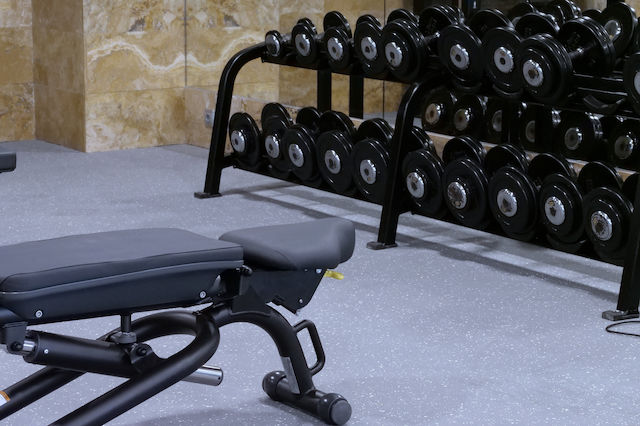
The Best Workout Benches for Every Need
The Best Multi-Gyms & Exercise Machines
Buying Guide for Elliptical Machines: Everything You Need to Know!

Be the first to leave a comment!