

Practical rules for choosing the right bicycle
Want to buy a bike but don't know how to choose? We're here to teach you the secrets!
It is important to choose the right size to make your ride comfortable and not strain your body. Let's see some ways you can calculate it.
Choosing the bike size
Measuring the inseam
First, we need to measure the inseam. Think of it as getting a suit tailored to your measurements. The steps are very simple:
First, stand upright without shoes in front of a wall
Slightly spread your legs, so they are parallel to the ground
Measure the distance from the floor to your inseam
That's it! Now you know your inseam height and can choose a bike and a suit!

Choosing the Size of the Bicycle Frame
The size that the bicycle frame should have is largely related to the length of the seat post.
The vertical post that supports the saddle needs to be 65% of the inseam height we measured before. For example, if your inseam height is 1 meter, then the length of the post should be around 65 centimeters.
Empirically, the rule is that you should be able to stand on tiptoes on the bike when sitting on the saddle. Don’t forget that the saddle is adjustable and you can raise it if needed!
Tip: The bicycle saddle should have a slight forward tilt (1° - 2°) to be more comfortable and to avoid numbness.
Also, it is important the length of the horizontal tube that connects the saddle to the handlebars since it contributes to the correct body posture and better weight distribution.
Unfortunately, for this tube there is no mathematical equation that gives us the perfect solution, but mainly empirical rules.
Rule 1: While riding the bike and having our hands on the grips, our line of sight to the front wheel should be “interrupted” by the handlebars.
Rule 2: When our hands are on the grips, our elbows should be bent at 60° - 70° and should be about 5 cm away from our knees when they reach their maximum height while riding the bike.
Tip: If you prefer to be more upright or more bent over respectively, there are various bike handlebars that you can install to achieve the desired posture

Choosing the Size of a Bicycle Handlebar
Bicycle handlebars are available in various widths. Most cyclists choose handlebars with a width that matches the distance between their shoulders. A wider handlebar opens up the chest and facilitates breathing and exerting power, but it is less aerodynamic. The choice depends on the type of cycling you do and what suits you.
Choosing the Size of a Crankset
The crankset is the disc that controls the chain, thus the movement of the wheels, and it also includes the pedal. The choice of crankset size also depends on your cycling style. Larger cranksets allow you to exert more power at a low cadence, which is particularly useful in uphill terrain. On the other hand, if you usually cycle at high cadences, it is preferable to choose something smaller. Due to the aforementioned reasons, mountain bikes are usually equipped with larger cranksets than road bikes.
Choosing the Type of Bicycle
In order to decide on the type of bicycle that suits you best, you should consider where you like to ride (e.g. city or mountain), take into account your riding style (e.g. high speed or more conservative riding), as well as the needs you want your bike to meet (e.g. daily commuting to work or going on excursions). These factors are crucial for ending up with a bicycle that truly represents you. So, let's take a look at the main categories of bicycles and their key features.
Mountain
Mountain bikes are designed for off-road cycling. For this reason, they are more resistant to stress compared to other types of bikes. Their tires are usually quite wide and have knobs for better grip on rough terrain. They typically have front suspension and, depending on the specific model, may also have rear suspension.
Racing
Racing bikes are built to achieve higher speeds than other types of bicycles. Because of this, they feature aerodynamic design, a crouched riding position, and are characterized by high rigidity to minimize energy loss.
City
City bikes, as their name suggests, are designed to facilitate comfortable and practical transportation within urban areas. They usually come with mudguards, a basket, chain guard, and warning lights. Many models are foldable to make it easier for the rider to transport them, especially when using public transportation.
Trekking
Trekking bikes are a hybrid type of bicycle that aim to bridge the gap between city and mountain bikes. Their geometry is based on mountain bikes, but their top tube is shorter so the rider can have a more upright riding position and therefore enjoy a more relaxed riding experience. Many trekking models have space for carrying items or the infrastructure to add a basket, chain guard, and warning lights. They differ from city bikes in their gear systems. City bikes have 3, 7, or (rarely) 8 gears, while trekking bikes have at least 21 gears. They are heavier than city bikes and are suitable for well-packed dirt roads.
BMX
The term BMX is used to describe bikes that are mainly designed for stunts, jumps, and fast riding on short tracks or special courses. BMX bikes have a small and durable frame, usually with 20-inch wheels, offering agility, control, and better balance. BMX bikes intended for stunt competitions are usually made from materials that provide greater durability, such as steel.
Gravel
Gravel bikes combine features from mountain and road bikes, offering versatility across different types of routes. Their geometry is based on road bikes, but is more comfortable and allows for greater stability over long distances and mixed surfaces. They have wider tires, which provide better grip and comfort on dirt roads, gravel, or rough pavement. They are an excellent choice for those who want to ride comfortably on various types of routes.
-
 Mountain Bike
-
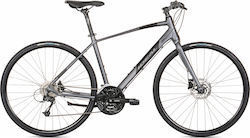 Racing bicycles
-
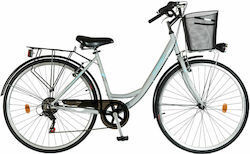 City Bikes
-
 Trekking Bicycles
-
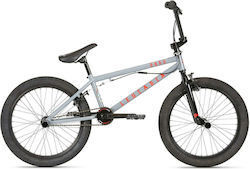 BMX Bicycles
-
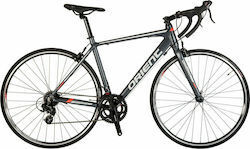 Gravel Bikes


Relevant Articles

Practical rules for choosing the right electric bicycle

Practical tips for choosing the right bike for your little hero
Buying Guide for Hiking Shoes

Be the first to leave a comment!