

Telescope Buying Guide: How to Choose the Perfect One for You!
Choosing a telescope isn’t rocket science. In this guide, we’ll go over in simple terms what you should look for so you don’t waste your money and can enjoy your journeys through the universe.
The A and the O: The Aperture (The telescope's "eye")
If you have to remember just one thing, it is this: In telescopes, everything is about the aperture (the opening of the tube in millimeters - mm). The bigger the telescope's "eye" is, the more light it gathers. And the more light it gathers, the clearer and brighter everything will appear.
Let's see what you can expect depending on the size:
Up to 70mm (Small): These are mainly for children, for a very basic first introduction, or for viewing nature, mountains, and birds in the morning. They will show you the Moon's craters nicely, but the planets will appear simply as small bright dots.
71mm to 100mm (Medium): A good, affordable introduction. You will clearly see the Moon, Jupiter's moons, and Saturn's rings as a small but sharp image.
101mm to 130mm (Powerful): This is where the real fun begins. You will see the planets in detail and be able to spot your first bright nebulae and star clusters.
Above 130mm (Advanced but also... for Beginners!): Don't be afraid of them! Telescopes with a large aperture (e.g. 150mm or 200mm) are not only for professionals. They are the best choice for everyone, because they offer "live", bright images of distant galaxies and faint objects that smaller telescopes simply cannot see.
2. The Big Trap: The Magnification Myth (The "Fake" Zoom)
Many beginners make the mistake of buying a telescope based on "how much zoom it has" (e.g., 300x, 500x). Don't fall for it!
Many cheap telescopes promise crazy zoom, but in practice all you'll see is a completely dark, blurry, and shaky image.
The golden rule: The maximum real magnification of a telescope is approximately its diameter in millimeters times 2. That is, a 70mm telescope can zoom clearly up to about 140 times. Anything beyond that is just marketing.
(Tip: Zoom changes very easily by changing the eyepiece – the small lens you look through, which is included in the package).
3. Types of Telescopes (How They Work)
There are three basic technologies, depending on how they collect light:
Refracting (With lenses): These are the classic, long, narrow telescopes. They require no maintenance, are durable, and are ideal for the moon, planets, and terrestrial observation (landscapes, sea).
Reflecting (With mirrors): They use a large mirror at the back. They are the most popular because they offer the largest aperture for the least money. They are perfect for seeing deep into space (galaxies, nebulae).
Catadioptric (Combination): They use both lenses and mirrors. They are more compact and "chunky" in shape, very easy to transport, and excellent, but usually cost more.
4. Mount Type (The Base/Tripod)
A good telescope is nothing without a stable base. If the base wobbles, even the slightest breeze will make you lose the star you’re looking at.
Altazimuth: The simplest option. It moves up and down and left and right, just like a classic camera tripod. Very easy for quick tours of the sky.
Equatorial: A more complex mount. You adjust it so that it follows the curved path of the stars across the sky (as the Earth rotates). It takes a little reading at first, but then you can “track” the star by turning just one lever.
5. New Era: Robotic & Smart Telescopes
If technology is your thing, you have two options:
Robotic (GoTo): Telescopes with a built-in computer and motors. You press on the controller or on your phone, "I want to see Saturn," and the telescope turns and finds it on its own!
Smart Telescopes: The latest in technology. These telescopes have no eyepiece at all for you to look through. They connect to your phone or tablet, find everything on their own, take fantastic photos, and show you the colors of nebulae live on your screen, even from the city!
Quick Guide: "What should I choose based on what I want to see?"
- I want to see the Moon, the mountains, and sometimes the planets: Choose a Refractor telescope with an Altazimuth mount (Aperture 70mm - 90mm). Easy, fast, and clear.
I want to see details on planets, rings, moons, and get seriously into the hobby: Choose a telescope with an aperture from 90mm to 130mm.
I want to dive into deep space, see distant galaxies, nebulae, and star clusters: Choose a Dobsonian reflector telescope with an aperture of 150mm or 200mm (8 inches). It is the ultimate value-for-money choice!
I know nothing about the sky and want my phone to show me everything ready-made: Choose a Smart Telescope.
Relevant Articles

New Law 2026 for Electric Scooters: Age Limits & Fines
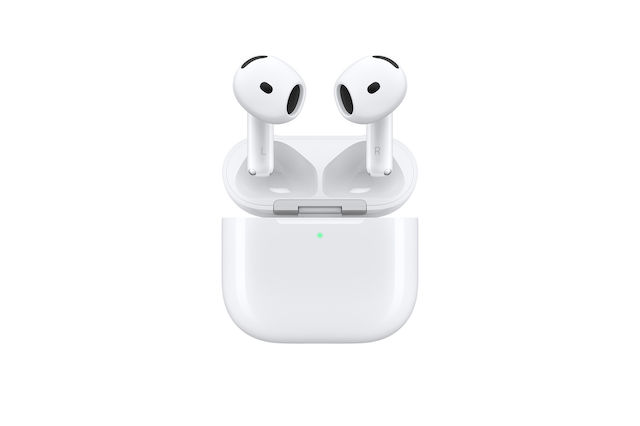
Official: Apple unveiled the new AirPods 5 with the market’s best Open-Ear ANC!
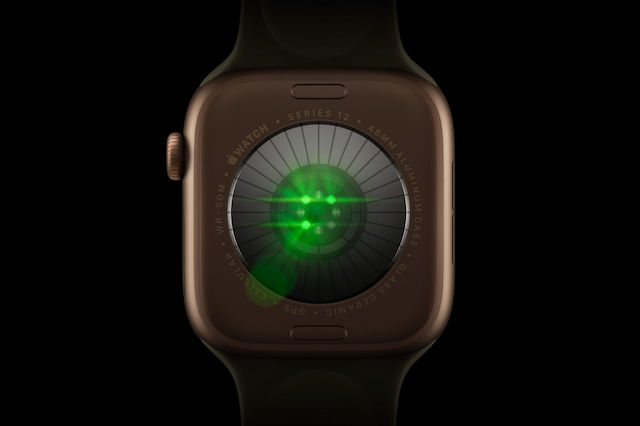
Official: Apple unveiled the new Apple Watch Series 12 and the top-of-the-line Apple Watch Ultra 4!

Be the first to leave a comment!