

Practical rules for choosing the right electric bicycle
Do you want to buy a bicycle but don't know how to choose? We're here to teach you the secrets!
Electric bicycles make commuting easier and faster by combining pedaling with motor assistance. However, to find the right model, you need to pay attention not only to the basic features of a bicycle but also to factors such as range and type of use.
Choosing the right bike size
Measuring inseam height
If you want to find the correct size, start with your inseam height, which is the most reliable method.
To measure it:
Stand upright without shoes in front of a wall
Slightly spread your legs, about hip-width apart
Measure the distance from the floor to your inseam
→ The correct size is especially important for electric bicycles, as the increased weight affects control and balance.

Bicycle Frame Size Selection
The frame size is related to the axis that supports the saddle and determines body posture.
Usually, the vertical axis corresponds to about 65% of the inseam height. In practice, however, you can also rely on simple rules:
You should be able to touch the ground with your toes when sitting on the saddle
The saddle is adjustable, so you can set it accordingly
→ On electric bikes, many riders prefer a slightly smaller size for better control.
Tip: A slight forward tilt of the saddle (1°–2°) improves comfort.

Indicative size guide based on your height
If you haven't measured your inseam or want a quick estimate, you can use the following guide based on your height:

→ The above table is indicative and does not replace the manufacturer's instructions.
The most important measurement is the inseam length and not just the height
Each manufacturer may have a different frame geometry
The choice is also affected by the riding style (more upright or more sporty position)
→ For electric bikes, many riders choose a slightly smaller size, because:
they are heavier
they often have a higher frame due to the battery
they offer better control at low speeds
Tip: If you are between two sizes:
choose the smaller one for better control
choose the larger one for more comfort on long rides
Handlebar & Crankset Selection
The handlebar affects handling and stability. A width close to shoulder width is considered a balanced choice, while a wider handlebar can offer better control, which is especially useful on electric bikes due to the increased weight.
Width equal to shoulders → most common choice
Wider → better control
Narrower → more aerodynamic
→ On electric bikes, a wider handlebar helps with better handling due to the increased weight.
On the other hand, the crankset is related to how power is transferred to the pedal. Larger sizes help on climbs, while smaller ones favor a higher cadence. In practice, however, on electric bikes this difference is less noticeable, as the motor covers much of the effort.
Larger → better for climbs
Smaller → better for high cadence
→ On electric bikes, its importance is less, as the motor provides assistance.

Motor & Assistance
The motor is the element that distinguishes an electric bicycle from a conventional one and directly affects the riding experience. In practice, you will encounter two main categories.
Central Motor → better balance and performance
Hub Motor → more economical solution for the city
The central motor is placed in the middle of the bicycle and offers better balance and a more natural pedaling feel, especially on uphill rides. On the other hand, the hub motor is a simpler and more affordable solution that adequately meets the needs of daily commuting in the city.
Most electric bicycles have different levels of assistance, such as eco, normal, and turbo, which allow you to adjust the intensity of the support and, consequently, the battery consumption.
→ According to legislation, assistance is cut off at 25 km/h.

Battery & Range
Range is one of the most important selection factors. The battery determines how far you can travel, so if your trips are short, a smaller range may fully cover your needs. For more frequent city use, a bike with medium range offers greater flexibility, while for long distances or excursions it is worth choosing models with longer battery life.
-
Up to 50 km → short daily commutes
-
55 – 75 km → basic daily use
-
76 – 100 km → longer distances
-
Over 100 km → excursions and touring
→ In practice, range is affected by the rider's weight, inclines, and the level of assistance you use.
Choosing the Type of Electric Bicycle
The type of bicycle mainly depends on the use you want to make of it. For commuting within the city, electric city bikes emphasize comfort and practicality. In contrast, electric mountain bikes are designed for more demanding routes and rough terrain.
Trekking models fall somewhere in between, covering mixed routes, while folding bikes are an ideal choice when ease of transport is a priority.
Electric City Bikes
Ideal for commuting in the city with comfort and without fatigue.
Electric Mountain Bikes
Suitable for dirt trails and uphill routes.
Electric Trekking Bikes
For mixed routes and long distances.
Folding Electric Bikes
Ideal for easy transport and storage.
→ Choosing the right type is the first step to significantly narrowing down your available options.
-
 Electric City Bikes
-
 Electric Mountain Bikes
-
 Electric Trekking Bicycles
-
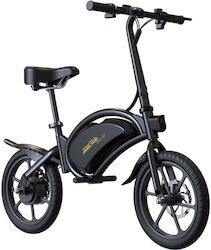 Folding Electric Bicycles


Wheels & Tires
The size of the wheels affects the bike's behavior on the road. Smaller wheels make transportation and maneuverability easier, while larger ones offer better stability and comfort, especially on rough surfaces.
For urban use, larger wheels tend to provide a smoother ride, while for more demanding off-road routes, even larger sizes are preferred for better traction.
-
Up to 20" → foldable, easy to transport
-
26" → maneuverability
-
27.5" – 29" → better performance on rough terrain
-
28" → ideal for city and trekking
Suspension
Suspension determines how comfortable the ride will be, especially on poor road surfaces. A basic front suspension covers most city needs, while on more difficult routes a system with both front and rear suspension absorbs vibrations more effectively.
In cases where use is limited to asphalt, a bike without suspension can be lighter and more efficient.
Front suspension → comfort on rough roads
Front & rear → maximum vibration absorption
No suspension → for asphalt
→ On electric bikes, having suspension becomes more important due to the extra weight.
Brakes
The choice of brakes directly affects safety. Disc brakes offer better performance and more stable braking, especially at higher speeds or on wet roads.
V-brakes are a more economical option, but on electric bikes disc brakes are considered the most reliable solution.
Gears
The number of gears plays a smaller role compared to conventional bikes, as the motor assistance covers a large part of the required effort.
This means you can ride comfortably even with fewer gears, without significantly affecting the riding experience.
Accessories & Spare Parts Worth Knowing About
Beyond choosing the bike itself, it’s worth paying some attention to the equipment that will accompany it. Electric bikes have some additional needs compared to conventional ones, mainly due to the battery and their electrical components.
One of the most important elements is the battery, as its performance decreases over time and it may need to be replaced. If you use your bike frequently, it’s useful to know that there are available options for compatible batteries and chargers or even a second battery for greater autonomy.
Equally important are the basic accessories that improve everyday use, such as lights, helmet or lock, especially if you often travel within the city.
→ Depending on your usage, you can equip your bike with accessories that increase its safety, comfort, and lifespan.

Choosing an electric bike doesn’t have to be complicated, as long as you start with the basics: where you will use it, what range you need, and which size suits you. From there, features like the motor, suspension, and equipment come to enhance the experience. Think about your daily routes and your needs, and choose a model that will serve you practically, not just “on paper.”
The right electric bike is the one that will make you use it more often and with greater ease!



Be the first to leave a comment!