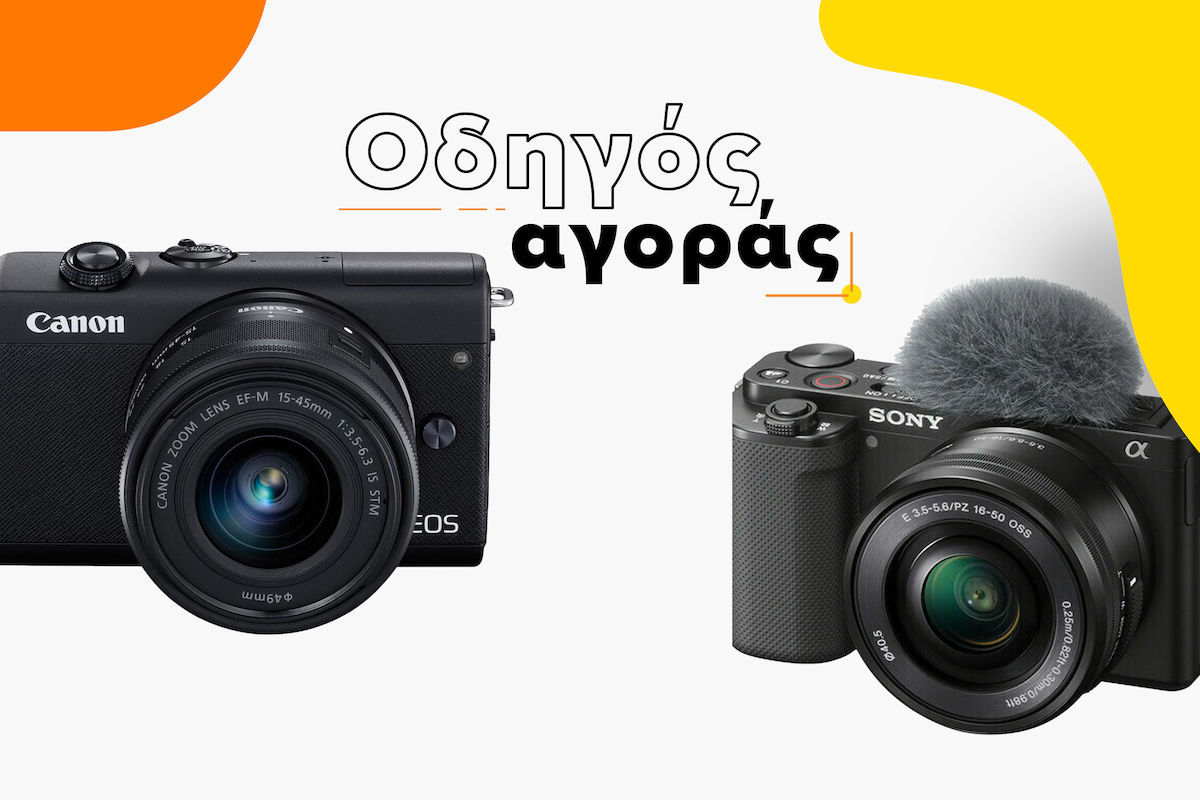

Looking for a mirrorless camera? This guide is for you!
Come and see what the basic features mean and which ones you should give greater importance to, based on the use you intend to make of it.
Let's start with the basics, what are mirrorless cameras?
Essentially, they are the technological continuation of film SLR cameras, which then progressed to DSLRs (digital SLR) and now to mirrorless!
Main features
Sensor Size - Full frame & Cropped
These terms refer to the size of the sensor. The larger the sensor, the more light it receives, meaning more information, so the quality of the photos is better and with more capabilities in low light.
Full frame sensors provide a greater exposure range and greater color depth.
They are usually found in premium models and are preferred by professionals who shoot large landscapes, but also by vloggers, as they allow you to shoot close-up shots while keeping your entire frame visible.
Cropped sensors give a more zoomed-in image, but have a smaller exposure range.
If you are looking for a camera to photograph objects from a distance, they are ideal. In addition, they are usually cheaper and lighter.
ISO
It refers to the range of the sensor's sensitivity to light and mainly indicates the camera's ability to take high-quality photos in low light without significant distortion.
If you plan to use your camera very often in dark environments, choose a model with over 1600 if it has a cropped frame, or over 3200 if it is full frame.
#SkroutzTip: To avoid possible distortions in your photos, keep the ISO as low as possible.
Analysis
The resolution of a camera is measured in megapixels (MP) and refers to the number of pixels on the image sensor. If you are an amateur, a camera with a 16MP resolution is more than enough!
Higher resolution values, such as 50MP, can be found in models mainly intended for professionals, who want to sell their photos printed in large posters without loss of quality and also zoom in excessively when editing them.
Autofocus: All the work is done by Artificial Intelligence (AI)
Forget the days when you struggled to take a clear photo of a running child or a playing dog. Today's Mirrorless cameras are equipped with Artificial Intelligence (AI).
The camera "sees" and recognizes the world. It can automatically detect a human eye, a bird among the branches, a car, or your pet and "lock" the focus on them, tracking them as they move. You just press the button and the camera ensures that the photo is crystal clear (in focus), even if your subject is constantly moving!
Image Stabilization (IBIS): The secret to perfect shots
When reading the specifications, look for the initials IBIS (In-Body Image Stabilization). This means that the camera's sensor itself has an internal "shock absorber" system that absorbs the shake from your hands.
It helps you take crystal-clear photos at night without needing a tripod.
It makes your videos look smooth and stable, even if you’re walking and shooting handheld. If you’re interested in video, this is a feature your camera must have.
Video
If you are interested in recording videos, consider the camera's video capabilities. Find a camera that can record in 4K resolution and at least 60 frames per second (60fps), for amazing resolution and image stabilization, for smooth videos.
Mirrorless camera in a kit or just the body?
A kit includes the camera "body", a lens, a battery, and in some cases an adapter and a strap.
The body includes only the camera "body" and does not come with a lens or any extra accessory.
If you are just starting out, a kit will make things easier for you, since with one purchase you will have everything you need to get started! If you have experience, lenses, and many accessories already, then choose only the body.
Which lenses are compatible with your new camera?
We may have left it for last, but it is a very important factor, as in case you do not have enough lens options in the future, you may need to change the camera itself!
First, you can prefer a kit that includes a lens, but in the future your needs will change and you will look for additional options. Check the product's features for the mount mechanism it has and see what range of options you have.
Want to learn more about lenses? Watch the video!
What is it intended for?
For your travels?
Practical size and portability are crucial for your travels! Find a lightweight camera with a cropped sensor for easy transportation, and since you probably want to use it immediately, prefer a kit!
For concerts & all events throughout the year?
Choose a camera with a full-frame sensor for high performance in low light and a wide ISO range for capturing vibrant and noise-free images in concert venues.
Because concerts have rhythm and rhythm has movement, prefer a camera with image stabilization.
For your content on social media & live streaming?
Find a camera that connects via WiFi, with 4K 60fps resolution for super video recording and ideally with automatic face tracking focus to always be in the right focus!
For nature shots:
Find a camera with a full-frame sensor and a wide dynamic range to capture both low-light snapshots and the brightest moments in detail.
Want to learn more about Mirrorless? Watch the video!
You can also take a look at the guide to the best mirrorless cameras on the market, where you will find the top choices based on user feedback, depending on your intended use and your available budget.
New: See now also used cameras & mirrorless cameras on Skoop by Skroutz, the new used items selling service from Skroutz!
Relevant Articles
Buying Guide for Camera Lenses: Everything You Need to Know!

The best camera lenses

The best film cameras

Be the first to leave a comment!