

Work Shoes Buying Guide
Are you looking for the ideal pair of work shoes for your job? Are you confused by the protection levels and the additional certifications and need guidance? Let’s take a detailed look at what you need to pay attention to and what it is good for the work shoes you will buy to have, based on your needs.
A few words...
A proper pair of work shoes can protect you from injuries, keep you comfortable, and assist with efficiency, depending on the job you do. These shoes are distinguished by protection levels, based on some basic needs encountered in different workplaces, and certifications are applied to these levels to make them suitable for different types of work.
In the table below, you can find a summary of the protection levels, as well as what each offers:
SkroutzTip: If you're looking for safety work shoes that meet the basic specifications, look for shoes that definitely have a protective toe cap, impact-resistant (SB).
Do you know the use? We know what you need!
Let's go, then, to see according to the need or the profession you have, which are the ideal shoes for you and what are the characteristics they need to have!
Basic protection & standing | Comfort
If you are looking for shoes with basic protection, ideal for standing, you need to look for lightweight and comfortable shoes. This type of footwear offers minimum protection, does not have toe protection, and is suitable for light, long-hour work in environments that do not have a high risk of danger.
Recommended for retail store employees, healthcare workers, security personnel, or maintenance workers in moderately demanding tasks.


Do you need more protection, comfort, and extra support for your feet?
- Shoes with heel energy absorption (E) help reduce ankle joint fatigue, which can be caused by jobs that require long hours of standing. Ideal for those who work in service or customer service stores, where standing is required.
- Shoes with ankle protection (AN) feature reinforcement around the ankle area and help prevent injuries that may be caused by contact with hard or sharp surfaces. Ideal for those working on construction sites or buildings.
- Shoes with metatarsal protection (M) are reinforced on the upper part to prevent injuries from sharp or bulky objects. Ideal for jobs that involve construction and industrial work, where there is a high chance of such objects falling.
Technical Work & Warehouse | Slip-Resistant Protection
If, on the other hand, you work in a warehouse or are looking for slip-resistant shoes ideal for technical work, you should make sure they have toe protection and provide antistatic properties, energy absorption in the heel, and be resistant to fuels and oils. Also, resistance to puncture from sharp objects, as well as protection against slipping on all types of hard floors, both on wet smooth and hard oily surfaces, make them stand out.
Suitable for workers in construction and industrial jobs, craftsmen in workshops, and warehouse workers.

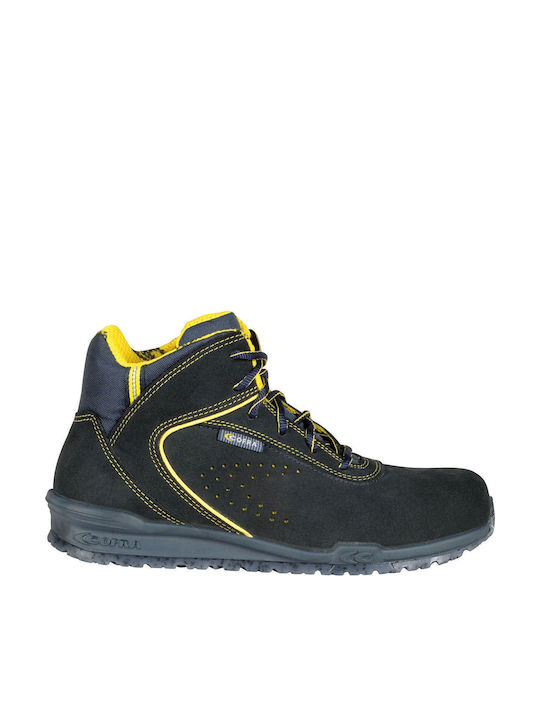


Do you need shoes resistant to slippery surfaces?
Shoes with slip resistance (SR) have a sole made from special materials, offer better grip, and keep the foot stable on different surfaces. More specifically:
- Shoes with slip resistance on wet floors (SRA) are suitable for work environments with wet smooth floors, such as tiles. Ideal for those who work in kitchens, hospitals, or food industries, where a liquid substance may spill on the floor.
- Shoes with slip resistance on oily floors (SRB) are suitable for work environments with oily hard floors, such as paint or resin coatings. Ideal for those who work in industrial or mechanical environments, such as workshops, where oils and fuels may be present on the floor.
- Shoes with combined slip resistance (SRC) combine the two certifications above. They provide the highest level of slip-resistant protection.
Electrical work | Antistatic protection
Shoes for electrical work feature toe protection, provide additional resistance to water and other liquids and have enhanced puncture resistance. They are slip-resistant and antistatic, which allows them to prevent the dangerous buildup of electrostatic charge.
Recommended for electricians, engineers and craftsmen in hazardous environments with electricity.


Do you need shoes intended for protection against electrostatic discharge and electricity?
- Antistatic shoes (ESD) protect against the buildup of electrostatic charges, helping to safely discharge these charges to the ground. Ideal for those working in industries with sensitive electronic equipment or in industries with fuels, chemicals, and other flammable materials.
- Antistatic shoes (A) provide mainly protection against static electricity and prevent the buildup of electrostatic charges in the body. Ideal for electricians and workers in factories and areas with a moderate risk of electricity buildup.
Antistatic A shoes have higher resistance than ESD shoes, while also offering some protection against electric shock at low voltages.
- Conductive shoes (C) have very low resistance and allow electrostatic charges to discharge very quickly. Ideal for those working in areas and spaces with explosive or flammable materials.
Conductive shoes do not protect against electric shock.
Plumbing work | Water resistance
On the other hand, you can find shoes for plumbing work, which feature toe protection, provide additional resistance to water and other wet substances, and are designed to prevent water from entering the inside of the shoe and keep feet dry in wet work environments. In addition, they offer enhanced puncture resistance, an anti-slip sole, and provide protection against slipping on all types of hard floors.
Recommended for plumbers, construction workers, and for any work carried out in wet environments.


Do you need shoes with waterproofing and water resistance?
Shoes with water penetration resistance (WR) are designed to prevent water from entering the inside of the shoe, keeping your feet dry. Ideal for agricultural work, construction sites and building projects during the winter months or any other job with frequent contact with water.
- More specifically, there are water-resistant upper shoes (WRU), which have a special coating in that specific area, where water is more likely to enter. Ideal for workers in workshops, warehouses or in areas where humidity prevails.
Construction & agricultural work outdoors | Temperature resistance
Finally, if you need shoes for construction and agricultural work outdoors make sure they have a sole that provides thermal insulation, protecting the feet from the cold. Shoes of this kind should also have toe protection, additional resistance to water and other liquids, enhanced puncture resistance, an anti-slip sole, and protection against slipping on all types of hard floors.
Recommended for heavy construction work on job sites and agricultural work outdoors.


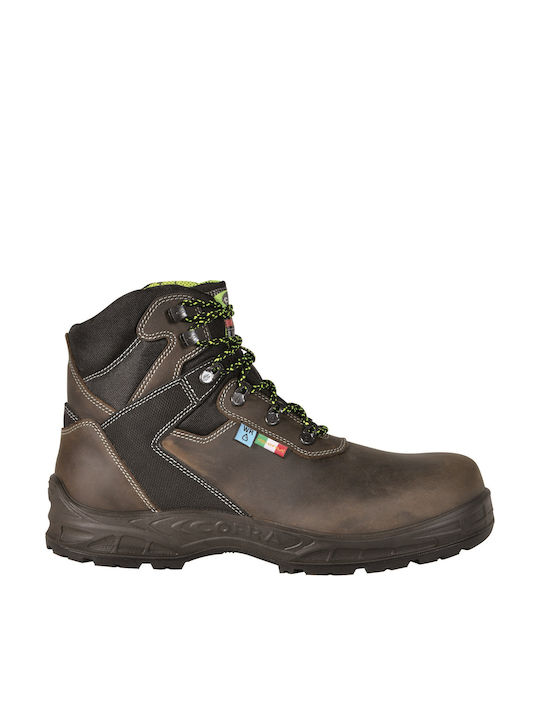


Do you need shoes for protection from extreme weather conditions, as well as the temperature conditions prevailing in each workplace?
- Shoes with cold insulation sole (CI), which provides thermal insulation, protect the feet from the cold. Ideal for delivery workers, transport workers and those who work/travel in low temperatures.
- Shoes with high temperature resistance (HI) are made from reinforced materials, so as to prevent heat transfer to the inside of the shoe. Ideal for those who work in environments with high temperatures, such as foundries, ovens or outdoor jobs during the summer months.
- Shoes with high temperature resistance sole (HRO) feature a special sole made of materials that are resistant to temperatures of up to 300°C for up to 60 seconds. Ideal for those who work in factories, metal industries or anywhere else where there is a risk from hot materials.

What material should you choose?
The material of a shoe plays a significant role in the shoe's lifespan, durability, and quality - especially when we talk about work shoes. You can find shoes made of:
- Leather: Leather shoes are usually heavier, suitable for use in winter or in work environments with low temperatures, and are considered more durable shoes. You can use them if you work on a construction site, in building, if you are an engineer, or even if you are a delivery person using a motorcycle during the winter months.
- Synthetic material: This material makes the shoes lighter and more comfortable. Shoes made of synthetic material are recommended for jobs where comfort is essential, such as for workers in the catering industry, retail stores, or the healthcare sector.
- Waterproof material: Waterproof shoes are a category of their own, as they are required in specific jobs where the presence of water is significant. For example, in agricultural work, mechanical environments such as car repair shops or ships.
Extra features
If you need more comfort, you can look for shoes that offer some of the following:
- Foot support, to help prevent injuries. You can try work boots that provide better support for the foot.
- Shock absorption, for more comfortable work. Athletic work shoes can help make everyday work life more comfortable.
- Lining, to prevent blisters and irritation, and softness, with shoes that hug the foot without pressing on it. Choose work shoes without steel for more comfort.
- Breathability/insulation, to maintain the temperature inside the shoe, depending on the season/weather conditions. Choose waterproof work shoes for winter and perforated ones for summer.
Don't forget! Many times there can be a difference in a product, based on its overall characteristics and construction. Before you decide, read the reviews of other users to see their opinion as well!
You can also take a look at the guide to the best work shoes for every need, where you will find the best options based on user feedback, whatever the conditions in your work environment may be.
Relevant Articles

The best work shoes for every need
The best power drills & electric screwdrivers on the market
The best electric screwdrivers on the market
Be the first to leave a comment!