

Buyer's Guide for Kids' Sneakers
Everything you need to know before buying sneakers for kids!
Are you looking for the new pair of kids sneakers for your child, your nephew, or your godchild? Or maybe you don’t know how to choose a gift for that baptism or children’s party you’ve been invited to? If you’re confused and don’t know where to start, you’re in the right place. Let’s take a detailed look at the features of kids’ and baby sneakers and what you should pay attention to when choosing.
Size & Fit
Size is perhaps one of the main issues you will be concerned with when buying a pair of children's shoes. You need to make the right choice so that the child's feet fit well inside the shoe, while at the same time they should offer comfort and flexibility of movement.
1. Measurement before purchase
Children's feet are constantly growing, so in order to choose the right size each time, you will need to measure the length of the child's feet before each purchase. The best way to measure the child's foot is to place a white sheet of paper vertically against a wall and the child's foot on the paper, touching the wall. Then measure the greatest distance between the wall and the foot, as shown in the diagram below:

In addition to the correct length, make sure of the width of the shoe as well. The shoe should not be too narrow, but also not too wide. The right fit in width plays an important role in comfort and flexibility.
Besides the paper on the wall, make sure that the child is standing upright and distributing their weight evenly on both feet.
Extra tip: Gently press the front part of the shoe with your thumb while the child is wearing it. There should be a gap about the width of your thumb between the toes and the tip.
2. Matching
After you have taken the correct measurement, what you need to do is match the length of the foot with the shoe size. On Skroutz you can do this easily and simply by using the "Find your size" option before selecting the size, on each product page. Keep in mind that each brand has its own sizing and fit, so the child may wear a different size depending on the manufacturer. So, make sure every time that you have made the correct match.

3. Room for growth
Another thing you should consider before purchasing is that your child's foot needs to have at least one centimeter of space from the edge of the shoe, so that there is the necessary comfort and room for the foot to grow.
However, don't overdo it by choosing a larger size, because a wrong choice can cause injuries, movement problems, and issues with the development of your child's foot.
Material & Build Quality
The material is one of the features that play a very important role when choosing children's sneakers. You need to take into account factors such as comfort, breathability, ease of cleaning, as well as factors like the season when the child will wear them. During the summer months, lighter sneakers are definitely needed, allowing the foot to breathe and not trap sweat, while for winter, a sturdier and warmer material is recommended.
Today, many synthetic materials (such as mesh or special membranes) are designed to let the foot breathe even better than leather and dry much faster if they get wet. Also, if you care about the environment, you will now find many lines made from recycled materials that are just as durable.
Outer Material
- Leather sneakers are durable, offer good support and comfort, and can adapt to the child's foot. They are ideal for everyday walks as well as for more special occasions.
- Synthetic leather sneakers are more affordable than genuine leather ones, but just as durable and easy to clean. They are recommended for walks and endless play.
- Canvas sneakers are made from breathable, lightweight material and offer greater flexibility and comfort. They are a perfect match for casual outfits and are mainly suitable for the summer months.
Inner Lining
You can find sneakers with fabric or synthetic lining. Fabric is soft and allows the foot to breathe, but it easily absorbs sweat and needs frequent cleaning. On the other hand, synthetics have durable materials, can remove moisture more easily, but do not let the foot breathe.
Sole Material
The sole also plays a very important role in the comfort and proper footing of the child.
- A foam sole can easily absorb shocks and provide better footing, making shoes with this type of sole ideal for sports activities.
- Rubber is another material often found in children's sneakers, which offers very good grip, stability, and durability. It is a heavier material, suitable for play and intense activities.
- There are also sneakers made from EVA, a lightweight material with good shock absorption and flexibility. Shoes made from EVA are recommended for everyday use.
- Finally, for children who may have foot problems and need extra support, you can look for sneakers with anatomic insoles.
Before you buy, do the "bending sole test": Grab the shoe and try to bend it. It should be flexible at the front, where the child's toes bend, but stable at the heel. A very hard sole will make it difficult for the child to run.
The weight of the shoe
Something we often forget is how lightweight the sneaker is. Children run and jump all day, so a heavy shoe can tire them quickly or make movement difficult.
Extra Tip: When you hold the shoe in your hand, it should feel "featherlight". If it feels heavy to you, imagine how much heavier it will feel on a child's small foot!
Tying & Holding
When it comes to tying the shoe, it can be a subjective choice, depending on what is convenient or what the child likes, but it also has to do with the child's age and abilities.
- For younger children, slip-on sneakers are recommended, providing easy wear, as well as sneakers with velcro, which can also be easily fastened by the children themselves. These two types are very convenient for parents as a quick solution when the children are still very young and cannot put on and take off their shoes by themselves.
- On the other hand, sneakers with laces are suitable for use by older children who can tie them on their own. Laces offer better fastening with greater security and are recommended for use in intense activities, without the fear of them "coming undone" and the foot slipping.
Type
Another feature you need to consider when choosing is the type of shoe. There are two types of children's sneakers based on the height of the shoes:
- Low sneakers: The majority of sneakers are low, which makes them lighter and more comfortable, suitable for everyday use. In addition, they help children be more flexible during intense activities, such as running and playing. You can find casual designs for everyday wear, as well as more special designs for formal occasions.
- High sneakers: They offer style and extra support to the ankle. Prefer them for sports like basketball or for outings, but keep in mind that they may be a bit heavier than low sneakers. For the winter cold, don't just look at the height, but also make sure they have a warm inner lining.
Extra Features
With lights: Children's sneakers with lights are something that kids absolutely love. This is an additional feature that makes sneakers a more playful and fun choice. They give kids style, while helping parents keep track of them, since they are easier to spot in an outdoor space.
Colors & Designs
Of course, all the technical features are the ones that will concern you when making a purchase, unlike, however, the child. Whether it is children's sneakers for girls, or children's sneakers for boys, all the child will want is for their new sneakers to have their favorite color and their favorite heroes on them. This is something that has nothing to do with the child's comfort and safety, but it is a good idea to take their opinion into account in this area. That way, you will make sure that, in addition to making the right decision, you also made the right choice so the child will love them.
1. Choose based on the child's favorite color:
It may be the color of their favorite team, the color of their favorite cartoon, or colors that inspire them and highlight their personality. Certainly, white children's sneakers are the safest choice, since they match everything and add style. However, they get dirty easily. So, in case the child will spend many hours playing outdoors, a pair of multicolored or dark-colored sneakers would be a more suitable choice.
2. Choose based on the child's favorite hero:
Choose based on the child's favorite hero:
-
 Stitch
-
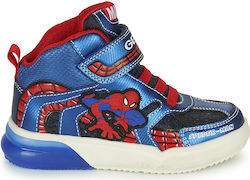 Spiderman
-
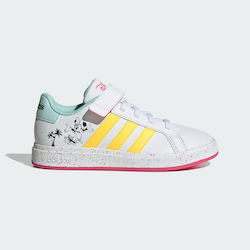 Minnie
-
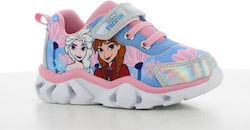 Frozen
-
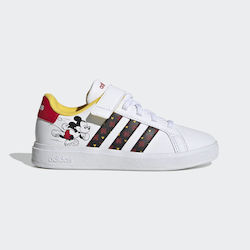 Mickey
-
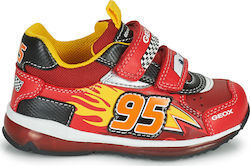 Disney Cars
-
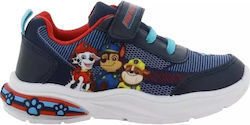 Paw Patrol

Popular Series
- The Nike Air Force 1 stand out for their timeless design, comfortable fit, and the good shock absorption they provide. They are made from high-quality materials, which ensure durability over time, and are ideal for everyday looks.
- The Converse Chuck Taylor All Star are a classic pair of sneakers that can be worn from morning to night, paired with different styles and outfits. They stand out for their minimal design and come in a wide range of colors.
- The Vans Old Skool are one of the brand’s most iconic designs and are inseparably linked to its name. They are very durable sneakers with a simple design that can be worn for casual and semi-casual looks.
- The Adidas Superstar are another popular design that stands out for the shell toe at the front of the shoe and the 3 stripes on the side. They offer comfort and support for the foot, making them an ideal choice for everyday wear.
- The Nike Air Max are known for their innovative technology: the air sole (Air unit), located in the shoe’s midsole. This technology was originally designed to provide maximum shock absorption for runners.
- The New Balance 530 are known for their retro and "chunky" style, with a mesh upper and synthetic overlays. They pair easily with various outfits, from sporty to more casual.

Skroutz tips for the right choice:
- It is best to try on shoes in the afternoon and not in the morning, as feet may swell during the day. This way, you will make the best choice regarding size.
- It is a good idea for the child to try on both the left and right shoe when buying, to make sure there is the necessary comfort for both feet.
- During the fitting, the child should wear the ideal socks. For example, if the shoes are intended for winter use, the child should wear thick socks when buying them, just as they will when using them.
- It is preferable to choose shoes that are easy to clean, since children are more likely to get them dirty again and again through play and various activities.
Don't forget!
By taking into account the above individual features and combining those that suit your child's needs, you can arrive at the ideal choice for them. Before you decide, you can also take a look at other users' reviews to see their opinions and experiences, which may help you reach your final decision much more easily.
Don't forget! Taking into account the above individual characteristics and combining those that fit the needs of the child, you can reach the ideal choice for them. Before you decide, you can also take a look at the reviews of other users, in order to see their opinion and experience, which can help you reach a final decision much more easily.
You can also take a look at the guide with the top choices in kids' sneakers, where you will find the best options based on user feedback.
Relevant Articles
The best baby monitor systems
The best baby relax chairs of 2026 for moments of comfort & relaxation
The best child car seats for 2026
Be the first to leave a comment!