

Buying Guide for Drill Drivers
Everything you need to know before buying a drill driver, whether you are an amateur or a professional!
Are you wondering which drill driver is worth buying? What is it that you need to pay attention to and what features should it have? What you should definitely keep in mind is that the drill driver is suitable for screwing-unscrewing and drilling holes in wood, metal, and various building materials.
Whatever your needs may be, let’s take a detailed look at the different options and what each one offers.
Corded or cordless?
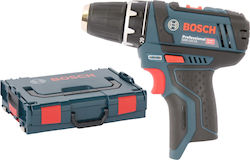
The nature of the tasks for which you will need a drill driver mainly requires flexibility and ease of use. Something that a cordless drill driver can offer. It is more convenient, offers portability and allows freedom of movement, so you can screw and unscrew or drill holes in hard-to-reach places or areas without direct access to electricity. A cordless drill driver requires the battery to be charged before each job and, depending on the size of the tasks, may also require changing or recharging the same battery.
Choose it for outdoor spaces, such as construction sites or for DIY tasks at home. It is suitable for places where there is no direct or any access to outlets and electricity, or for jobs that require constant movement.
Top choices in Battery-Powered Drills




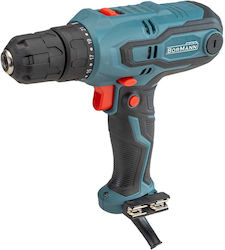
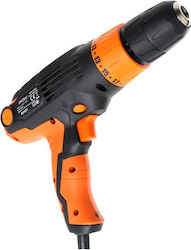
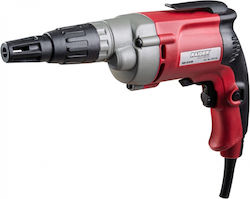
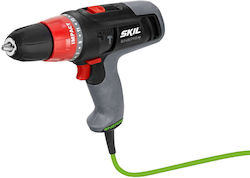
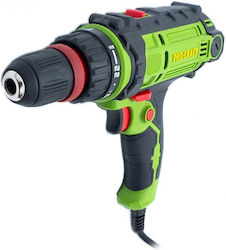
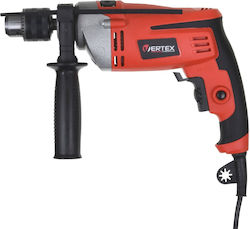
On the other hand, if you choose a corded drill driver, you will have a smaller range in terms of the space where you can work, but you will gain the unlimited autonomy offered by a device that is connected to the mains. Corded drill drivers, therefore, are suitable for use in enclosed spaces with a specific work area and access to electricity.
Prefer it in workshops or for demanding tasks where extensive use is made and precision in the results is needed. It is suitable for use in places with easy access to a power outlet or for long-duration projects that require greater power.
Top choices in Electric Drills

Battery
If you end up choosing a cordless drill driver, you need to pay attention to the battery features, such as voltage and autonomy.
Voltage
The battery voltage is measured in Volts and indicates the power of the drill driver. The higher the voltage, the more energy the device can deliver. This makes it ideal for heavier and more demanding tasks. Indicatively, a drill driver with the following values is suitable for different tasks:
- Drill drivers with a voltage of 12 - 16.8V are ideal for smaller tasks mainly around the home, such as hanging frames or decorations and assembling furniture.
- Drill drivers with a voltage of 18 - 20V make up the majority and are intended for use by hobbyists and professionals alike, for both medium-sized tasks and more demanding ones. For example, drilling into hard materials and screwing/unscrewing larger screws, which are necessary in a renovation or construction projects.
- Drill drivers with a voltage of 21V and above are required for heavier tasks and professional use. In particular, drill drivers with a voltage of 36V and above are mainly used by professionals, such as builders, for very demanding projects.
Capacity
The battery capacity is related to charging time and battery autonomy, expressed in ampere-hours (Ah). The higher the Ah rating a battery has, the longer it can keep operating between 2 charges.
- A battery with a capacity of 1.5 - 2Ah is suitable for basic tasks and not so frequent use, while a battery with a capacity of 2 - 3Ah is more useful in everyday life and for those who use the drill driver more often.
- Long-life batteries (3Ah and above) are ideal for semi-professional and professional use, for very demanding tasks that require long runtime. Some of these may be industrial and other construction projects, renovations, and generally tasks that require maximum balance between power and autonomy.

Speed and Torque Adjustment
Speed
The speed of a drill driver has to do with how fast it rotates and performs different tasks. It is measured in RPM and the higher it is, the device can be used on softer materials, such as plastic, wood, and less hard metals. Whereas, lower speed can be useful on hard surfaces, such as concrete, where more control is required.
Torque
The torque of a drill driver refers to the rotational force the device can exert and is measured in Nm. In contrast to speed, higher torque values (68 Nm and above) are suitable for heavier tasks. Whereas, moderate (34 - 68 Nm) to low (22 - 34 Nm) values make the drill driver an ideal choice for everyday and general use.
The speed adjustment, as well as the torque adjustment allow you to select the corresponding values, making a drill driver suitable for carrying out more and different tasks, depending on your needs.
More capabilities
Impact: The impact function provides high power to easily and quickly complete even the most demanding tasks. Such a drill driver is an essential tool for anyone frequently working with hard materials such as cement, bricks, and stone. The combination of rotary motion with the function performed by a hammer makes it more efficient and precise in the above materials, reducing the need for the user to exert more physical effort.
Angle: An angle drill driver, thanks to its design, can reach inaccessible areas and perform tasks that a regular one could not accomplish. It can be used in hydraulic and electrical installations, as well as in woodworking projects, such as assembling cabinets, etc.
Brushless: Such a device is accompanied by a brushless motor, which means it generates less heat and friction. Thus, the motor is not subject to as much wear, while the battery lasts much longer. It is a good choice for professionals who need increased performance and accuracy in their results.
With interchangeable head: The more chucks (heads for the drill driver) accompany the tool you choose, the more tasks you can perform. It can range from a simple assembly or hole in the wall to hang a frame, to construction work such as drilling into hard metals.
Accessories
Extra batteries
A device can come with 1 or more batteries. Such a drill driver can be used by demanding users, such as a professional or an amateur who wants continuous work without waiting. The more batteries that come with such a cordless tool, the greater autonomy it gives you.
There are also solo drill drivers that come without a battery and require you to purchase one separately.
Case
Many drill drivers come with a case, in which you can store the device, extra batteries and accessories, and carry them with you wherever you go. The case can be very useful for professionals who travel frequently due to the nature of their work, such as an electrician, as well as for amateurs for easy transport from home to the country house.
Summarizing, in order to make the right choice for you, what you need to do is answer a basic question. Do you intend to use the drill for:
Amateur or professional use?
Are you an enthusiastic DIYer who loves using tools to create everything inside and outside the house? A lightweight cordless drill with a low to medium battery voltage and corresponding capacity is just what you need. And if you need it for more than one task, such as drilling into wood and screwing into walls, interchangeable heads are what you are looking for.
On the other hand, if you are a professional with heavy-duty requirements, then you need a more stable and compact device, such as a corded drill or one with a high voltage and capacity battery. Alternatively, a hammer drill is an even better choice if you want easy and fast results.
You can also take a look at the guide to the best drill drivers on the market, where you will find the best options based on user feedback, both for hobbyists and professionals.
Relevant Articles
The best power drills & electric screwdrivers on the market
The best electric screwdrivers on the market
Buying Guide for Electric Screwdrivers
Be the first to leave a comment!