

Fishing Rod Buying Guide
The following guide provides information for finding the right fishing rod, regardless of experience level. It analyzes the main features that should be taken into account when making a choice, offering clear information that will help fishing enthusiasts select the right equipment for their needs and preferences.

Rod Length (Open - Closed)
The open length refers to the total length of the rod when it is fully extended and ready for use, as opposed to the closed length, which refers to when it is collapsed or broken down into sections.
- Open Length: The length of the rod affects casting distance and accuracy. A rod with greater length provides longer casting distance, making it ideal for techniques such as Surfcasting and Shore Jigging, while a shorter rod is suitable for fishing at close range and in places like rivers and lakes.
- Closed Length: The closed length of the rod affects its portability. Telescopic and multi-section rods are easier to transport and store.
Improving Performance by Choosing the Appropriate Rod Length
Sensitivity and Feel
The length of the rod affects sensitivity and feel during fishing. A longer rod offers better control of lure movement but is less sensitive to subtle fish movements, while a shorter rod usually provides greater sensitivity and allows you to detect delicate bites.
Preferences and Experience Level
Beginner anglers usually prefer rods with a shorter open length for better control, while advanced anglers may choose longer rods for improved performance in specific techniques (Surfcasting-Shore Jigging).

Types of Fishing Rods
- Telescopic: They are designed to collapse into a short length, as their sections slide into each other. They are chosen by anglers who seek portability and convenience, making them a suitable choice for travel and hiking. Additionally, their affordable price makes them very popular as they do not strain the budget. However, telescopic rods may have reduced durability due to the large number of sections they consist of, while their feel and response during fishing may not be as sensitive as that of one-piece rods.
- Two-piece / Three-piece: They consist of two or three sections that connect together. Their performance is significant, offering better feel and power. Although they are not known for their portability, they can be broken down into pieces for easier transport. At the same time, they have fewer weak points compared to telescopic rods, offering greater stability. Finally, their joints may be vulnerable and affect their feel and durability.
- One-piece: They consist of a single section, without joints, creating a durable body. Overall, they offer the best feel and response during fishing and are suitable for large and strong fish. However, they are difficult to transport due to their length and have a higher cost compared to other types.

The Role of Casting Weight
It refers to the weight of the lure that the rod can effectively cast and is defined from 10 to 50 grams. For example, a rod with a casting weight of 20-50g is suitable for fishing with lures weighing between 20 and 50g. In summary, it affects the distance and accuracy of your casts and the type of fish you are targeting.
Casting Weight Categories
- Light: 1-15 grams: Light artificial lures, suitable for small fish such as sea bass and mullet.
- Medium: 15-40 grams: For larger artificial and medium-sized lures, suitable for medium fish such as bream and white seabream.
- Heavy: 40-100+ grams: For heavy lures and large live baits, suitable for large predatory fish such as dentex and tuna.
How Does Casting Weight Affect Rod Selection?
- Fishing Environment: On coasts and rocks, you need a wide casting weight range to adapt to conditions. On a boat, a lower casting weight can be used for better control. In rivers and lakes, a lighter casting weight offers better response and accuracy.
- Type of Rod: Telescopic rods are usually suitable for light to medium casting weight, while two-piece rods offer a good balance between portability and performance. Three-piece rods support a wider range of casting weight, providing good portability and durability. In contrast, one-piece rods are suitable for heavy casting weight, offering the best performance and durability.
- Sensitivity and Response: A rod with light casting weight provides higher sensitivity, ideal for detecting subtle bites. In contrast, a rod with heavy casting weight provides more power and performance for catching large fish.

The Importance of Construction Material
The construction material shapes both the durability and the comfort during use. Below, the main construction materials are analyzed and how they affect the choice of fishing rod.
1. Carbon: It is lightweight with high sensitivity, great strength, and high responsiveness when applying fishing techniques. It offers excellent feel and bite detection, making it ideal for techniques that require fine sensitivity and precision such as Spinning and Apiko. Overall, it provides comfort, especially during long fishing sessions, but it is relatively fragile as a material and can be more expensive in cost.
2. Graphite: Light to medium weight and with good sensitivity. It offers a balanced feel and performance in fishing. It is resistant to stress, making it suitable for various fishing techniques. However, it does not offer the same sensitivity and responsiveness and is a relatively expensive material.
3. Fiberglass: It is heavy and provides stability during use. Its durability helps beginners and it is suitable for using heavy lures at long casting distances. It is economical, making it affordable for many anglers. However, its weight can be tiring and the reduced sensitivity may affect accuracy during fishing.
4. Composite Materials: They highlight an interesting combination of the properties of fiberglass and carbon or graphite. With a good balance between weight and strength, they offer the advantages of both materials, meaning they are durable and flexible, suitable for various fishing techniques. Good sensitivity and resistance to stress make them ideal for use in a variety of fishing conditions. However, they may be more expensive and may not offer the absolute sensitivity that carbon provides.

Weight Selection
The weight of the fishing rod refers to its total weight without the presence of accessories, and it is naturally influenced by the construction material, length, and type of the rod.
How Does Weight Affect Fishing Rod Selection?
Comfort: Lightweight rods offer greater comfort and freedom of movement during long fishing sessions, reducing hand and wrist fatigue.
Sensitivity and Accuracy: Lightweight rods are sensitive and provide good response to the angler's movements, helping detect subtle bites and allowing the use of techniques that require high sensitivity, such as finesse fishing.
Durability and Performance: Heavy rods offer stability and strength during fishing, are less sensitive to extreme weather conditions, and provide a better user experience for beginners.

Fishing Rod Sections
The sections of a fishing rod refer to the number of individual parts that make up the rod. It should not be confused with the type of rod (telescopic, one-piece, two-piece, etc.) as this characteristic refers to the general structure and function of the rod, while the sections are the distinct parts that make up the whole, regardless of the type.
For example, a telescopic rod may have sections that extend or compress, while a one-piece rod may consist of a single section. The number of sections affects the overall structure and sensitivity of the rod. Usually, a rod with more sections is more flexible and can offer greater accuracy, while a rod with fewer sections may have greater strength and stability.

Number of Guides
This refers to the number of rings used to guide the line through the rod during casting and retrieve. They are usually made of ceramic or aluminum as they help reduce friction and pressure on the line while fishing.
Rods with multiple guides (6 to 10 depending on the length of the rod) usually offer better performance and reduce friction during casting and retrieving the line, while adding more can increase the weight of the rod and its cost. On the other hand, fewer guides (1 to 5 depending on the length of the rod) offer better sensitivity to the rod, but may lose in performance.

Action
Action refers to the flexibility of the rod during fishing, which affects how it handles pressure from fishing and its response to the angler's movements.
The main types are as follows:
Slow Action: The rod bends at the base (towards the tip) and curves along its entire length when pressure is applied. It provides greater sensitivity and is more flexible for casting small lures, ideal for light fishing.
Medium Action: The rod bends and curves towards the tip in the middle of the rod. It offers a balanced response, making it ideal for a variety of fishing styles, from light to medium-weight techniques.
Fast Action: The rod bends and curves only at the tip, near the end. It offers less sensitivity but greater power and casting performance, suitable for large fish and for use in open waters.
Super Fast Action: The rod bends very close to its tip. It offers minimal sensitivity at the base but excellent power and casting performance. It is used for high-precision and fast techniques, such as Jigging and in environments with dense vegetation.
Heavy Action: The rod bends and curves significantly at the base area, near the handle. It is a strong rod that does not bend easily and withstands resistance. Suitable for fishing with large baits or fishing in areas with dense vegetation.

Fishing Reels
The following features are key parts of the reel equipment and affect the choice of the appropriate rod.
Size (Capacity): Usually expressed in meters (m) or millimeters (mm). The larger the spool, the more it affects the balance and durability of the rod.
Construction Material: Made from durable materials such as aluminum or graphite, which offer strength and lightweight properties.
Drag System: Allows control of the line tension during casting and represents the brake power during the fight with the fish. It is usually indicated in pounds (lbs) or kilograms (kg).
Number of Ball Bearings: Refers to the number of ball bearings the reel is equipped with. More ball bearings usually mean smoother operation and greater durability as they facilitate the movement of the main shaft. For example, it may have 5+1 ball bearings, where the "+1" refers to an anti-reverse bearing.
Gear Ratio: The gear ratio is usually expressed as a number, such as 5.2:1. This means that for every turn of the handle, the reel drum makes 5.2 rotations. High gear ratios are around 7.0:1 and above, while low ratios are below 5.0:1.
Table of Recommended Features for Fishing Techniques
About reel sizes
The size of each reel is indicated by a number, e.g. 3000, 5500, 300, etc. The larger this number is, the larger the reel is, and therefore the more fishing line it can hold. However, you should know that these numbers do not represent a single/global standard. In other words, reels of size 4000 from two different manufacturers may differ in size.
Also, some manufacturers use letters alongside the number to indicate specific characteristics of each reel, such as the body type, the reel speed and the spool capacity. Below you can see the most commonly used letters and what they correspond to.
Speed
- PG (Power Gear): Indicates a low gear ratio (e.g. 4.6:1, 4.8:1). The reel is stronger and provides greater cranking power. Ideal for techniques that require power, such as jigging.
- HG (High Gear): Indicates a high gear ratio (e.g. 5.7:1, 6.0:1). The reel is faster and retrieves more line per turn. Ideal for techniques that require fast retrieval, such as spinning.
- XG (Extra High Gear): Corresponds to a very high gear ratio (e.g. 6.2:1, 6.4:1). It is even faster than HG.
Spool Capacity
- S (Shallow Spool): Indicates a shallow spool. It has less capacity, but is ideal for thin lines and techniques that do not require large amounts (e.g. LRF, Light Spinning).
- D (Deep Spool): Indicates a deep spool. It has greater capacity for thicker lines or when a long length is needed (e.g. for boat fishing).
- SS (Super Shallow Spool): Even shallower than S, for very thin lines and specialized techniques.
Body Type
- C (Compact): This letter indicates that the reel body is smaller relative to the spool. For example, a C3000 reel from Shimano has the body size of a 2500, but the spool and capacity of a 3000. This results in reduced weight and better balance.
Special Marking
- DH (Double Handle): Means that the reel has a double handle.
- SW (Saltwater): This code is used by Shimano to indicate that the reel is resistant to saltwater and corrosion.
- LT (Light & Tought): This is a popular Daiwa code indicating a new series of reels with a light but durable body.
- MQ (Monocoque Body): This Daiwa code describes a reel body that is made from a single piece, offering greater strength and torsional rigidity.
So according to the above, the Shimano Vanford 3000XG-S reel has the following characteristics:
- Shimano: Manufacturer
- Vanford: Model
- 3000: Reel size
- XG: Extra high gear ratio, very fast
- S: Shallow spool

Fishing Techniques
The Surf Casting technique, used for fishing from the shore at long distances, requires long and durable rods with sufficient stiffness to meet the demands of casting. Similarly, the Jigging technique, which focuses on controlling the artificial lure at the bottom, requires shorter and more flexible rods in order to provide the necessary precision and flexibility during fishing.
Each fishing technique requires specific characteristics from the rod, as analyzed above, and these affect performance and the achievement of the angler's goals. The table below is an attempt to compile all the points that can guide an angler in purchasing a rod according to the various fishing techniques.
Recommended Features of Fishing Rods for Fishing Techniques

#SkroutzTips
- Before deciding on a rod, it is important to first determine which fishing technique you want to use and which fish species you are targeting.
- It is equally important to carefully compare the different models and brands before settling on a choice. Ask for advice from experienced anglers, who can recommend the right features.
- A rod stand provides organization, ensuring easy access and protection from damage, while the case offers safety during transport and fishing.
- Make sure you have the right bait, lines and equipment for the rod you own.
- Remember that choosing a rod is personal and depends on your individual preferences and needs. Choose the one that makes you feel comfortable and confident.
-
 Artificial Baits
-
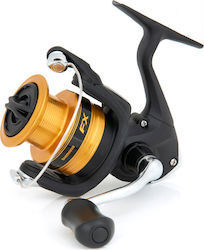 Fishing Reels
-
 Fishing Gears
-
 Fishing Clothing & Accessories
-
 Fishing Tools
-
 Fishing Accessories
-
 Fishing Boxes
-
 Fishing Bags

Relevant Articles
Fishing: A Survival Guide for Beginners!
Buying Guide: How to Choose the Right Boat Cleaners
Buying Guide for Antifouling Paints (Mooring Paints): How to Choose the Right One
Be the first to leave a comment!