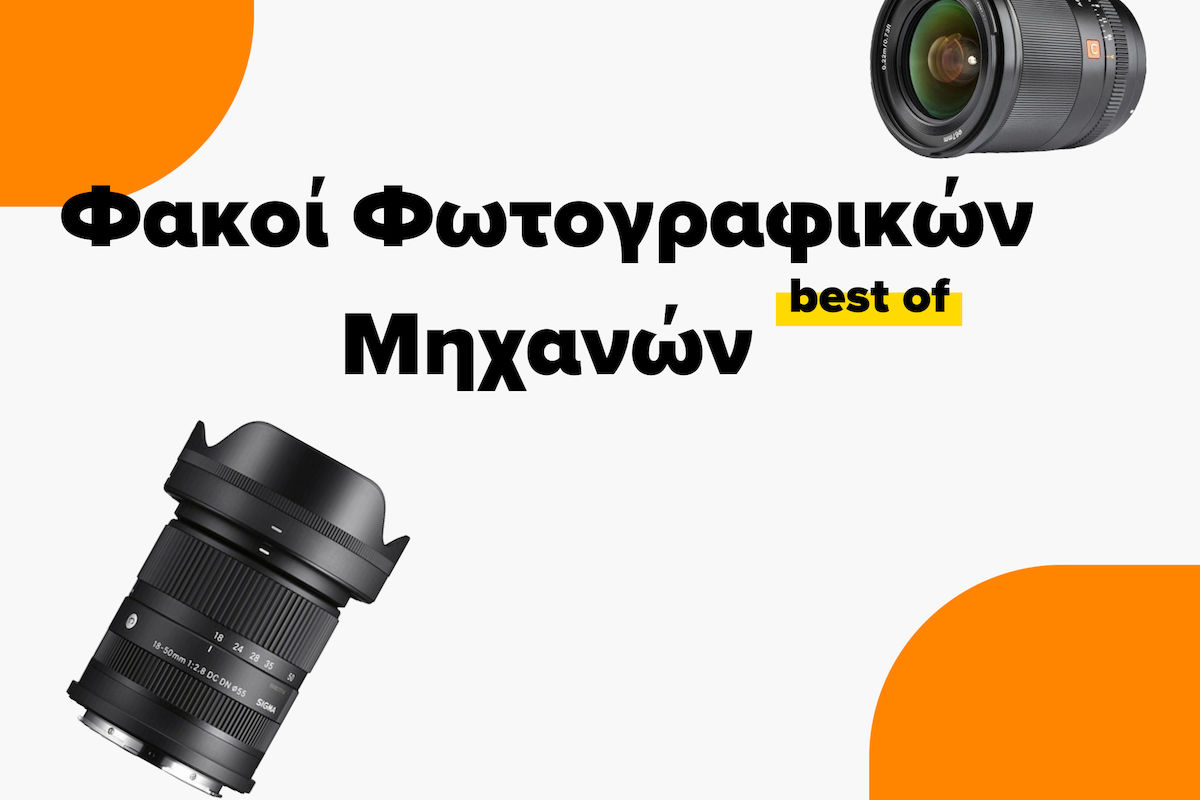

The best camera lenses
See top suggestions for camera lenses and choose the best one for your needs!
Who are the best camera lenses for 2024? See ideal suggestions on lenses for every use and budget and choose the best one for your needs!
To find the best options for you, we relied on user reviews on their main features, such as the type of lens, the type, the aperture, the focal length, capabilities, etc.
Prime lens for portrait photography
With the EF 50mm f/1.8 STM lens, you can easily create artistic and impressive photos. The large f/1.8 aperture allows you to capture your subject with perfect focus, while the background gets a beautiful blurred effect. Additionally, the ability to let in more light ensures brighter and more vibrant images, while the advanced STM technology provides an almost silent and extremely fast focusing system during shooting. The 50mm focal length lets you fill the frame with your subject from a comfortable distance and capture stunning portraits with a natural look.
Portrait photography

- Maximum Aperture (f): 1.8
- Minimum Aperture (f): 22
- Focal Length: 50 mm
- Filter Diameter: 49 mm
- Weight: 159 gr
User review we highlighted
"The best lens for someone experimenting with a prime lens for the first time (for FF always). For Crop it works as an 80mm at f2.8. Still quite good for portraits or for more distant Street photography. It is quite good regardless of price. Satisfactory focusing speed, good sharpness, good control in color aberaeron, satisfactory quality. Worth the money."
Wide-angle lens for landscape photography
With a 16mm focal length, this lens offers a wide viewing angle, ideal for landscapes, architecture, and interior shots. The large f/1.4 aperture provides excellent brightness, allowing you to capture impressive photos even in low-light conditions. The lens is also equipped with Dual Linear Motor (DN) technology for fast, silent, and precise focusing, making it ideal for both video and photography.
Landscape photography

- Maximum Aperture (f): 1.4
- Minimum Aperture (f): 16
- Focal Length: 16 mm
- Filter Diameter: 67 mm
- Weight: 405 gr
User review that stood out
"A must-have lens...
For those who specifically want it for videos or landscape photos, especially at night, this is where they should start. I can't find anything negative to say."
Zoom telephoto lens
The Olympus M.Zuiko Digital ED 40-150mm f/4.0-5.6 R is a versatile lens that covers a wide range of focal lengths, making it ideal for various photographic situations. With a focal range from 40mm to 150mm, this lens accommodates a wide variety of shots, from portraits and landscapes to sports events and distant subjects. It is lightweight and portable, making it easy to carry and use during your photographic adventures.
Zoom

- Maximum Aperture (f): 5.6
- Minimum Aperture (f): 22
- Focal Length Range: 40 - 150mm
- Filter Diameter: 58mm
- Weight: 190 gr
User review that stood out
"I bought it because of its low cost and I was impressed by the results. It is truly a lightweight but high-quality gem. What will impress the user is the clarity and sharpness it provides even in the most extreme cases. I believe it should be in your equipment because apart from the quality it offers, it is also very lightweight. The five stars are really not enough."
Street Photography and Travel
With a maximum aperture of f/1.8, this lens is capable of delivering impressive results even in low-light conditions. The large aperture also creates a beautiful, blurred background that draws attention to the main subject of the image. Equipped with Silent Wave Motor (SWM) technology, the lens offers fast, accurate, and nearly silent autofocus, making it ideal for shooting both photos and videos. Additionally, its compact design makes this lens extremely portable and versatile for everyday use and travel.
Street Photography and Travel

- Maximum Aperture (f): 1.8
- Minimum Aperture (f): 22
- Focal Length: 35 mm
- Filter Diameter: 52 mm
- Weight: 200 gr
User review that stood out
"I give it 5 stars but I am bothered by the fact that it makes quite a noise when autofocus is activated, so if you want to shoot videos you will need to use manual focus. The lens's bokeh is amazing for its price and it delivers amazing results in terms of sharpness. Ideal for portraits, excellent for landscapes and other types of photos."
Macro lens for capturing impressive detail
The AF-S DX Micro NIKKOR 40mm f/2.8G, with a wide aperture range from f/1.8 to f/22, allows you to capture high-resolution and sharp images, ranging from infinity to life-size (1:1). This means you can focus very close to your subjects, discovering the tiny details of life. It is aimed at photographers who want to capture detailed and clear images of small objects, such as flowers, insects, jewelry, and products, whether for commercial or other purposes. Additionally, equipped with Silent Wave Motor (SWM) technology, the lens provides fast, silent, and accurate autofocus, making it ideal for both photography and video.
Shots with impressive detail

- Maximum Aperture (f): 2.8
- Minimum Aperture (f): 22
- Focal Length: 40 mm
- Filter Diameter: 52 mm
- Weight: 235 gr
User review that stood out
"Good lens, it takes some work to get used to it, good for macro photography, for food, fast focusing. Not suitable for videos.. honest for its price.. update.. the lens is a real gem."
Here are some lens options for specific applications in camera bodies and photography equipment. When choosing lenses, you should consider the manufacturer of your digital camera and then think about the type of photography you want to shoot. Here are some points to consider:
- Determine the focal length. You want a lens that can focus precisely on your subjects, depending on the type of photography you are doing. For example, a wide-angle lens is good for landscapes, a telephoto lens is good for portraits, and macro lenses are good for capturing small objects and highlighting details.
- Aperture and Brightness. The maximum aperture value of the lens determines how much light can enter your camera's sensor. Lenses with a large maximum aperture (small f-stop number) allow more light and are good for low-light situations or creating an impressive bokeh (blurred background).
- Wide-angle or Telephoto. Depending on the type of shots you are taking, you may need a wide-angle lens for landscapes or a telephoto lens to zoom in on distant subjects.
- Image Stabilization. If you plan to use the lens without a tripod or for low shutter speed shots, you may want a lens with built-in image stabilization. Each manufacturer has given its own name to the stabilization system in the lenses they have developed (e.g. Canon - Image Stabilization (IS), Nikon - Vibration Reduction (VR), etc.).
- Size and Weight. Take into account the size and weight of the lens, especially if you plan to carry it frequently.
Relevant Articles

The best film cameras
The Best DSLR Cameras for 2026
Buying Guide for DSLR Cameras
Be the first to leave a comment!