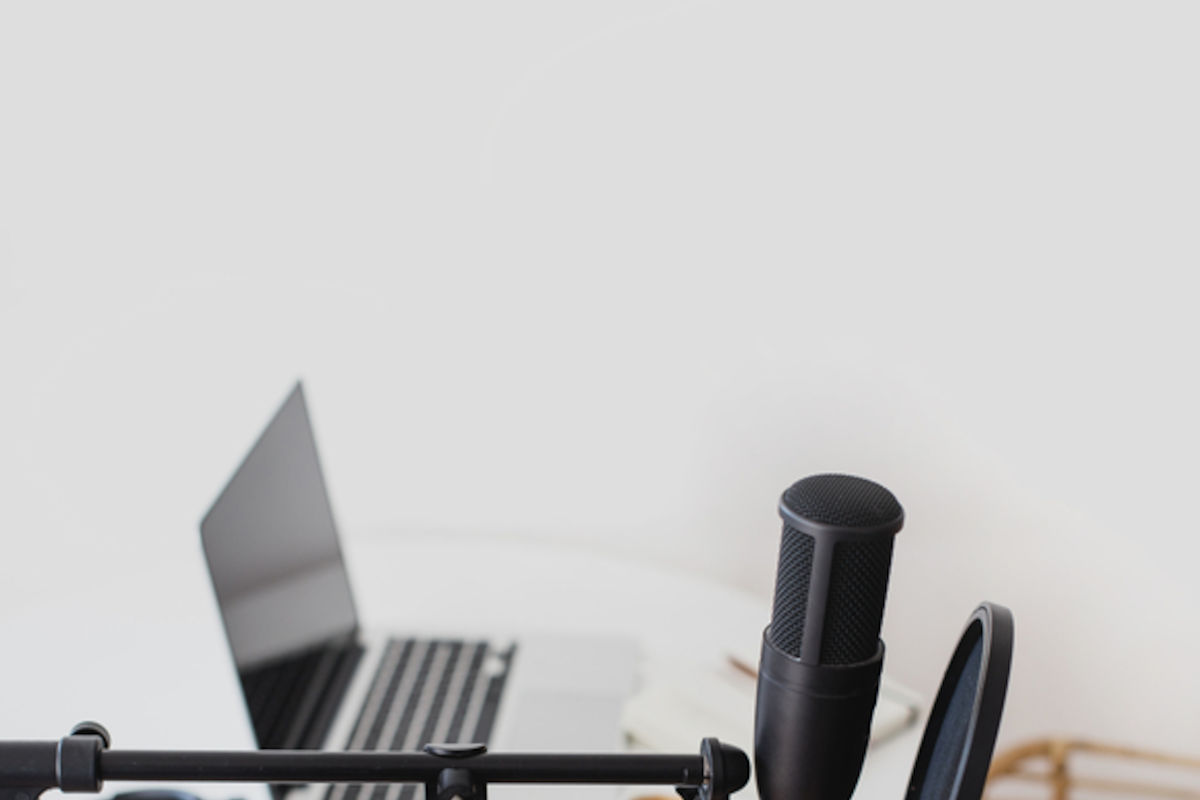

Home recording equipment
Do you want to start recording music or podcasts from home? This guide will provide you with the necessary information and products you will need to start today!

To begin with, home recording is something you can do at quite a high level, without a very high budget, as there are now many value for money product options!
So let's take it step by step!
Sound Card
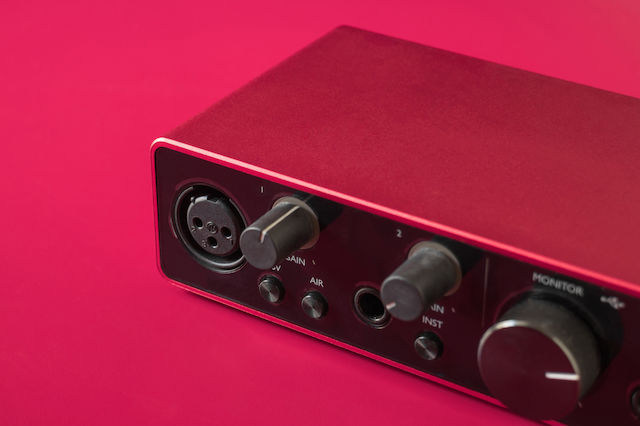
The most important product you will buy, as it replaces your computer's sound card. Why? Because your PC's card is made to play sound from songs and videos, not for processing sound from a musical instrument or your voice.
Our Proposal

- 2 TRS/XLR inputs
- 2 speaker outputs and 1 headphone output
- 48v phantom power function to connect a condenser microphone
- Air circuit for extra clarity and treble
Included in the package are ProTools First, Ableton Live Lite, 2GB Loopmasters sample content, Focusrite RED plug-in suite, plug-in collective, XLN Audio Addictive keys, softube time and tone bundle. Ideal for home studio.
See more options.


How to Use It
- Connect it via USB to your computer and plug your guitar/keyboard or microphone into the appropriate jack
- Select the Line setting for high-intensity instruments like drums and keyboards, while for instruments like an electric guitar that connects directly without an amplifier, choose Instrument
- Adjust the input gain so that when you play or sing loudly, the corresponding indicator on the switch does not turn red
- Open the software (DAW) of your choice and start recording
Microphone
There are 2 main types of microphones: condenser and dynamic.
The former are very sensitive to every sound and require additional power supply to operate. They offer the best possible sound, but due to their increased sensitivity, they should be used in a controlled recording environment.
Dynamic microphones, on the other hand, are more durable and less sensitive to ambient sounds, making them work better the closer you bring them to you. They are ideal for recording loud instruments such as a distorted electric guitar.
Our proposal for dynamic

An industry-standard microphone that has been used for many years in countless instrument recordings. Place it very close to your amplifier's speaker or the hole of your acoustic guitar to achieve the best results.
See more options.


Whatever type of microphone you choose, don’t forget to get a Pop Filter so it can cut down on consonants that are more pronounced in speech and can ruin your take such as "p" and "s", as well as an XLR cable, if the microphone you get doesn’t already include one.
Microphone Stand
To avoid holding the microphone permanently, you need to get a stand. However, be careful, as the stand is something that can make your life easy or difficult if you choose one that is unsuitable for your needs.
If you will be sitting at your desk for podcasting or streaming, a desktop stand is ideal, as you can bring it to the perfect height while sitting, keeping your hands free.
On the other hand, if you want to record an amplifier speaker or play guitar in a chair, a standing microphone with an adjustable joint is a quite economical solution.
Our suggestion for a desktop stand

- Sturdy construction
- Multiple joints for flexibility
- Folded dimensions 90 mm X 80 mm X 455 mm
This type of stand is particularly popular among streamers and podcasters, as it allows you to sit at your desk and have the microphone at the height and position you want. When you're done with the microphone, this stand allows you to essentially hide it in your desk until next time.
Our suggestion for a vertical stand

- Height from 95 to 165 cm
- With joint for flexibility of movements
See more options.


Speakers
After recording all the parts you want, the final step is to listen to the result with a pair of quality studio monitors or self-powered speakers!
The characteristic of this type of speaker is that it reproduces the sound exactly as it is from its source, without the need for an amplifier, hence the name. Thus, it will act as a blank canvas for you to check your work and make any necessary changes to the EQ.
Tip: After you have finished editing your song, don't forget to listen to it using simple everyday in-ear headphones, as most people will listen to it from their mobile phones.
Our Proposal

- Power 50W RMS
- 2 speakers (tweeter for highs, subwoofer for lows)
- They have a headphone output
Exceptional value for money studio monitors that will help you take your production to a high level, even if you are a beginner. In cases where it is night or you do not want to disturb, you can connect headphones to the speakers.
See more options.


If you want to learn even more, watch the video for tips from an expert podcaster!
So don't wait, get the necessary equipment and start creating today!
Be the first to leave a comment!