

Duvet Buying Guide: Find the Best One for You
Filling, weight, size & care: Everything you need to know to sleep comfortably all year round.
The duvet is one of the bedding essentials we use every day, without giving much thought to how it affects the quality of our sleep. And yet, a duvet that is too heavy, too light, or the wrong size can affect your sleep more than you might imagine.
Before we begin, discover the top duvet picks on Skroutz:


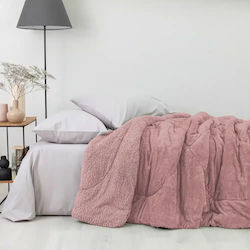


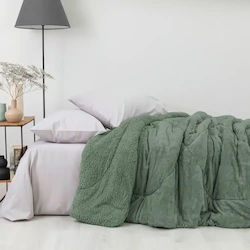
In this guide, you’ll learn what filling and weight mean in practice, which size is right for your bed, and how to care for your duvet so it lasts for years. Let’s take a look.
1. Filling
The filling determines how warm, lightweight, durable and easy to care for the duvet will be, which is why it is one of the most important factors to consider when choosing one. There are four main categories:
✨ Down (feathers & down)
Down duvets are the most premium option, as they are very warm for their weight, fluffy, breathable and can last for many years with proper care. They are filled with goose or duck feathers and down, and the ratio between the two plays an important role (e.g. 90/10 or 70/30). The higher the down content, the lighter, fluffier and warmer the duvet will be (but also more expensive), with goose down generally considered superior to duck down.
Ideal for: those who want a warm duvet without the weight and do not have allergies.
✨ Synthetic (microfiber, hollowfiber)
Synthetic duvets are filled with polyester fibers, often hollowfiber or microfiber, which mimic the feel of down. They are affordable, hypoallergenic, and most can be machine-washed at home for maximum convenience and hygiene. Hollowfiber has gaps in its structure, allowing the duvet to breathe better.
Ideal for: people with allergies, families with children and those who want easy care.
✨ Wool
Wool is a material that stands out for its ability to regulate temperature and moisture very effectively. As a result, wool duvets provide instant warmth when it is cold and allow the body to breathe when it is warm.
Ideal for: those who sweat while sleeping.
✨ Natural fibers (cotton, silk, bamboo, Tencel)
Finally, you can also find duvets made from natural fibers, which are lighter and cooler, making them ideal for summer and for those who tend to overheat. However, they cost more and are therefore less widely available.
Comparison at a Glance:
2. Weight & thermal performance
The warmth of a duvet is usually expressed in two ways:
- The weight of the duvet, which is measured in grams per square meter (gr/m² or gsm) and affects comfort, as well as warmth to some extent. However, a heavier duvet is not necessarily warmer.
- Thermal performance, which is measured in tog, an international unit of thermal resistance that can range from 3, for the coolest duvets, to 15, for the warmest. The higher the number, the warmer the duvet, regardless of the material.
SkroutzTips:
1. For a heated home, duvets with a thermal performance of 8–10.5 tog are a good choice, while if it gets colder, opt for 11 tog or higher.
2. If you share a bed with someone who feels colder or warmer than you, a medium-weight duvet is usually the best compromise, or alternatively, two single duvets.
3. Type
For synthetic duvets, here are some general guidelines:
✨ Winter
The number-one choice for cold rooms with inadequate heating, as well as for people who feel the cold easily, is a winter duvet, with a weight of 300–450+ g/m² and a thermal rating of 10.5–13.5 tog.
✨ Summer
If you’re looking for something for warm nights or as a lightweight cover, a summer duvet is the ideal choice. Look for one weighing around 100–200 g/m² with a thermal rating of 3–4.5 tog.
✨ Mid-season
For spring, autumn, or homes with good heating, a duvet weighing around 200–300 g/m² with a thermal rating of 7–9 tog will keep you warm without making you sweat.
✨ 4 seasons
There are also 4-season duvets, which consist of two duvets of different weights (one lightweight and one medium-weight) that fasten together with buttons or snap fasteners. Use the lightweight one in summer, the medium-weight one in spring and autumn, and both together in winter. It’s a practical solution if you want one product for the whole year, especially in the Greek climate, with its significant seasonal temperature differences.
✨ Duvet blanket
Finally, the duvet blanket is the ideal choice for very cold winters. It combines a blanket on the outside with a duvet on the inside, making it exceptionally warm, soft, and fluffy.
With down duvets, fill weight is not as important as it is with synthetic duvets. A smaller amount of down can provide the same warmth. It’s better to check the tog rating or the manufacturer’s seasonal recommendation.
4. Dimensions & size
The duvet should be considerably wider than the mattress, so it covers the sides and you stay covered when you turn over. A practical rule of thumb is to choose a duvet about 40–60 cm wider than the mattress.
The most common sizes on the Greek market are indicative:
Sizes vary from one manufacturer to another, so it’s always a good idea to check the exact dimensions in the product specifications. Also, don’t forget to take into account the dimensions of the duvet cover you may already have, or, if you’re planning to buy one, make sure it fits your new duvet.
5. Fabric & construction
The outer fabric
The cover affects the feel, breathability and durability of the duvet, depending on the material:
- 100% cotton: Durable and also absorbs and releases moisture easily.
- Cotton sateen: A particularly soft cotton fabric with a smooth texture and a lustrous finish.
- Percale: A tightly woven cotton fabric with a matte finish. Cool and durable, and easy to iron.
- Flannel: A densely woven cotton fabric with a soft, napped surface. Ideal for the winter months.
- Microfiber: A synthetic material (man-made microfibers) that makes the duvet lightweight, warm and fluffy.
The stitching
The stitching keeps the filling in place so it does not collect at the edges:
- Quilted (through-stitched): a simple, economical construction, but some warmth is lost at the seams. Suitable for lightweight and summer duvets.
- Box construction: fabric walls create “boxes” that keep the filling evenly distributed and prevent cold spots. This is the best choice for warm, down-filled duvets.
Discover duvets by pattern:
-
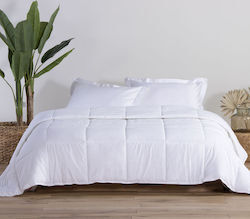 Solid Colors
-
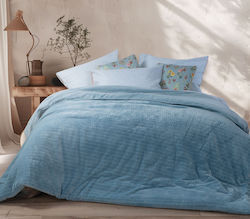 Wire
-
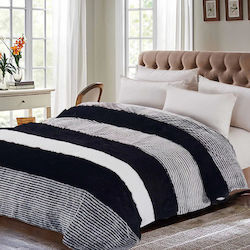 Striped
-
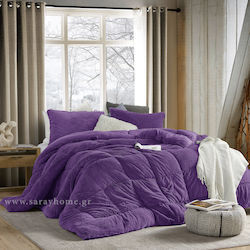 Geometric Shapes
-
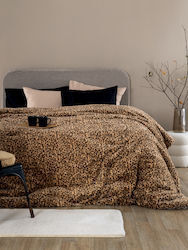 Animal Print
-
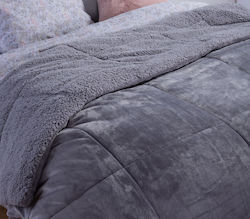 Floral
-
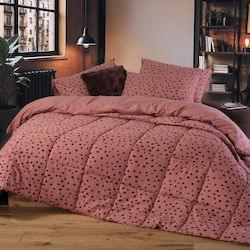 Polka Dot
-
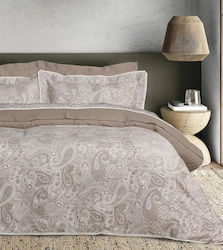 Paisley Patterns
6. Allergies & certifications
If you have an allergy to dust mites or down, choose a synthetic or silk duvet that can be washed at 60°C, a temperature that helps eliminate dust mites. Hypoallergenic duvets are an ideal choice for those with sensitivity, allergies or asthma, ensuring clean, hygienic sleep, as they are made from materials that prevent the growth of dust mites, dust and bacteria.
Some certifications worth looking for:
- OEKO-TEX® Standard 100: the materials have been tested for harmful substances.
- RDS (Responsible Down Standard): the down comes from birds that have not been mistreated, such as through live plucking.
- Anti-allergy / anti-mite treatments: special fabrics or finishes that help limit dust mites.
7. Care & Lifespan
✨ General guidelines:
- Always use a duvet cover: it protects the duvet from sweat and stains and reduces the need for washing.
- Air it regularly: a few hours on a shaded balcony helps it fluff back up and release moisture.
- Washing: follow the care label. Synthetic duvets can usually be washed at home once or twice a year. Down duvets and larger duvets often require a high-capacity washing machine or professional cleaning.
- Drying: make sure it is completely dry to prevent odors or mold. When using a tumble dryer, a few dryer balls can help prevent the filling from clumping.
- Storage: store it in a breathable fabric bag rather than a plastic vacuum storage bag for long periods, especially if it is a down duvet.
A good synthetic duvet usually lasts several years, while a high-quality down duvet can last over a decade with proper care. If your duvet has flattened, developed lumps, or no longer keeps you as warm as it used to, it’s time for a replacement.
✨ By filling type:
- Down duvet: Shake the duvet daily to air it out and maintain the loft of the down. If permitted, wash it according to the manufacturer’s instructions. Hand washing is preferable, or use a washing machine on a delicate cycle.
- Wool duvet: Shake the duvet often to maintain the loft of the wool. Hand washing is preferable, but if you use a washing machine, select a very low-temperature cycle and a special detergent for wool. Avoid using a tumble dryer and let it air-dry naturally.
- Microfiber duvets: Machine-wash according to the manufacturer’s instructions. You can usually use a warm cycle. Microfiber duvets often dry faster!
What will you use it for?
Check out the features to look for, based on how you plan to use it.
- For the depths of winter choose a down duvet with a TOG >11 and a flannel or 100% cotton cover for a super-soft feel.
- If you have allergies, choose a duvet with a high TOG (>11), a microfibre filling and a 100% cotton cover for a super-soft feel.
- For autumn/spring choose a lightweight, breathable wool or hollowfibre duvet to minimise the chance of sweating, with a TOG < 8. For the cover, you can also choose cotton sateen or percale.
Don’t forget! A product can often differ in its overall features and construction. Before you decide, read other users’ reviews to see what they think too!
Relevant Articles
Blanket Buying Guide: How to Choose a Blanket

What Should You Pay Attention to Before Buying a Robot Vacuum? Buying Guide
The Best Air Purifier Filters for Every Use
Be the first to leave a comment!