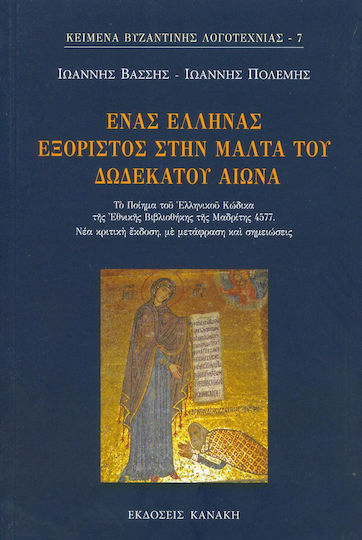
Ιωάννης Πολέμης
Ιωάννης Πολέμης (1860-1938). Ο Ιωάννης Πολέμης γεννήθηκε στην Αθήνα, καταγόμενος από ιστορική οικογένεια του Βυζαντίου. Ολοκλήρωσε τις εγκύκλιες σπουδές του στην Αθήνα και γράφτηκε στη Νομική Σχολή, γρήγορα ωστόσο εγκατέλειψε τις σπουδές του, καθώς τον είχε από νωρίς έλξει η λογοτεχνία. Διετέλεσε γραφέας του Υπουργείου Παιδείας, υπογραμματέας του Πανεπιστημίου Αθηνών και γραμματέας της Σχολής Καλών Τεχνών, ενώ υπήρξε επίσης ιδρυτής και πρώτος πρόεδρος της Εταιρίας Θεατρικών Συγγραφέων. Η πρώτη του εμφάνιση στο χώρο της λογοτεχνίας σημειώθηκε το 1880, όταν δημοσίευσε το πεζογράφημά του Ρέα Κυβέλη στο περιοδικό Αι Μούσαι, ενώ μέσω του ομώνυμου συλλόγου ήρθε σε επαφή με τον Παλαμά και τους ποιητές του κύκλου του. Καρπός της επαφής αυτής στάθηκε η στροφή του Πολέμη από την καθαρεύουσα στη δημοτική γλώσσα, στην οποία έγραψε και δημοσίευσε τα επόμενα ποιήματα και πεζά του στον Ραμπαγά και την πρώτη ποιητική συλλογή του με τίτλο Ποιήματα (1883). Από το 1884 ξεκίνησε να αρθρογραφεί με το ψευδώνυμο Guerrier στον Ασμοδαίο του Εμμανουήλ Ροΐδη και στο Άστυ και με το πραγματικό του όνομα στην Εβδομάδα, την Ποικίλη Στοά, το Εθνικό Ημερολόγιο του Κωνσταντίνου Σκόκκου και αλλού. Το 1888 δημοσίευσε τη δεύτερη ποιητική συλλογή του με τίτλο Χειμωνανθοί και την ίδια χρονιά έφυγε για σπουδές ιστορίας της τέχνης και αισθητικής στο Παρίσι με υποτροφία του Δήμου Αθηναίων. Στο Παρίσι γνωρίστηκε με τους Λεγκράν, Σαιντ Ιλλαίρ, Ψυχάρη, Ρενάν και Κοππέ. Στην Αθήνα επέστρεψε το 1890 και πήρε το Α΄ βραβείο στο Φιλαδέλφειο ποιητικό διαγωνισμό με τη συλλογή του Ερείπια, εξ’ ημισείας με τον Κωστή Παλαμά για τη συλλογή του Τα μάτια της ψυχής μου. Ως το 1922 συνέχισε να δημοσιεύει ποιήματα, πάντα με επιτυχία στο αναγνωστικό κοινό, ενώ η συλλογή Σπασμένα μάρμαρα βραβεύτηκε το 1917 με το Αριστείο Γραμμάτων και Τεχνών. Δημοσίευσε επίσης ανθολογίες και πεζογραφήματα, ενώ ασχολήθηκε με το θέατρο, συγγράφοντας αρχικά έμμετρα δράματα με βυζαντινή θεματολογία στη δημοτική (από τα οποία η Πρόκρις παραστάθηκε στο Βασιλικό Θέατρο) και αργότερα μονόπρακτα (τα οποία βραβεύτηκαν στον Αβερώφειο διαγωνισμό μαζί με το τρίπρακτο Βασιλιάς Ανήλιαγος), καθώς και πολύπρακτα έργα. Μετέφρασε έργα των Σαπφούς, Ανακρέοντα, Θεοκρίτου, Ευριπίδη, Ουγκώ, Μιστράλ, Μολιέρου, Αριστοφάνη και άλλων. Πέθανε το 1925 από βρογχοπνευμονία. Το έργο του Ιωάννη Πολέμη τοποθετείται χρονικά στο πέρασμα από το ρομαντισμό της Α΄ Αθηναϊκής Σχολής στη Νέα Αθηναϊκή Σχολή. Η γραφή του χαρακτηρίζονται από μελαγχολική διάθεση που παραπέμπει στην ποίηση του Αχιλλέα Παράσχου. Για περισσότερα βιογραφικά στοιχεία του Ιωάννη Πολέμη βλ. Άγρας Τέλλος, "Πολέμης Ιωάννης", Μεγάλη Ελληνική Εγκυκλοπαίδεια 20. Αθήνα, Πυρσός, 1932, Γιαλουράκης Μανώλης, "Πολέμης Ιωάννης", Μεγάλη Εγκυκλοπαίδεια της Νεοελληνικής Λογοτεχνίας 11. Αθήνα, Χάρη Πάτση, χ.χ., Μερακλής Μ.Γ., "Ιωάννης Πολέμης", Η ελληνική ποίηση· Ρομαντικοί - Εποχή του Παλαμά - Μεταπαλαμικοί· Ανθολογία - Γραμματολογία, σ.314-317. Αθήνα, Σοκόλης, 1977 και χ.σ., "Πολέμης Ιωάννης", Παγκόσμιο Βιογραφικό Λεξικό 8. Αθήνα, Εκδοτική Αθηνών, 1988.
(Πηγή: Αρχείο Ελλήνων Λογοτεχνών, Ε.ΚΕ.ΒΙ.).



 Βιβλία Θρησκείας & Μεταφυσικής
 Βιβλία Κλασικής Γραμματείας

 Βιβλία Θρησκείας & Μεταφυσικής