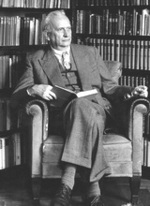
Karl Jaspers
Ο Γερμανός φιλόσοφος Karl Jaspers γεννήθηκε το 1883 και πέθανε το 1969. Το μεγαλύτερο μέρος της μόρφωσής του απέκτησε στις πόλεις Heidelberg και Gottingen της Γερμανίας. Δε μπορεί να θεωρηθεί στενά ως απολογητής μιας συγκεκριμένης επιστήμης, καθώς εκτός από φυσικός, ψυχίατρος και νομικός, επιδόθηκε με ιδιαίτερο ζήλο στη σπουδή της φιλοσοφίας και ειδικότερα του ρεύματος του υπαρξισμού. Στα έργα του, γίνονται εμφανείς οι επιδράσεις από φιλοσόφους όπως ο Spinoza, o Kant, o Kierkegaard και ο Nietzsche. Αντιθέτως δε δείχνει να δέχεται ιδιαίτερες επιδράσεις από τις υπαρξιστικές θεωρίες του Heidegger και του Sartre. Αντιπαρέθεσε στο φιλοσοφικό όρο "Dasein" (υπόσταση) του Heidegger τον όρο "Existenz" (ύπαρξη). Η υπόσταση του ανθρώπου είναι κάτι πιο στενό από την ύπαρξή του. Σκοπός της ύπαρξης θα πρέπει να θεωρείται η υπέρβαση της υπόστασης, σύνθημα το οποίο θεμελίωσε ο νιτσεϊκός Ζαρατούστρα, το μοντέλο του Υπερανθρώπου. Ο Jaspers είναι από εκείνους τους φιλοσόφους που δεν αντιμετώπισε τη φιλοσοφία ως μια ακόμα επιστήμη, αλλά ως τη λύση στα προβλήματα που διαχρονικά καταδιώκουν την ανθρώπινη ύπαρξη. Κύριο μέρος του φιλοσοφικού του στοχασμού περιέχεται στη "Φιλοσοφία" του (1941). Εκεί, θα μας πει αρκετά για τη ζωή και τη σταδιοδρομία του: "Αρχικά, επέλεξα τη σπουδή του νόμου με την πρόθεση να γίνω δικηγόρος. Συγχρόνως παρακολουθούσα μαθήματα φιλοσοφίας. Το τελευταίο αποδείχθηκε απογοητευτικό. Οι παραδόσεις δεν προσέφεραν τίποτα από αυτά που αναζητούσα στη φιλοσοφία: ούτε τις θεμελιώδεις εμπειρίες της Ύπαρξης, ούτε καθοδήγηση για εσωτερική δράση ή προσωπική βελτίωση. Εκείνο που μου προσέφεραν ήταν περισσότερο αμφισβητήσιμες απόψεις που αξίωναν επιστημονική εγκυρότητα. Εγώ όμως εκείνο που ζητούσα ήταν ουσιαστική αντίληψη της πραγματικότητας."