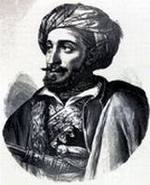
Ιωάννης Μακρυγιάννης
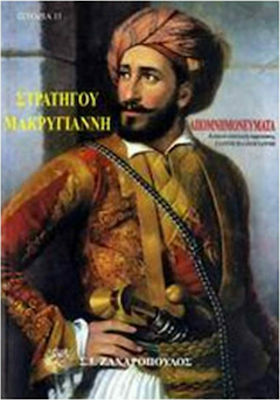
Ιωάννης Μακρυγιάννης (1797-1864). Ο Ιωάννης Τριανταφυλλοδημήτρης του Δημητρίου και της Βασιλικής γεννήθηκε στο Αβορίτι Δωρίδας, σε παιδική ηλικία όμως κατέφυγε με την οικογένειά του στη Λιβαδειά, μετά από το φόνο του πατέρα του από τουρκαλβανούς. Πέρασε επώδυνα και στερημένα παιδικά χρόνια. Από το 1804 ως το 1811 εργάστηκε ως ψυχογιός. Το 1811 εγκαταστάθηκε στην Άρτα, όπου εργάστηκε αρχικά ως επιστάτης στο σπίτι του Θανάση Λιδωρίκη και στη συνέχεια έκανε περιουσία ως έμπορος και τοκογλύφος. Το 1820 μυήθηκε στη Φιλική Εταιρεία και διαδραμάτισε πρωταγωνιστικό ρόλο στην Επανάσταση. Πολέμησε σε πολλές μάχες, τραυματίστηκε πολλές φορές, συχνά βαριά. Οι πληγές του οδήγησαν το κορμί του σε σταδιακή σήψη, η οποία τον συνόδεψε για την υπόλοιπη ζωή του. Μετά την ίδρυση του ελληνικού κράτους και την άφιξη του Καποδίστρια διορίστηκε γενικός αρχηγός της εκτελεστικής δύναμης της Πελοποννήσου, θέση την οποία έκρινε ως υποτιμητική της προσφοράς του και η οποία τον οδήγησε σε πικρία. Την περίοδο εκείνη ο Μακρυγιάννης έμαθε να γράφει, ώστε να μπορέσει να γράψει τα Απομνημονεύματά του, τα οποία θεωρήθηκαν από τους ιστορικούς της νεοελληνικής λογοτεχνίας ως πρότυπο γλωσσικού ύφους και αφηγηματικής τεχνικής και τον τοποθέτησαν στο χώρο του έντεχνου λόγου. Μετά τη δολοφονία του Καποδίστρια, τον οποία θεωρούσε υπαίτιο για την άδικη στάση του κράτους έναντι των αγωνιστών του ’21 τάχθηκε υπέρ των Συνταγματικών. Απογοήτευση δοκίμασε και από τη στάση του Όθωνα και αποσύρθηκε στο σπίτι του στη σημερινή περιοχή της Αθήνας που φέρει το όνομά του, μαζί με τη γυναίκα του Αικατερίνη Σκουζέ, με την οποία απέκτησε δώδεκα παιδιά. Επανήλθε στον πολιτικό χώρο λίγο αργότερα και ως το 1834 εκλέχτηκε κατ’ επανάληψιν δημοτικός σύμβουλος της πρωτεύουσας. Οι ενέργειές του για παραχώρηση Συντάγματος οδήγησαν σε κατ’ οίκον περιορισμό του, συνέχισε ωστόσο να αγωνίζεται και διαδραμάτισε σημαντικό ρόλο στην εξέγερση της 3ης Σεπτεμβρίου του 1843. Το 1853 φυλακίστηκε με την κατηγορία της εσχάτης προδοσίας και αποφυλακίστηκε ένα χρόνο αργότερα με ενέργειες του Δ.Καλλέργη. Από τότε αποσύρθηκε στο σπίτι του και μόνο μετά την έξωση του Όθωνα ξαναπήρε τιμητικά τον τίτλο του υποστράτηγου και το 1864 του αρχιστράτηγου. Την ίδια χρονιά εκλέχτηκε πληρεξούσιος Αττικής με απόφαση της Εθνικής Συνέλευσης. Πέθανε στην Αθήνα από εξάντληση. Στο λογοτεχνικό του έργο ανήκουν επίσης τα Οράματα και θάματα, γραμμένα κατά τη διετία 1851-1852. Για περισσότερα βιογραφικά στοιχεία του Ιωάννη Μακρυγιάννη βλ. Κεχαγιόγλου Δημήτρης, «(Γιάννης) Μακρυγιάννης», Η παλαιότερη πεζογραφία μας. Από τις αρχές της ως τον πρώτο παγκόσμιο πόλεμο Β΄,1, σ.252-270. Αθήνα, Σοκόλης, 1999, Κορομηλάς Γ.Δ., «Μακρυγιάννης Ιωάννης», Μεγάλη Ελληνική Εγκυκλοπαίδεια 16. Αθήνα, Πυρσός, 1931, Ξανθοπούλου - Κυριακού Α., «Μακρυγιάννης», Παγκόσμιο Βιογραφικό Λεξικό 5. Αθήνα, Εκδοτική Αθηνών, 1986, Σταμέλος Δημήτρης, «Μακρυγιάννης Γιάννης», Μεγάλη Εγκυκλοπαίδεια της Νεοελληνικής Λογοτεχνίας 9. Αθήνα, Χάρη Πάτση, χ.χ. και «Χρονολόγιο Στρατηγού Μακρυγιάννη», Διαβάζω 101, 5/9/1984, σ.32-35
(Πηγή: Αρχείο Ελλήνων Λογοτεχνών, Ε.ΚΕ.ΒΙ.).


 Βιβλία Ιστορίας